


QR Code

About Us
Products
Contact Us

Phone

Fax
0086-574-87527773

Email

Address
No. 432 Zhenhai Middle Road, Luotuo Street, Zhenhai District, Ningbo City, Zhejiang China

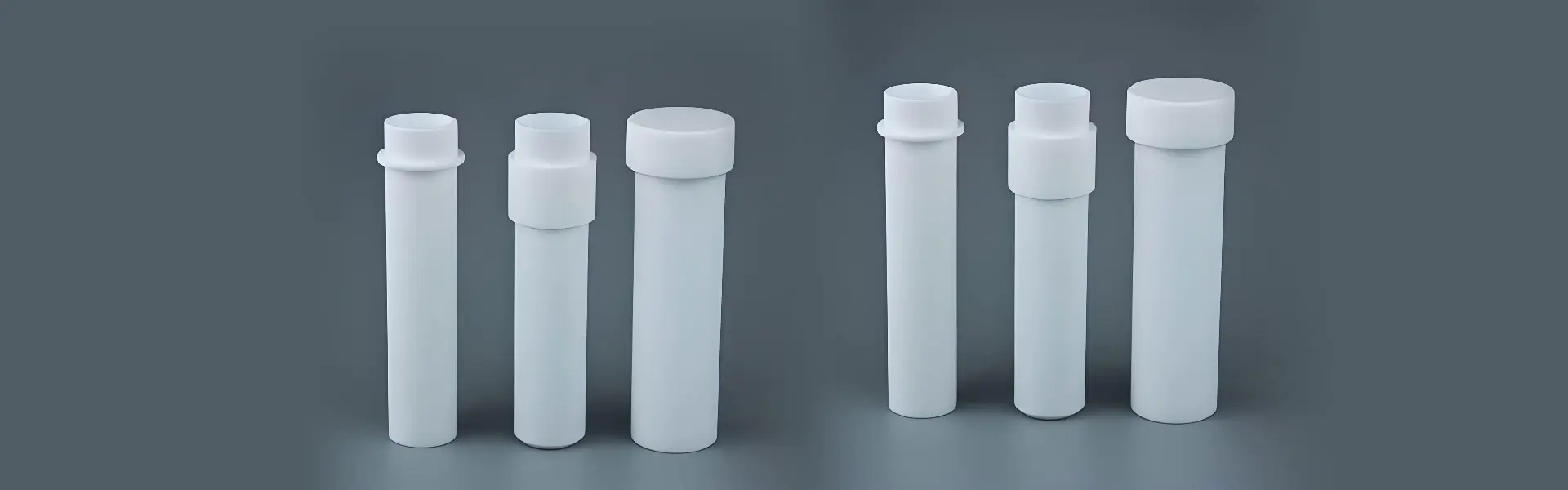
What are PTFE Parts used for? This question comes up constantly when maintenance engineers and procurement managers search for components that can survive aggressive chemicals, extreme temperatures, and relentless mechanical stress. In oil refineries and semiconductor fabs, PTFE seals, gaskets, O-rings, and valve seats are the invisible workhorses that prevent multi-million-dollar leaks and unplanned shutdowns. Yet many buyers still settle for generic elastomer seals that swell, crack, or extrude within weeks—simply because they don’t know how PTFE can eliminate those failure modes. At Ningbo Kaxite Sealing Materials Co., Ltd., we’ve helped hundreds of industrial teams replace failing seals with customized PTFE parts that deliver tighter emissions control, longer service intervals, and lower total cost of ownership. In this guide, you’ll discover the real-world applications and engineering advantages of PTFE components, how to spec them correctly, and where sourcing the right partner makes all the difference.
Every procurement manager knows the ripple effect of a leaking pump or valve: production stops, maintenance crews scramble, and compliance reports pile up. What often gets overlooked is that the root cause is typically a seal material pushed beyond its limits. For example, a nitric acid pump in a fertilizer plant might use an EPDM gasket that hardens and cracks after six months. The immediate fix is a $50 replacement, but the real cost includes five hours of downtime at $3,000 per hour plus safety risks. Multiply this across a plant with 200 pumps, and the annual waste climbs past $500,000. In such high-consequence applications, PTFE parts act as an insurance policy. Their near-universal chemical inertness and broad temperature tolerance prevent the swelling, embrittlement, and stress relaxation that destroy ordinary seals.
Imagine an oil & gas processing line in Northern Canada where an outdoor valve must seal reliably from -40°C cold starts to +260°C steam purges. Nitrile rubber O-rings become brittle and leak at low temperatures, while silicone versions soften and extrude at high temperatures. A PTFE O-ring, however, maintains its elasticity and dimensional stability across this entire range. When paired with a stainless steel spring energizer inside a PTFE lip seal, it compensates for thermal expansion and stays leak-tight even under cycling conditions. This performance is why PTFE parts are used for cryogenic couplings, autoclave door seals, and heat exchanger gaskets.

| Parameter | PTFE O-ring (Virgin) | PTFE O-ring (25% Glass-Filled) |
|---|---|---|
| Temperature range (°C) | -200 to +260 | -200 to +260 |
| Tensile strength (MPa) | 20 – 30 | 18 – 25 |
| Hardness (Shore D) | 50 – 60 | 60 – 72 |
| Maximum PV (psi·fpm) | 1,000 | 2,500 |
| Chemical resistance | Excellent (pH 0-14) | Excellent (no significant change) |
A pharmaceutical reactor requires ultra-pure seals that will not leach plasticizers into the product or swell in aggressive solvents like methylene chloride. Viton® seals might work initially, but repeated CIP (clean-in-place) cycles with hot caustic and acid can degrade the fluoroelastomer within months. PTFE is the “universal inert” material: it resists virtually all chemicals except molten alkali metals and a few fluorinating agents at high pressure. This makes PTFE gaskets and envelope seals the default choice for API process lines, HPLC pumps, and food-grade processing where zero contamination is mandatory. When you buy PTFE parts from Ningbo Kaxite Sealing Materials Co., Ltd., every batch comes with full traceability and can be supplied with FDA, USP Class VI, or EC 1935/2004 compliance documentation—removing audit friction for your quality team.
In rotating equipment like centrifugal compressors and agitators, seal faces generate heat and wear. Carbon-graphite versus tungsten carbide pairs still require a thin fluid film; when that film breaks down, scoring and leakage follow. PTFE-based rotary shaft seals, often filled with carbon fiber or MoS₂, provide self-lubricating properties with a coefficient of friction as low as 0.05 against steel. This eliminates stick-slip and can run dry for short periods, making them ideal for vacuum pumps and mixers that might lose lubrication. One of our customers replaced a mechanical seal in a paint mixer with a PTFE lip seal from Ningbo Kaxite and doubled the mean time between maintenance from 2,000 to 4,200 hours.
Not every white plastic part is created equal. To get consistent performance, specify these parameters: resin type (virgin PTFE vs. 15% glass or 25% carbon filled), crystallinity (should be >50% for wear resistance), density (typically 2.14–2.20 g/cm³ for virgin), and post-sintering annealing to remove residual stress. At Ningbo Kaxite Sealing Materials Co., Ltd., we mold, machine, and test under ISO 9001:2015, and we offer certificates of conformance with dimensional reports. Whether you need 10 custom valve seats or 10,000 gaskets, our engineering team will help you optimize the geometry for your housing groove and bolt load.
Q: What are PTFE parts used for in the food and beverage industry?
A: PTFE is FDA-compliant and non-absorbent, so it is used for pump diaphragms, valve seals, and hose liners in dairy, brewing, and bottling lines. It prevents product hold-up, resists cleaning chemicals, and does not support bacterial growth, making it the material of choice for sanitary flange gaskets and tri-clamp seals.
Q: What are PTFE parts used for when extreme purity is required?
A: In semiconductor wet benches and ultra-pure water systems, PTFE fittings, valve bodies, and seats avoid metallic ion leaching. Virgin PTFE contains no plasticizers or curatives, so it maintains 18.2 MΩ·cm water resistivity and prevents wafer contamination. Modified PTFE with lower permeation is often used for high-purity chemical delivery.
You’ve seen the scenarios where PTFE seals, gaskets, and custom components eliminate catastrophic failures and reduce compliance burdens. Whether you’re upgrading a single problem pump or standardizing across a global factory, the right material and supplier matter. Send us your application details—fluid, temperature, pressure, and motion profile—and our engineers at Ningbo Kaxite Sealing Materials Co., Ltd. will return a proposal within 24 hours. We’ve done this for LNG terminals, biotech fermenters, and hydraulic systems, and we’re ready to help you.
Ningbo Kaxite Sealing Materials Co., Ltd. designs and manufactures high-performance PTFE sealing solutions from our ISO-certified facility in China. With over a decade of experience serving procurement professionals globally, we combine rapid prototyping, rigorous quality control, and competitive pricing to solve your most demanding static and dynamic sealing challenges. Explore our full product range at https://www.kxt-seal.com or reach our support team directly for a same-day quote at [email protected]. We respond to every inquiry with a clear, data-driven recommendation—no generic catalog suggestions, just engineering that fits your system.
D. G. Flom, N. T. Porile, 1955, “Friction of Polytetrafluoroethylene Dry Bearings,” Journal of Applied Physics, 26(9), 1088–1092.
L. H. Peebles Jr., 1970, “Cold Flow and Creep in PTFE Resins,” Polymer Engineering and Science, 10(1), 54–59.
J. F. Lontz, 1980, “Sintering of PTFE—Processing and Properties,” Journal of Applied Polymer Science, 25(11), 2519–2532.
M. O. W. Richardson, 1986, “The Wear of PTFE-Based Dry Bearing Materials,” Tribology International, 19(1), 23–28.
R. L. Fusaro, 1990, “Self-Lubricating Composites of Porous Metals Infiltrated with PTFE,” Lubrication Engineering, 46(7), 457–464.
T. A. Blanchet, F. E. Kennedy, 1992, “Sliding Wear Mechanism of Polytetrafluoroethylene (PTFE) and PTFE Composites,” Wear, 153(1), 229–243.
J. N. Aneli, G. E. Zaikov, 2000, “Chemical Resistance of Polymeric Materials in Corrosive Environments,” International Journal of Polymeric Materials, 47(2-3), 347–362.
K. Friedrich, Z. Lu, A. M. Häger, 2005, “Recent Developments in the Tribology of Filled PTFE,” Composite Science and Technology, 65(15-16), 2329–2343.
M. Conte, A. Igartua, 2012, “Study of PTFE Composites Tribological Behavior for Hydraulic Sealing Systems,” Wear, 296(1-2), 568–574.
S. S. Kim, H. G. Lee, D. G. Lee, 2016, “Leakage Characteristics of PTFE Lip Seals under Reciprocating Motion,” Journal of Mechanical Science and Technology, 30(9), 3997–4004.
0086-574-87527773
No. 432 Zhenhai Middle Road, Luotuo Street, Zhenhai District, Ningbo City, Zhejiang China