


QR Code

About Us
Products
Contact Us

Phone

Fax
0086-574-87527773

Email

Address
No. 432 Zhenhai Middle Road, Luotuo Street, Zhenhai District, Ningbo City, Zhejiang China

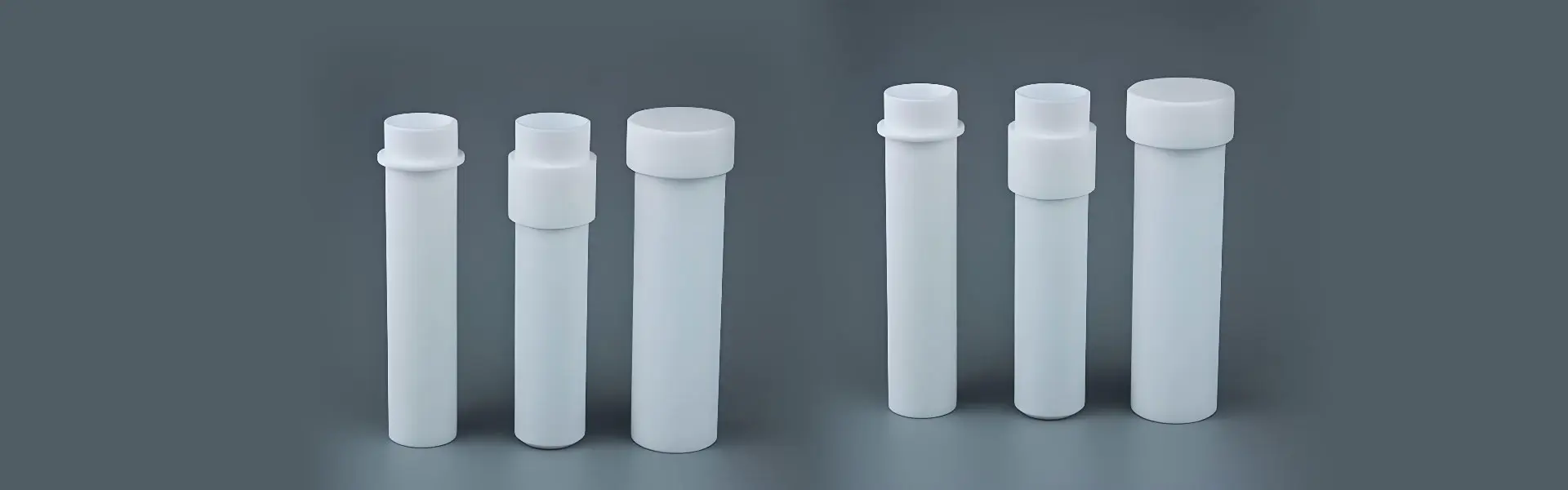
In the world of high-performance sealing, material selection is not just a choice—it's the cornerstone of reliability, safety, and operational efficiency. For decades, engineers facing extreme conditions have turned to two exceptional polymers: Polytetrafluoroethylene (PTFE) and Polyether Ether Ketone (PEEK). At Kaxite, we specialize in manufacturing precision PTFE & PEEK Seals that set the benchmark for performance in industries where failure is not an option. This guide delves into the properties, applications, and technical specifications of these advanced materials, providing the detailed information necessary for your critical design decisions.
PTFE and PEEK represent the pinnacle of polymer engineering, each offering a unique profile of properties that make them suitable for challenging environments.
Our seals are engineered from premium-grade virgin polymers and composites to ensure consistent, traceable quality. Below are the detailed specifications for our standard material formulations.
| Grade | Description | Color | Density (g/cm³) | Tensile Strength (MPa) | Max Continuous Temp. | Primary Applications |
|---|---|---|---|---|---|---|
| Virgin PTFE | Pure, unfilled polymer for maximum chemical purity. | White | 2.15 - 2.20 | 25 - 35 | 260°C (500°F) | Chemical processing, Pharmaceutical, Food & Beverage |
| Glass-Filled PTFE | PTFE reinforced with glass fibers for improved wear resistance and compression strength. | Brown | 2.20 - 2.30 | 17 - 24 | 260°C (500°F) | Bushings, Bearings, Gaskets in rotary equipment |
| Carbon-Filled PTFE | PTFE filled with carbon/graphite for superior thermal conductivity and low friction. | Black | 2.10 - 2.20 | 17 - 20 | 260°C (500°F) | Compressor rings, Valve seats, High-load applications |
| Stainless Steel Filled PTFE | PTFE filled with stainless steel powder for extreme wear resistance and load capacity. | Gray Metallic | 3.00 - 3.30 | 15 - 18 | 260°C (500°F) | Heavy-duty industrial machinery, Aerospace components |
| Grade | Description | Color | Density (g/cm³) | Tensile Strength (MPa) | Max Continuous Temp. | Primary Applications |
|---|---|---|---|---|---|---|
| Virgin PEEK | Unfilled, high-purity polymer offering the best overall balance of properties. | Beige | 1.30 | 90 - 100 | 250°C (482°F) | Semiconductor, Aerospace, High-pressure fluid handling |
| 30% Glass-Filled PEEK | PEEK reinforced with glass fibers for increased stiffness, strength, and dimensional stability. | Brown | 1.52 | 160 - 170 | 250°C (482°F) | Pump components, Wear plates, Insulators |
| Carbon-Filled PEEK | PEEK filled with carbon fibers for exceptional strength, wear resistance, and reduced thermal expansion. | Black | 1.40 - 1.45 | 200 - 215 | 250°C (482°F) | Bearings, Seals in aggressive media, Automotive |
| PTFE-Blended PEEK | A composite of PEEK and PTFE, optimizing for low friction and high wear resistance. | Gray/Black | 1.38 - 1.42 | 85 - 95 | 250°C (482°F) | Dynamic seals, Sliding bearings, Bushings |
The unique properties of these materials make them indispensable across a wide spectrum of high-tech and heavy industries.
Q: What is the primary difference between PTFE and PEEK seals?
A: The core difference lies in their mechanical properties and structural integrity. PTFE is a softer, more pliable material with unparalleled chemical resistance and the lowest coefficient of friction, but it is prone to cold flow (creep) under sustained load. PEEK is a high-strength, rigid engineering thermoplastic with excellent mechanical and thermal properties, offering superior resistance to creep, wear, and fatigue in dynamic applications. Think of PTFE for static sealing in highly corrosive environments and PEEK for dynamic, high-load, and high-temperature sealing where structural strength is critical.
Q: Can PTFE and PEEK seals be used in ultra-high vacuum (UHV) applications?
A: Yes, both materials are excellent choices for vacuum applications, but with considerations. Virgin (unfilled) grades of both PTFE and PEEK are preferred as they have very low outgassing rates, which is crucial to maintaining vacuum integrity. Kaxite offers specially processed grades with controlled porosity and surface finishes to minimize gas permeation and particle generation, making them suitable for semiconductor and scientific UHV systems.
Q: How do I choose between a filled and an unfilled (virgin) polymer grade?
A: The choice depends on the application's dominant requirement. Use virgin/unfilled grades when you need maximum chemical resistance, purity, or electrical insulation. Opt for filled or reinforced grades (e.g., glass, carbon, stainless steel) when you need to enhance specific mechanical properties. For instance, glass or carbon fillers dramatically improve the wear resistance, compressive strength, and dimensional stability of both PTFE and PEEK, making them last longer in moving parts but potentially slightly reducing chemical resistance in some media.
Q: Are Kaxite PTFE and PEEK seals suitable for FDA and USP Class VI compliance?
A: Absolutely. Kaxite's virgin PTFE grades are inherently compliant with FDA regulations (21 CFR 177.1550) for food contact and are widely used in pharmaceutical applications. Our virgin PEEK is also FDA compliant and meets USP Class VI standards for biocompatibility, making it suitable for repeated sterilization and use in medical devices. Certificates of Compliance are available upon request for specific material lots.
Q: What are the machining and tolerance capabilities for custom seal designs?
A: Kaxite specializes in precision machining of both PTFE and PEEK. We can produce custom seals, including O-rings, V-rings, backup rings, flange gaskets, and complex molded shapes. Standard machining tolerances for dimensions typically follow ISO 2768-mK for plastics. For critical features, we can achieve tolerances as tight as ±0.025 mm (±0.001"). Our engineering team can advise on design for manufacturability to ensure optimal seal performance and cost-effectiveness.
Q: How does temperature affect the performance of these seals?
A: Temperature fundamentally influences seal behavior. PTFE retains its flexibility and sealing force at cryogenic temperatures as low as -200°C, while PEEK may become more brittle. At high temperatures, PTFE begins to soften above 260°C, leading to increased creep, whereas PEEK maintains its mechanical strength well above 250°C. Thermal expansion is also a key factor; PTFE has a high coefficient of thermal expansion, which must be accounted for in gland design, while carbon-filled PEEK has a much lower rate. Always consult Kaxite's detailed technical data sheets for property values at your specific operating temperature.
Use this simple decision matrix as a starting point for material selection. For complex applications, contact Kaxite's technical support for a comprehensive analysis.


0086-574-87527773
No. 432 Zhenhai Middle Road, Luotuo Street, Zhenhai District, Ningbo City, Zhejiang China