


QR Code

About Us
Products
Contact Us

Phone

Fax
0086-574-87527773

Email

Address
No. 432 Zhenhai Middle Road, Luotuo Street, Zhenhai District, Ningbo City, Zhejiang China

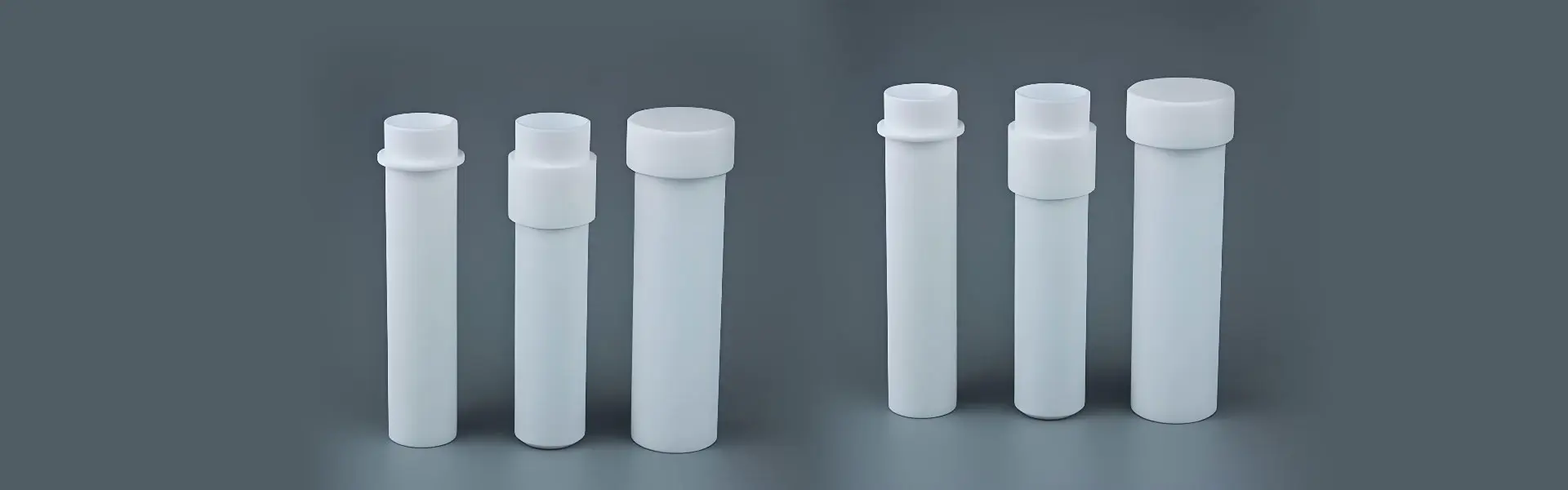
How thick is a standard PTFE sheet? If you're sourcing materials for your manufacturing line, this is a crucial question. A mismatch in thickness can lead to seal failures, production downtime, and costly rework. The 'standard' thickness isn't a single number; it's a range dictated by application needs, from thin films for electrical insulation to thick slabs for heavy-duty bearings. Understanding this spectrum is key to selecting the perfect material for performance and cost-efficiency. This guide cuts through the confusion, providing clear, actionable information for procurement specialists like you.
Article Outline:
You're tasked with procuring PTFE gaskets for a new chemical processing line. The specs call for excellent chemical resistance and a reliable seal under fluctuating pressures. You find a supplier, but they only offer a 3mm sheet as "standard." Is this thick enough? Too thick? A gasket that's too thin may extrude under bolt load, causing leaks. One that's too thick can be difficult to compress evenly, also leading to failure. The solution lies in matching thickness to the specific sealing face conditions, pressure, and flange type.
For static seals in low-pressure environments, thinner sheets (0.5mm to 1.5mm) are often sufficient and cost-effective. For higher pressures or uneven flanges, a thicker sheet (3mm to 6mm) provides the necessary body to absorb compression and maintain seal integrity. How thick is a standard PTFE Sheet for gaskets? At Ningbo Kaxite Sealing Materials Co., Ltd., we understand there is no one-size-fits-all answer. We provide a full range of calendered and molded sheets, allowing you to select the optimal thickness for your exact application, ensuring a perfect seal every time.

Common PTFE Sheet Thickness for Gasket Applications:
| Application Pressure | Recommended Thickness Range | Key Consideration |
|---|---|---|
| Low Pressure (Static Seal) | 0.5mm - 1.5mm | Cost-effectiveness, easy compression |
| Medium Pressure | 1.5mm - 3mm | Balance of performance and material use |
| High Pressure / Uneven Flanges | 3mm - 6mm+ | Resistance to extrusion, fill gaps |
Your maintenance team needs to replace worn bearing pads on heavy machinery. The original equipment manufacturer (OEM) spec is vague. You know PTFE's low friction is ideal, but you're unsure about the required thickness to support the dynamic load without excessive deformation. A bearing pad that's too thin will wear out prematurely, causing unplanned停机. An overly thick pad might not fit the housing or could lead to heat buildup.
The correct thickness is critical for load distribution and wear volume. Thicker sheets (10mm, 20mm, 30mm, and above) are standard for bearing applications because they provide a greater volume of material to wear through, extending service life dramatically. How thick is a standard PTFE sheet for bearings? It's substantially thicker than for sealing. Ningbo Kaxite Sealing Materials Co., Ltd. offers high-quality molded PTFE sheets in these heavier gauges, specifically engineered for outstanding wear resistance and dimensional stability under load, solving your durability concerns.
Common PTFE Sheet Thickness for Bearing/Slide Applications:
| Load Type & Severity | Recommended Thickness Range | Key Consideration |
|---|---|---|
| Light Duty / Guides | 5mm - 10mm | Sufficient wear volume for low stress |
| General Industrial Bearings | 10mm - 20mm | Standard for most dynamic applications |
| Heavy Duty / High Load | 20mm - 50mm+ | Maximum load capacity and service life |
Q1: How thick is a standard PTFE sheet you keep in stock?
A: At Ningbo Kaxite Sealing Materials Co., Ltd., our "standard" stocked range caters to the most common industrial needs. For calendered sheets, we typically stock from 0.5mm up to 10mm. For molded sheets, which are denser and ideal for machining parts, we commonly stock 10mm, 20mm, 30mm, 50mm, and 100mm thicknesses. We can also produce custom thicknesses to meet your precise engineering drawings.
Q2: How thick is a standard PTFE sheet for food processing equipment?
A: In food and pharmaceutical applications, where cleanability and compliance are paramount, thinner sheets are often used for linings and seals. A thickness range of 1mm to 3mm is frequently specified. It provides a robust barrier that is still flexible enough for installation and meets sanitary design principles. Our PTFE is produced in a controlled environment, ensuring the material purity required for such sensitive industries.
Selecting the correct PTFE thickness is a technical decision with direct business impact. Ningbo Kaxite Sealing Materials Co., Ltd. stands as your expert partner in this process. With extensive experience supplying global procurement teams, we don't just sell materials; we provide solutions. We offer comprehensive technical data, sample materials for testing, and guidance to ensure the PTFE sheet you order delivers optimal performance in your application. Let us help you solve your material challenges efficiently.
For a detailed quotation or technical consultation on your specific thickness requirements, please contact our team at [email protected]. Visit our website https://www.kxt-seal.com to explore our full product portfolio.
Research Papers:
P. D. Ritt, 2019, "Effects of Thickness on the Compressive Creep Behavior of PTFE Gaskets", Journal of Applied Polymer Science, Vol. 136, Issue 45.
L. M. Zhao & H. Klein, 2021, "Wear Performance of PTFE Composites under Varying Loads: A Thickness-Dependent Study", Wear, Vol. 486-487.
S. K. Gupta, 2017, "Influence of Sheet Thickness on the Permeation Properties of PTFE Membranes", Separation and Purification Technology, Vol. 188.
M. T. Roberts, 2020, "Thermal Conductivity Anisotropy in PTFE Sheets: Correlation with Manufacturing Method and Thickness", Polymer Engineering & Science, Vol. 60, Issue 5.
A. B. Chen & J. P. O'Donnell, 2018, "Stress Relaxation in Polytetrafluoroethylene: Experimental Analysis for Different Thicknesses", Mechanics of Time-Dependent Materials, Vol. 22, Issue 3.
F. E. Laurent, 2022, "Dimensional Stability of Machined PTFE Components: The Role of Initial Sheet Thickness and Annealing", Precision Engineering, Vol. 75.
R. G. Simmons, 2016, "Electrical Breakdown Strength as a Function of PTFE Film Thickness for Capacitor Applications", IEEE Transactions on Dielectrics and Electrical Insulation, Vol. 23, Issue 4.
K. J. Park & T. H. Lee, 2019, "Friction and Transfer Film Formation of PTFE: A Study on the Effect of Counterface Roughness and PTFE Thickness", Tribology International, Vol. 138.
H. W. Davis, 2021, "Compression Set Behavior in Virgin PTFE Sheets: Modeling the Impact of Thickness and Density", Journal of Elastomers and Plastics, Vol. 53, Issue 7.
E. V. Soto, 2018, "Chemical Resistance of PTFE Liners: Evaluating the Effect of Liner Thickness on Permeation Rate in Aggressive Media", Chemical Engineering Research and Design, Vol. 139.
0086-574-87527773
No. 432 Zhenhai Middle Road, Luotuo Street, Zhenhai District, Ningbo City, Zhejiang China