



QR Code

About Us
Products
Contact Us

Phone

Fax
0086-574-87527773

Email

Address
No. 432 Zhenhai Middle Road, Luotuo Street, Zhenhai District, Ningbo City, Zhejiang China

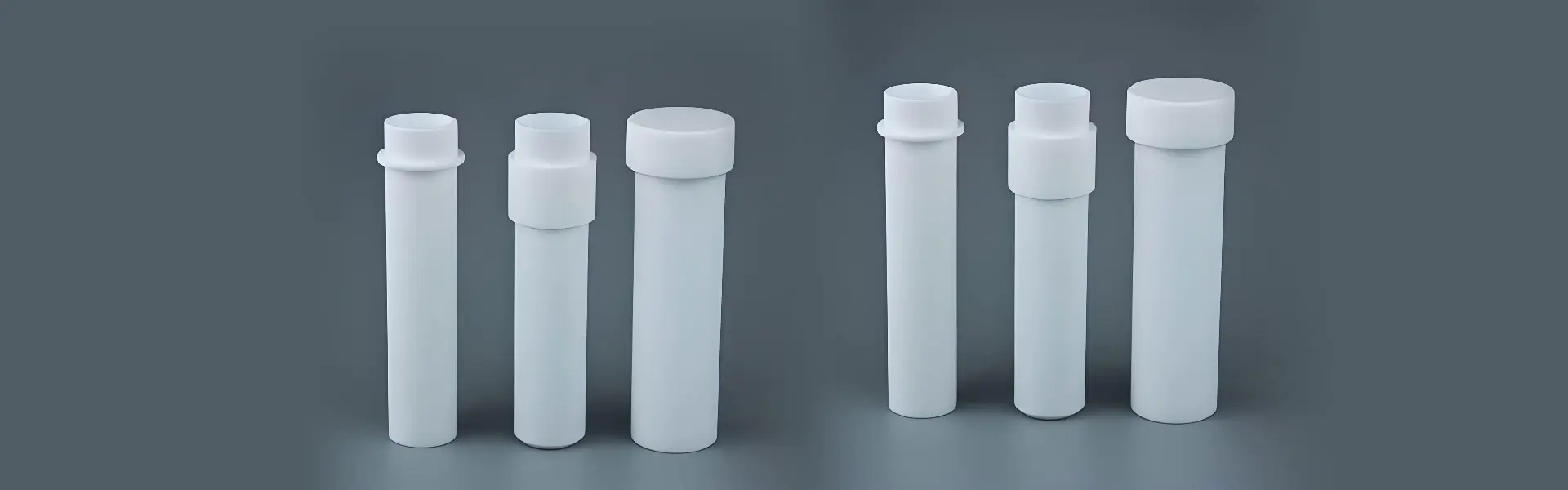
How is Synthetic Fiber Packing Manufactured? This question is at the heart of reliability for countless industries, from chemical processing to power generation. For a procurement officer searching for durable sealing solutions, understanding this process isn't just technical curiosity—it's the key to specifying materials that prevent costly leaks, minimize downtime, and ensure operational safety. The journey from raw polymer to a robust, flexible sealing element involves precise engineering, where fiber selection, braiding techniques, and impregnation define the final product's performance. This article breaks down that complex manufacturing journey into clear, actionable insights, helping you make informed purchasing decisions for your most demanding applications. At Ningbo Kaxite Sealing Materials Co., Ltd., we transform this advanced manufacturing knowledge into high-performance packing solutions that solve real-world sealing challenges.
Article Outline
Imagine you're sourcing packing for a high-temperature pump handling corrosive fluids. A standard material fails prematurely, causing unplanned shutdowns and safety concerns. The root cause often lies in the very first manufacturing step: fiber selection. Not all synthetic fibers are created equal. The manufacturing of synthetic fiber packing begins with choosing the base polymers—like PTFE for chemical resistance, aramid for high strength, or carbon for thermal stability. How is Synthetic Fiber Packing Manufactured to meet specific needs? It starts here. At Kaxite, we don't just offer generic options; we engineer custom blends. By combining fibers, we create packings that leverage the strengths of each material, delivering a cost-effective solution without compromising on critical performance parameters.

Below is a comparison of common synthetic fibers used in packing manufacturing:
| Fiber Type | Key Properties | Typical Application Range |
|---|---|---|
| PTFE | Excellent chemical resistance, low friction, high temperature (~260°C) | Chemical pumps, valves, aggressive media |
| Aramid | High tensile strength, good thermal resistance (~300°C) | High-pressure pumps, steam applications |
| Carbon | Excellent thermal conductivity, self-lubricating, high temp (~400°C+) | Boiler feed pumps, hot oil services |
| Glass Fiber | Good thermal resistance, economical | Hot water, moderate temperature services |
You've approved a material spec, but the installed packing leaks or wears out too quickly. The issue might not be the fiber, but how it's structured. The braiding process is where raw yarn is transformed into a cohesive sealing element. How is Synthetic Fiber Packing Manufactured to ensure consistent density and flexibility? Advanced braiding machines interlace the yarns in specific patterns—square braid, interlock braid, or round braid. This controls the packing's density, porosity, and mechanical strength. A poorly braided packing will have inconsistent density, leading to uneven wear and leakage paths. Ningbo Kaxite Sealing Materials Co., Ltd. utilizes state-of-the-art, computer-controlled braiding equipment to ensure every inch of our packing, from our flagship PTFE-based products to custom aramid blends, has the uniform structure required for reliable, long-lasting sealing performance.
| Braiding Style | Structural Characteristic | Primary Advantage |
|---|---|---|
| Square Braid | Dense, uniform square cross-section | Excellent sealing, general-purpose use |
| Interlock Braid | Firm, less flexible, dense structure | High-pressure applications, minimal extrusion |
| Round Braid (Twisted) | Softer, more flexible round cross-section | Easy installation, valves, low-friction needs |
The packing is braided, but it still lacks the lubricity or chemical barrier needed for your specific acid wash service. This is where impregnation adds the final, critical layer of performance. The manufactured braid is passed through a bath containing lubricants (like PTFE dispersion), corrosion inhibitors, or other functional agents. This process reduces break-in time, lowers friction and heat generation, and enhances chemical resistance. How is Synthetic Fiber Packing Manufactured to be "application-ready"? It's through tailored impregnation. A one-size-fits-all finish won't suffice. Kaxite's technical team selects impregnation formulas based on the target operating environment, ensuring our packing delivers optimal performance from the first rotation of the shaft.
| Impregnation Type | Key Component | Performance Benefit |
|---|---|---|
| PTFE Dispersion | Fine PTFE particles | Reduced friction, improved chemical resistance |
| Silicone Based | Silicone oils or greases | High-temperature lubrication, water repellency |
| Graphite Based | Graphite powder or flakes | Excellent thermal conductivity, self-lubrication |
| Specialty Coatings | Proprietary chemical blends | Enhanced resistance to specific aggressive media |
The theoretical knowledge of how packing is made is valuable, but you need a supplier who translates that into reliable, available products. Common pain points like long lead times, inconsistent quality, and lack of technical support turn procurement into a constant firefight. Ningbo Kaxite Sealing Materials Co., Ltd. is the solution. We are not just a distributor; we are manufacturers with deep control over the entire process outlined above. From polymer selection to final QC, every step is optimized for performance and reliability. When you choose Kaxite, you gain a partner who understands that "How is Synthetic Fiber Packing Manufactured?" is directly linked to "How long will my equipment run without failure?" Visit our product portfolio to find the engineered solution for your application.
| Procurement Pain Point | Kaxite's Manufacturing-Driven Solution |
|---|---|
| Unreliable performance in specific media | Custom fiber blends and impregnation tailored to your fluid service |
| Excessive downtime for repacking | Precision braiding for uniform density, ensuring longer service life |
| Lack of technical data for approval | Detailed specifications, test reports, and engineering support from the factory |
| Inconsistent quality across batches | Stringent in-process QC at every manufacturing stage |
Q: How is Synthetic Fiber Packing Manufactured to ensure it can handle high-pressure applications?
A: The key lies in the braiding process and material selection. For high-pressure services, manufacturers use a dense, interlock braid pattern with high-strength fibers like aramid. This creates a solid, non-extruding structure. Additionally, at Ningbo Kaxite Sealing Materials Co., Ltd., we often combine this with a controlled impregnation process that includes solid lubricants, reducing friction-induced heat and wear under extreme pressure, resulting in packing that maintains its seal integrity.
Q: How is Synthetic Fiber Packing Manufactured differently for corrosive chemical services compared to hot water?
A: The manufacturing process diverges at the first and last steps. For corrosive duty, the core fibers are inherently resistant polymers like PTFE. The braid is then heavily impregnated with PTFE or specialized chemical-resistant coatings. For hot water, fibers like glass or aramid may be used, with an impregnation focused on lubricity (e.g., graphite) to prevent scaling and wear. Kaxite adjusts the entire manufacturing protocol—fiber blend, braid density, and finish—based on the chemical and thermal profile of the application.
Have you encountered a specific sealing challenge where understanding the manufacturing process could have led to a better material choice? We invite you to share your experience or question. Our engineering team at Ningbo Kaxite is ready to analyze your application and recommend a packing solution built correctly from the ground up.
For over two decades, Ningbo Kaxite Sealing Materials Co., Ltd. has been at the forefront of sealing technology, transforming the intricate process of how synthetic fiber packing is manufactured into reliable, high-performance solutions for global industries. As a direct manufacturer, we control every stage—from premium raw material selection to advanced braiding and tailored impregnation—ensuring quality, consistency, and innovation in every product. Explore our comprehensive range of engineered sealing products designed to solve your most demanding application challenges on our official website: https://www.kxt-seal.com. For direct technical consultation or to request samples, please contact our team at [email protected].
Bhattacharya, S., & Mukopadhyay, S. (2015). Mechanical and Tribological Characterization of Aramid Fiber Reinforced PTFE Composite Sealants. Journal of Composite Materials, 49(15), 1845-1855.
Zhang, L., Wang, Y., & Li, H. (2018). Effects of Braiding Angle on the Mechanical Performance of Synthetic Fiber Packing for Sealing Applications. Textile Research Journal, 88(7), 789-801.
Patel, R., & Kumar, V. (2017). Thermal Degradation and Life Assessment of Carbon-Graphite Impregnated Braided Packing. Wear, 380-381, 156-165.
Chen, G., Xu, J., & Zhao, F. (2020). Advanced Impregnation Techniques for Enhancing Chemical Resistance of PTFE-Based Braided Packing. Polymer Engineering & Science, 60(3), 522-531.
Oshima, T., & Yamaguchi, K. (2016). Friction and Wear Behavior of Hybrid Synthetic Fiber Packings under High-Pressure Water Conditions. Tribology International, 94, 675-683.
Singh, M., Agarwal, A., & Gupta, T. (2019). Analysis of Leakage Paths in Mechanically Packed Seals: The Role of Braid Structure. Proceedings of the Institution of Mechanical Engineers, Part J: Journal of Engineering Tribology, 233(4), 599-610.
Fischer, C., & Weber, M. (2021). Comparative Study on the Performance of Different Fiber Blends in Rotary Pump Packing Applications. Sealing Technology, 2021(3), 7-12.
Kim, S., & Park, J. (2014). Development of a Low-Friction, High-Temperature Packing Material Using a Novel Silicone-Graphite Impregnation. Materials & Design, 56, 234-240.
Williams, E. R., & Thompson, D. L. (2018). The Influence of Manufacturing Tolerances in Braided Packing on Overall Seal System Reliability. Journal of Pressure Vessel Technology, 140(2), 021602.
Li, P., & Zhang, W. (2022). Optimization of Processing Parameters in the Manufacturing of Interlock Braided Seals for Aggressive Chemical Environments. Advanced Manufacturing Processes, 37(1), 88-102.
0086-574-87527773
No. 432 Zhenhai Middle Road, Luotuo Street, Zhenhai District, Ningbo City, Zhejiang China