


QR Code

About Us
Products
Contact Us

Phone

Fax
0086-574-87527773

Email

Address
No. 432 Zhenhai Middle Road, Luotuo Street, Zhenhai District, Ningbo City, Zhejiang China

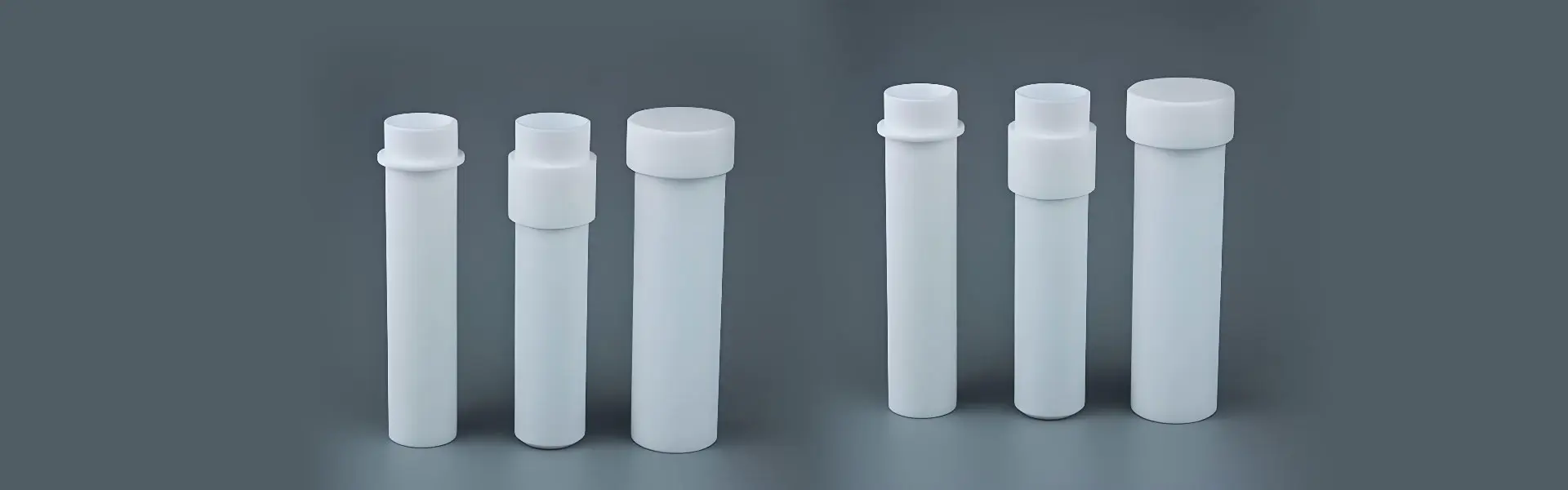
In the world of high-performance engineering plastics, few materials offer the unique combination of properties found in PTFE Rod. Also known as Polytetrafluoroethylene or Teflon® (a registered trademark of Chemours), PTFE rod is a versatile semifinished product prized for its exceptional chemical resistance, outstanding thermal stability, and remarkably low coefficient of friction. At Kaxite, we specialize in manufacturing premium-grade PTFE rods that meet the rigorous demands of industries ranging from aerospace and semiconductor manufacturing to food processing and chemical handling. This guide provides a comprehensive overview of PTFE rod, its key parameters, applications, and why Kaxite is the trusted partner for your critical polymer needs.
PTFE is a fully fluorinated thermoplastic polymer, first discovered in 1938. Its molecular structure, a long chain of carbon atoms fully shielded by fluorine atoms, is the source of its "non-stick" and inert characteristics. This structure grants PTFE a set of properties unmatched by most other polymers. Available in rod form, it serves as a stock material for machinists and fabricators to create custom seals, bearings, insulators, and components. Kaxite's manufacturing process ensures our rods are produced from 100% virgin PTFE resins, guaranteeing consistency, purity, and optimal performance in your final machined parts.
Selecting the correct PTFE rod requires a detailed understanding of its technical specifications. Below are the key parameters that define the performance and suitability of our product for specific applications.
| Property | Test Standard | Typical Value (Kaxite Virgin PTFE) | Unit |
|---|---|---|---|
| Density | ASTM D792 | 2.15 - 2.20 | g/cm³ |
| Tensile Strength | ASTM D638 | 25 - 35 | MPa |
| Elongation at Break | ASTM D638 | 300 - 500 | % |
| Compressive Strength | ASTM D695 | 12 | MPa |
| Melting Point | ASTM D4591 | 327 | °C |
| Continuous Service Temperature | - | -200 to +260 | °C |
| Coefficient of Friction (Dynamic) | ASTM D1894 | 0.05 - 0.10 | - |
| Dielectric Strength | ASTM D149 | 60 | kV/mm |
We provide a comprehensive range of sizes to suit various machining and fabrication needs. Our rods are available in both extruded and molded (skived) forms.
| Diameter Range (Standard) | Length (Standard) | Tolerance | Available Form |
|---|---|---|---|
| 5 mm to 50 mm | 500 mm, 1000 mm | ±0.2 mm | Extruded Rod |
| 55 mm to 300 mm | 500 mm, 1000 mm | ±0.5% | Molded & Skived Rod |
| Custom diameters up to 600 mm | Custom lengths available | As per agreement | Molded Block |
Kaxite also offers filled PTFE compounds, where materials like glass fiber, carbon, graphite, or bronze are added to the polymer to enhance specific properties like wear resistance, compressive strength, or thermal conductivity for demanding applications.
Q: What are the most common applications for PTFE rod?
A: PTFE rod is machined into a vast array of components. Common uses include: seals and gaskets for aggressive chemical environments, non-lubricated bearings and bushings, electrical insulators and standoffs, laboratory equipment components, wear plates, slide plates, valve seats, diaphragms, and custom parts for the food and pharmaceutical industries where purity and non-contamination are critical.
Q: How does PTFE rod from Kaxite differ from other brands on the market?
A: Kaxite PTFE rods are manufactured using controlled processes from 100% virgin PTFE resin. This ensures high consistency in density and mechanical properties throughout the entire rod length and cross-section. Our stringent quality control measures guarantee no voids, inclusions, or impurities that could compromise the performance of your machined parts, providing superior reliability and longer service life.
Q: Can PTFE rod be easily machined?
A: Yes, PTFE is renowned for its excellent machinability. It can be turned, milled, drilled, sawed, and threaded using standard metalworking tools, though sharp, high-speed steel or carbide tools are recommended. Its low thermal conductivity requires care to avoid overheating; using sharp tools and proper cooling (often compressed air) is essential to achieve a smooth, clean finish.
Q: What are the limitations of PTFE rod that I should be aware of?
A> While PTFE has outstanding chemical and thermal properties, it has some limitations. It has relatively low mechanical strength and stiffness compared to metals and some other plastics, and it exhibits significant cold flow (creep) under sustained load. It is not suitable for applications involving high mechanical stress or heavy continuous load. For such scenarios, Kaxite's filled PTFE compounds are recommended.
Q: How should PTFE rod be stored and handled?
A: PTFE rods should be stored in a cool, dry place away from direct sunlight and heat sources. They should be kept clean and free from dust and contamination. While PTFE itself is chemically inert, surface contamination can affect the performance of machined components, especially in clean or ultra-pure applications. Handle with clean gloves to prevent oil and dirt transfer from hands.
Q: Is Kaxite PTFE rod suitable for FDA or USP Class VI compliance in food and medical applications?
A: Kaxite offers specific grades of virgin PTFE rod that are manufactured using resins compliant with FDA regulations 21 CFR 177.1550 for food contact and can meet USP Class VI requirements for medical device applications upon request. It is crucial to specify your regulatory needs when ordering to ensure you receive the appropriate certified material.
Q: Can I get custom-sized or colored PTFE rods from Kaxite?
A> Absolutely. Kaxite provides extensive customization options. We can supply rods in non-standard diameters and lengths to minimize your machining waste. While natural PTFE is an opaque white, we can also provide rods in standard colors (like black for UV resistance or specific colors for coding) using compatible, thermally stable pigments.
Choosing Kaxite means more than just purchasing a material; it means securing a reliable supply chain partner dedicated to quality and performance. Our expertise allows us to provide not only the material but also technical support for your design and machining processes. We ensure traceability from raw resin to finished rod, offer competitive pricing on both standard and custom orders, and maintain a robust inventory for quick turnaround on many popular sizes. For engineers and purchasers seeking a dependable source of high-performance PTFE rod that delivers consistent results batch after batch, Kaxite stands as a premier global supplier.


0086-574-87527773
No. 432 Zhenhai Middle Road, Luotuo Street, Zhenhai District, Ningbo City, Zhejiang China