


QR Code

About Us
Products
Contact Us

Phone

Fax
0086-574-87527773

Email

Address
No. 432 Zhenhai Middle Road, Luotuo Street, Zhenhai District, Ningbo City, Zhejiang China

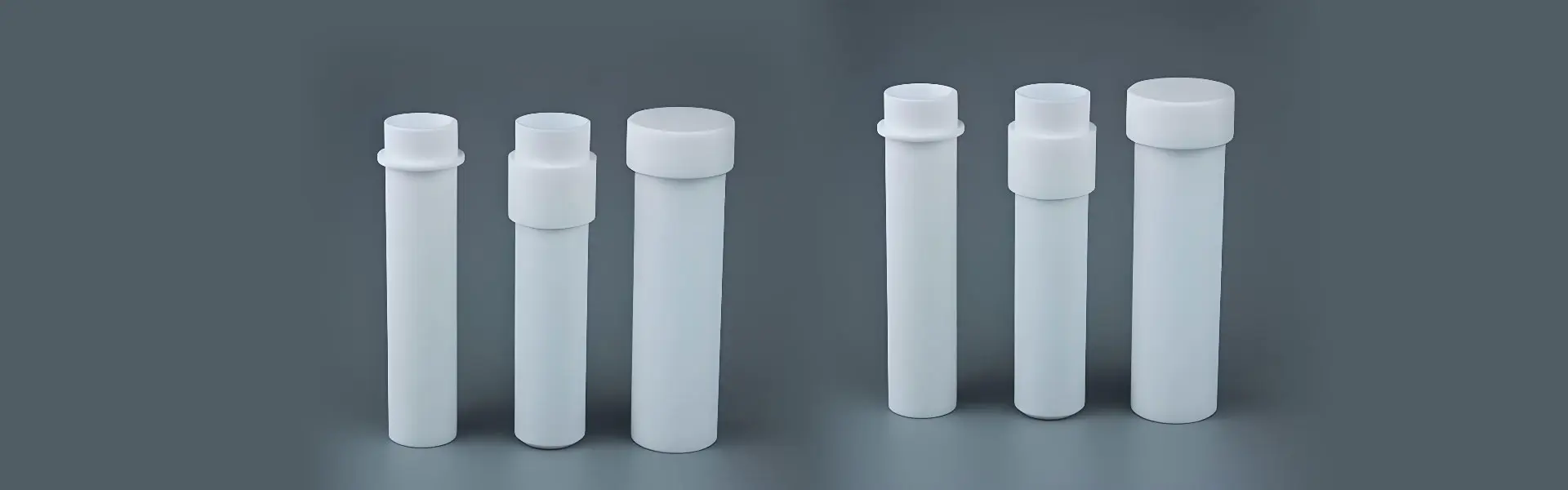
In the vast landscape of composite and reinforcement materials, few are as versatile and fundamental as glass fiber. Known for its exceptional strength, durability, and insulating properties, glass fiber has become an indispensable component across countless industries, from aerospace and automotive to construction and telecommunications. At Kaxite, we have dedicated years to mastering the science and application of high-performance glass fiber, providing our clients with solutions that push the boundaries of what's possible. This guide delves deep into the world of glass fiber, exploring its composition, types, key parameters, and answering the most common questions professionals like you have.
Glass fiber, also known as fiberglass, is a material consisting of numerous extremely fine fibers of glass. It is produced by drawing molten glass into filaments with diameters typically ranging from a few micrometers to tens of micrometers. These fibers can be used in their continuous filament form, woven into fabrics, or chopped and used as a reinforcement in composite materials. The resulting products offer a remarkable combination of properties: they are stronger than many metals by weight, non-conductive, non-magnetic, and resistant to heat, chemicals, and corrosion. The core principle behind its strength lies in the reduction of glass to a fibrous form, which minimizes the presence of surface flaws that typically cause bulk glass to be brittle.
Not all glass fibers are created equal. Different compositions yield vastly different performance characteristics. Kaxite specializes in manufacturing several key types, each engineered for specific applications.
To specify the right glass fiber for your project, understanding the key technical parameters is essential. Below are detailed tables outlining the critical properties and standard product forms available from Kaxite.
| Property | Kaxite E-Glass | Kaxite S-Glass | Kaxite C-Glass | Test Standard |
|---|---|---|---|---|
| Tensile Strength | 3,450 MPa | 4,580 MPa | 3,240 MPa | ASTM D2343 |
| Tensile Modulus | 72.5 GPa | 86.9 GPa | 68.9 GPa | ASTM D2343 |
| Density | 2.58 g/cm³ | 2.49 g/cm³ | 2.52 g/cm³ | ASTM D792 |
| Elongation at Break | 4.8% | 5.4% | 4.5% | ASTM D2343 |
| Dielectric Constant (1 MHz) | 6.6 | 5.2 | 6.9 | ASTM D150 |
| Softening Point | 846°C | 975°C | 770°C | ASTM C338 |
| Product Form | Description | Typical Filament Diameter | Common Tex/Yield | Primary Applications |
|---|---|---|---|---|
| Continuous Roving | Parallel strands of continuous filaments wound into a cylindrical package. | 13-24 μm | 1200, 2400, 4800 Tex | Pultrusion, filament winding, spray-up, weaving. |
| Chopped Strands | Continuous strands chopped to specific lengths (3mm, 4.5mm, 6mm, 12mm, 25mm). | 10-17 μm | N/A | Reinforcement for thermoplastics, BMC/SMC, gypsum, cement. |
| Woven Roving | Heavy, drapeable fabric made from interwoven continuous rovings. | As per roving | 300-1200 g/m² | Hand lay-up, boat hulls, large structural parts. |
| Glass Fiber Fabrics | Precise weaves (plain, twill, satin) of fine yarns. Available with various surface treatments. | 5-9 μm (yarn) | 80-600 g/m² | Aerospace composites, PCB laminates, high-performance sporting goods. |
| Glass Fiber Mat | Non-woven, randomly oriented chopped strands or continuous filaments bonded with a chemical binder. | 10-17 μm | 225-900 g/m² | Hand lay-up, closed molding, marine applications. |
Here are detailed answers to some of the most frequently asked questions about glass fiber, based on our extensive experience at Kaxite.
What is the main difference between E-Glass and S-Glass?
The primary difference lies in their mechanical performance and cost. S-Glass is a magnesium aluminosilicate composition that provides significantly higher tensile strength (up to 30% more), higher modulus (stiffness), and better temperature resistance compared to the calcium aluminosilicate E-Glass. This makes S-Glass ideal for ultimate performance applications like aircraft components and ballistic armor. E-Glass, while strong, is the cost-effective workhorse for the vast majority of general industrial and consumer applications where the highest possible strength-to-weight ratio is not the sole critical factor.
How does glass fiber compare to carbon fiber in composites?
Glass fiber and carbon fiber are complementary reinforcements with distinct profiles. Glass fiber offers excellent tensile strength, impact resistance, and elongation (it is less brittle), along with superior electrical insulation and lower cost. Carbon fiber provides a much higher modulus (it is stiffer) and tensile strength by weight, excellent fatigue resistance, and a lower coefficient of thermal expansion, but it is conductive, more brittle on impact, and significantly more expensive. The choice depends entirely on the application's requirements for stiffness, weight, budget, and electrical properties. Kaxite provides expert guidance on material selection for your specific needs.
What are the standard surface treatments (sizings) and why are they important?
Sizings are critical chemical coatings applied during the fiber manufacturing process. They perform several key functions: they protect the filaments from abrasion during processing, bind the strands together to form a manageable roving or yarn, and most importantly, they provide compatibility and adhesion between the inorganic glass surface and the organic polymer resin matrix (e.g., polyester, epoxy, vinyl ester). A mismatch in sizing can lead to poor interfacial bonding, resulting in weak, brittle composites. Kaxite offers a wide range of tailored sizings optimized for different resin systems and manufacturing processes to ensure optimal composite performance.
Is glass fiber safe to handle? What are the key safety considerations?
Proper handling is essential. The fine fibers can cause mechanical irritation to the skin, eyes, and respiratory tract. It is not classified as a carcinogen like some older synthetic fibers, but prudent safety measures must be followed. Always wear appropriate Personal Protective Equipment (PPE): nitrile or leather gloves, safety glasses with side shields, and a NIOSH-approved dust mask (N95 or better) when cutting, sanding, or generating dust. Work in well-ventilated areas. While the cured resin in a composite encapsulates the fibers, post-processing operations like grinding require controlled environments and proper respiratory protection. Kaxite provides detailed Material Safety Data Sheets (MSDS/SDS) for all our products.
How does temperature affect glass fiber performance?
Glass fiber itself has excellent thermal resistance. The softening point for E-Glass is around 846°C, and it retains a significant portion of its room-temperature strength up to about 600°C. However, its performance in a composite is limited by the polymer matrix. Standard polyester resins begin to degrade around 80-120°C, epoxies around 120-180°C, and high-temperature phenolics or polyimides can push this higher. For sustained high-temperature applications, the choice of matrix resin is the limiting factor. Kaxite's S-Glass and specialized high-temperature sizings are designed to perform optimally in these demanding thermal environments.
What factors determine the choice between woven fabric and chopped strand mat?
The choice is driven by the manufacturing process, desired mechanical properties, part geometry, and cost. Woven fabrics (like plain weave, twill) provide directional strength, excellent drapeability over complex curves, and a smooth surface finish. They are used in hand lay-up, vacuum bagging, and prepreg for high-performance, structural parts. Chopped Strand Mat (CSM) provides quasi-isotropic (uniform in-plane) strength, is easier to wet-out with resin, and is significantly less expensive. It is ideal for simpler shapes, marine hulls, and applications where multi-directional strength is needed but maximum specific strength is not critical. Kaxite offers comprehensive product ranges in both categories.
Can glass fiber be recycled?
Recycling composite materials containing glass fiber is an area of active development. The thermoset polymers commonly used (polyester, epoxy) are cross-linked and cannot be simply re-melted. However, several methods exist: mechanical recycling (grinding into filler/powder for use in new composites or construction materials), thermal recycling (using heat to decompose the resin and recover fibers, though with some property loss), and increasingly, chemical recycling (dissolving the resin to recover clean fibers). While virgin glass fiber offers the best performance, Kaxite is committed to supporting circular economy initiatives and can advise on sustainable material life-cycle strategies for your projects.


0086-574-87527773
No. 432 Zhenhai Middle Road, Luotuo Street, Zhenhai District, Ningbo City, Zhejiang China