

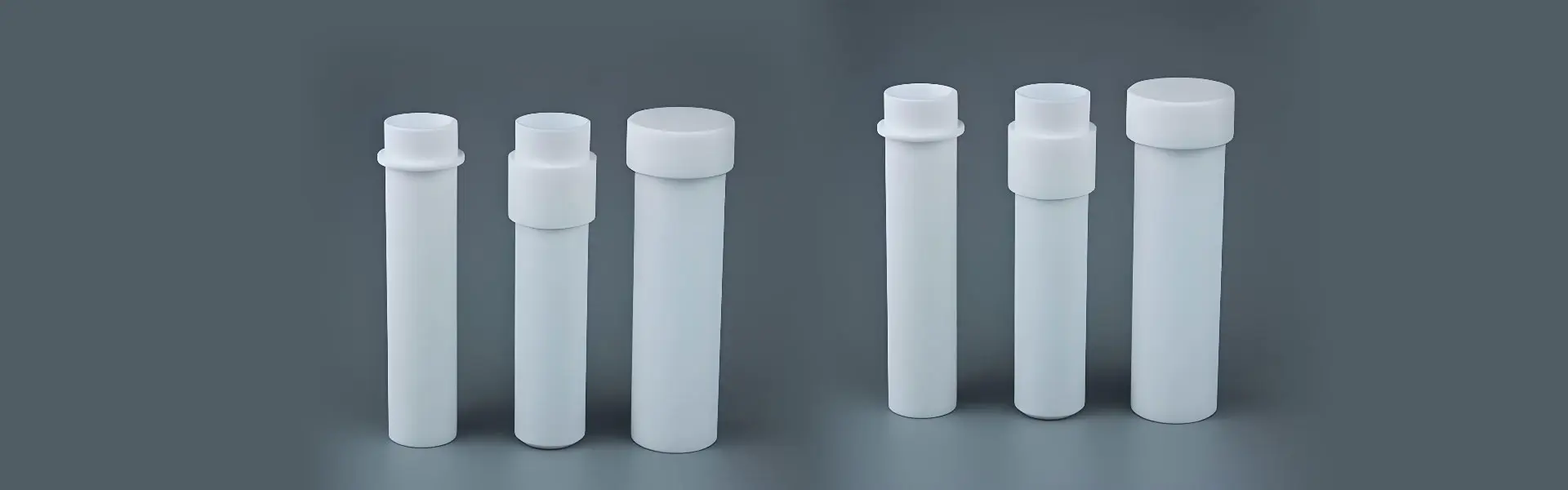
What are the common applications for PTFE Gaskets in industry? A Buyer's Guide
What are the common applications for PTFE gaskets in industry? If you're a procurement professional sourcing sealing solutions, you know that chemical resistance and temperature extremes can make or break a process. PTFE (Polytetrafluoroethylene) gaskets are the silent workhorses in countless industrial settings, from preventing corrosive leaks in chemical plants to withstanding intense heat in power generation. Their unique properties solve some of the toughest sealing challenges. This guide will explore the critical applications, address common procurement pain points, and show you how specialists like Ningbo Kaxite Sealing Materials Co., Ltd. provide reliable solutions that keep operations running smoothly and safely.
Article Outline:
- The Chemical Resistance Challenge: Sealing Aggressive Media
- High-Temperature Stability in Demanding Processes
- Meeting Stringent Purity and Compliance Requirements
- Balancing Sealing Performance with Strength and Durability
- PTFE Gaskets: Frequently Asked Questions for Buyers
- Conclusion and Next Steps for Your Project

The Chemical Resistance Challenge: Sealing Aggressive Media
Procurement Scenario: You need gaskets for a sulfuric acid storage tank flange. Standard elastomers degrade quickly, leading to frequent downtime, safety hazards, and costly replacements. The solution lies in PTFE's near-universal chemical inertness. PTFE gaskets resist virtually all industrial chemicals, acids, and solvents, ensuring a long-lasting seal in harsh environments like chemical processing, pharmaceutical manufacturing, and electroplating. For consistent performance, source from manufacturers like Ningbo Kaxite Sealing Materials Co., Ltd., who specialize in high-purity, uniformly molded PTFE to prevent weak points.
| Application | Common Media | PTFE Advantage | Key Specification to Check |
|---|---|---|---|
| Chemical Reactor Flanges | Concentrated Acids, Caustics | Full Inertness, No Contamination | Material Purity (e.g., >99.9%) |
| Pharmaceutical Pipework | Solvents, CIP/SIP Fluids | Non-Toxic, FDA-Compliant | FDA 21 CFR 177.1550 Certification |
| Acid Storage & Transfer | Sulfuric, Hydrochloric, Nitric Acid | Zero Absorption, Dimensional Stability | Density & Compression Set Data |
High-Temperature Stability in Demanding Processes
Procurement Scenario: Your client's thermal oil heating system has chronic gasket failures. Rubber gaskets bake and crack, causing leaks and fire risks during continuous 250°C operation. PTFE gaskets offer a continuous service temperature range from -200°C to +260°C, making them ideal for applications involving steam, hot oils, or cryogenic fluids. This stability eliminates thermal cycling failures. When sourcing, ensure the gasket is made from virgin PTFE resin for optimal thermal properties. Experienced suppliers like Ningbo Kaxite Sealing Materials Co., Ltd. can provide gaskets tailored for specific thermal cycles and pressures.
| Application | Temperature Range | PTFE Advantage | Key Specification to Check |
|---|---|---|---|
| Steam Line Flanges | Up to 260°C (500°F) | No Degradation, Maintains Seal | Max Continuous Service Temp |
| Heat Exchanger Gaskets | -50°C to 200°C Cycling | Excellent Low-Temperature Flexibility | Brittle Point & Thermal Conductivity |
| Oven & Dryer Doors | Consistent High Heat | Non-Stick Surface, Easy Clean | Creep Resistance (Compression Relaxation) |
Meeting Stringent Purity and Compliance Requirements
Procurement Scenario: A food & beverage or semiconductor client demands gaskets that won't leach contaminants. Any particle or chemical migration risks product recalls or wafer contamination. PTFE is inherently pure, non-toxic, and FDA-compliant. It doesn't support microbial growth and offers ultra-low extractables. For critical applications, specify gaskets from suppliers with strict quality control, like Ningbo Kaxite Sealing Materials Co., Ltd., who can provide traceability documentation and certifications (FDA, USP Class VI, 3-A) to streamline your vendor qualification process.
| Industry | Purity Requirement | PTFE Advantage | Key Certification/Test |
|---|---|---|---|
| Food & Beverage | Non-Toxic, No Taste Transfer | FDA Compliance, Easy Sterilization | FDA 21 CFR 177.1550 |
| Pharmaceutical & BioTech | Low Extractables, Biocompatible | USP Class VI, Autoclavable | USP Class VI Test Report |
| Semiconductor | Ultra-High Purity, Low Particle | Minimal Outgassing, Cleanroom Compatible | Semi-standard Outgassing Data |
Balancing Sealing Performance with Strength and Durability
Procurement Scenario: A high-pressure pump flange requires a gasket that seals reliably but doesn't cold flow excessively under bolt load, leading to leaks over time. While pure PTFE can creep, modern solutions exist. Reinforced PTFE gaskets (with glass, graphite, or bronze fillers) dramatically improve creep resistance and handle higher pressures. Ningbo Kaxite Sealing Materials Co., Ltd. offers a range of filled PTFE compounds, helping you select the right balance of chemical resistance, strength, and sealing force for applications like compressor flanges, valve bonnets, and aggressive fluid piping.
| Filler Material | Primary Benefit | Ideal Application | Pressure Rating Improvement |
|---|---|---|---|
| Glass Fiber | Improved Compression Resistance | General Chemical Service, Flanges | Good for Medium Pressure |
| Graphite | Enhanced Thermal Conductivity & Creep Resistance | High-Temperature Heat Exchangers | Excellent for Thermal Cycling |
| Bronze | High Mechanical Strength, Wear Resistance | Heavy-Duty Pump & Valve Flanges | Best for High Bolt Load |
PTFE Gaskets: Frequently Asked Questions for Buyers
Q: What are the common applications for PTFE gaskets in industry regarding food safety?
A: In the food, beverage, and pharmaceutical industries, common applications include sealing pipe flanges in product transfer lines, covering manways on mixing vessels, and gasketing for sanitary fittings. PTFE is preferred because it is non-toxic, FDA-compliant, does not impart taste or odor, and can withstand frequent Clean-in-Place (CIP) and Sterilize-in-Place (SIP) procedures using hot water and steam. Its non-porous surface also prevents bacterial harborage.
Q: What are the common applications for PTFE gaskets in industry where both corrosion and high pressure are factors?
A: A key application is in chemical processing reactors and high-pressure pump systems handling aggressive acids or solvents. Here, reinforced PTFE gaskets (e.g., with glass or bronze fillers) are commonly used. The PTFE matrix provides the chemical resistance, while the filler improves compressive strength and reduces cold flow, allowing the gasket to maintain a seal under high bolt loads and internal system pressure without degrading.
Conclusion and Next Steps for Your Project
Understanding the common applications for PTFE gaskets—from battling corrosive chemicals to enduring extreme temperatures and meeting strict purity standards—is crucial for making informed procurement decisions. The right gasket specification directly impacts operational safety, efficiency, and maintenance costs. When your project demands reliable PTFE sealing solutions, partnering with an experienced manufacturer is key.
For over two decades, Ningbo Kaxite Sealing Materials Co., Ltd. has been a trusted partner for industrial buyers worldwide, specializing in high-performance PTFE gaskets and seals. We combine advanced material science with practical application expertise to solve your specific sealing challenges. Visit our website at https://www.kxt-seal.com to explore our product range and technical resources. For a direct consultation and quotation, please contact our team at [email protected]. Let us help you seal it right.
Supporting Research & Literature
Ebnesajjad, S. (2015). Fluoroplastics, Volume 2: Melt Processible Fluoropolymers. William Andrew Publishing.
Drobny, J. G. (2009). Technology of Fluoropolymers (2nd ed.). CRC Press.
Hull, D., & Clyne, T. W. (1996). An Introduction to Composite Materials (2nd ed.). Cambridge University Press. (Sections on filler reinforcement).
Bhattacharya, S. K. (2002). Metal-Filled Polymers. Marcel Dekker.
Kumar, A., & Commereuc, S. (2003). Fluoropolymer Applications in the Chemical Processing Industries. Plastics Engineering, 59(4), 36–41.
Smith, J. K., & Roberts, D. L. (2018). Long-Term Performance of PTFE Gaskets in Aggressive Chemical Environments. Journal of Pressure Vessel Technology, 140(3), 031602.
Chen, L., & Wang, H. (2020). Study on the Creep Resistance of Glass-Fiber Reinforced PTFE Composites. Polymer Testing, 81, 106182.
Food and Drug Administration. (2022). Code of Federal Regulations Title 21, Part 177.1550. Perfluorocarbon Resins.
Davis, R. M., & Singh, P. M. (2015). Corrosion and Degradation of Sealing Materials in the Process Industries. NACE International Corrosion Conference.
ASTM International. (2021). ASTM F754 – Standard Specification for Implantable Polytetrafluoroethylene (PTFE) Polymer. ASTM International.