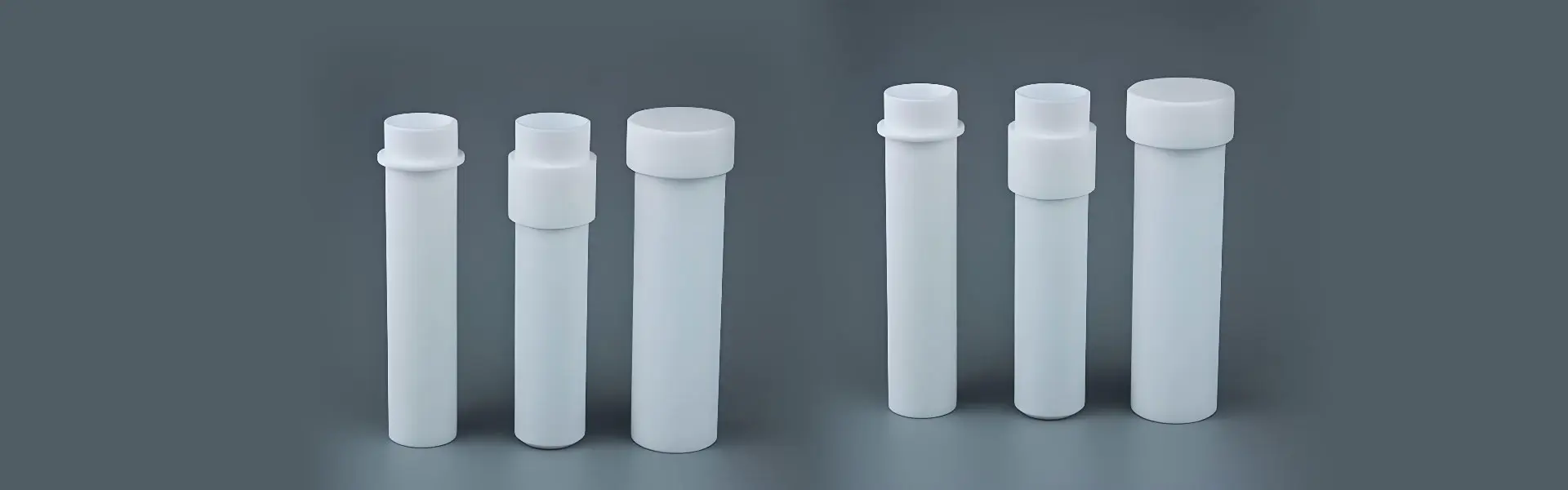
PTFE Parts are the cornerstone of modern industrial applications where extreme chemical resistance, high-temperature performance, and low friction are non-negotiable. As a seasoned expert with decades of experience in high-performance polymers, I understand that selecting the right component isn't just about the material—it's about precision engineering, reliable data, and a supplier who understands the stakes. At Kaxite, we specialize in manufacturing premium-grade PTFE (Polytetrafluoroethylene) components that meet the most demanding specifications across industries from aerospace and semiconductor to food processing and pharmaceuticals. This guide delves deep into the critical parameters, specifications, and considerations that define top-tier PTFE parts, empowering you to make an informed decision for your application.
### Understanding PTFE: The Material of Choice
PTFE, often recognized by the brand name Teflon®, is a synthetic fluoropolymer celebrated for its unique set of properties. Its virtually inert nature makes it resistant to nearly all industrial chemicals and solvents. It operates seamlessly across a broad temperature range, from -200°C to +260°C (-328°F to +500°F). Most notably, it possesses the lowest coefficient of friction of any solid material, which is why it's synonymous with non-stick and self-lubricating applications. However, not all PTFE parts are created equal. Variations in manufacturing processes, filler materials, and machining tolerances lead to significant differences in performance.
### Critical Product Parameters for PTFE Components
When specifying PTFE parts, engineers must evaluate several key parameters. Here is a detailed breakdown:
**1. Material Grades & Composition:**
PTFE can be supplied in various grades, each tailored for specific performance enhancements.
* **Virgin PTFE:** Pure, unfilled PTFE offering the best chemical resistance and electrical insulation properties.
* **Glass-Filled PTFE:** Incorporates glass fibers to improve compressive strength, wear resistance, and dimensional stability, while slightly reducing chemical resistance.
* **Carbon-Filled PTFE:** Adds carbon/graphite to enhance conductivity (both electrical and thermal), increase hardness, and further improve wear properties.
* **Bronze-Filled PTFE:** Bronze powder is added to dramatically increase thermal conductivity, compressive strength, and wear resistance, ideal for heavy-duty bearing applications.
* **Stainless Steel-Filled PTFE:** Provides excellent wear resistance and reduced deformation under load.
* **Modified PTFE:** Chemically altered to improve certain properties like creep resistance or permeability.
**2. Mechanical & Physical Properties:**
These properties determine how the part will behave under stress and in its operating environment.
| Property | Typical Range for Virgin PTFE | Impact on Application |
| :--- | :--- | :--- |
| **Tensile Strength** | 20-35 MPa (2900-5000 psi) | Indicates resistance to pulling forces; crucial for seals and gaskets under tension. |
| **Compressive Strength** | Low (exhibits cold flow) | Unfilled PTFE is prone to deformation under sustained load; fillers like glass or bronze mitigate this. |
| **Elongation at Break** | 300-500% | High elasticity allows parts to withstand deformation without fracturing. |
| **Coefficient of Friction** | 0.05 - 0.10 (dynamic) | Extremely low, providing excellent anti-stick and self-lubricating characteristics. |
| **Hardness (Shore D)** | 50-65 | Softer than many engineering plastics; fillers increase hardness. |
| **Continuous Service Temp**| -200°C to +260°C (-328°F to +500°F) | Unmatched thermal stability for extreme environments. |
| **Thermal Conductivity** | 0.25 W/m·K | Poor heat conductor; filled grades (bronze, carbon) improve this significantly. |
**3. Dimensional Specifications & Tolerances:**
Precision machining is where Kaxite excels. We adhere to international standards (ISO, ASTM) and can achieve tight tolerances for critical dimensions.
* **Standard Tolerances:** For general applications.
* **Precision Machining:** For components like semiconductor wafer carriers, seals in fluid systems, or intricate insulators where every micron counts.
* **Custom Shapes & Sizes:** From simple sheets, rods, and tubes to complex molded or machined geometries like bellows, piston rings, valve seats, and custom gaskets.
**4. Chemical Compatibility:**
One of PTFE's strongest suits is its near-universal chemical resistance. It is unaffected by:
* Strong acids (e.g., sulfuric, nitric, hydrochloric)
* Strong bases (e.g., sodium hydroxide)
* Solvents (e.g., acetone, toluene)
* Oxidizing agents
Exceptions include molten alkali metals and certain fluorine-based compounds at high temperature and pressure.
### Kaxite's Manufacturing Excellence for PTFE Parts
At Kaxite, our process ensures consistency, quality, and performance:
1. **Raw Material Sourcing:** We use only high-purity, globally sourced PTFE resins from reputable suppliers.
2. **Compression Molding & Sintering:** For shapes like sheets, rods, and tubes, we use controlled compression molding and precise sintering cycles to achieve optimal crystallinity and mechanical properties.
3. **CNC Machining:** Our state-of-the-art CNC centers allow for high-precision, repeatable machining of complex parts from molded blanks, ensuring adherence to the strictest blueprints.
4. **Quality Control:** Every batch undergoes rigorous testing, including dimensional checks, density verification, and, when specified, testing for specific mechanical or electrical properties.
5. **Post-Processing:** We offer secondary operations like skiving (for tape), surface etching (for improved bonding), and labeling/packaging per customer requirements.
### Frequently Asked Questions (FAQ) About PTFE Parts
**What are the main advantages of using PTFE parts over other plastics like PVC or Nylon?**
PTFE offers superior performance in harsh environments. Compared to PVC or Nylon, PTFE has a much higher maximum continuous use temperature (up to 260°C), is completely chemically inert, has a lower coefficient of friction, and will not absorb moisture. This makes it ideal for critical applications where failure is not an option.
**How do I choose between virgin PTFE and a filled PTFE grade?**
The choice depends on your application's primary challenge. Use virgin PTFE for maximum chemical purity, outstanding electrical insulation, or FDA-compliant food contact. Choose a filled grade (like glass, carbon, or bronze) when you need enhanced mechanical properties: improved wear resistance, reduced creep (cold flow), higher stiffness, or better thermal conductivity for bearing or seal applications under load.
**Can PTFE parts be used for FDA or USP Class VI applications in food and pharmaceutical industries?**
Yes, specific grades of virgin PTFE are compliant with FDA regulations (21 CFR 177.1550) for repeated food contact and can meet USP Class VI standards for biocompatibility. It is crucial to specify this requirement to your supplier. At Kaxite, we provide certified materials and documentation for such regulated industries.
**What is "cold flow" or "creep" in PTFE, and how is it managed?**
Cold flow is the tendency of unfilled PTFE to deform slowly under a continuous mechanical load, even at room temperature. It is a key design consideration. This characteristic is managed by using filled PTFE compounds (which dramatically reduce creep), designing parts with adequate support, limiting stress points, and ensuring the operating load and temperature are within specified limits.
**Are there temperature limits for PTFE parts?**
PTFE has an excellent operating range. Its mechanical properties remain stable from cryogenic temperatures as low as -200°C (-328°F) up to +260°C (+500°F). Short-term exposures to even higher temperatures may be possible, but above 260°C, the material begins to degrade, releasing fumes. Always consult the specific grade's datasheet.
**How do I join or bond PTFE parts? PTFE is known for being non-stick.**
Bonding PTFE is challenging due to its non-reactive surface. Standard adhesives do not work. Effective methods include using specialized PTFE adhesives after surface preparation (like sodium etching or plasma treatment), mechanical fastening, or thermal welding for specific forms. Kaxite can provide pre-treated components or advise on the best assembly method for your design.
**What industries commonly use Kaxite PTFE parts?**
Our components are critical in numerous sectors: Semiconductor Manufacturing (for ultra-pure, contaminant-free wafer handling), Chemical Processing (for seals, gaskets, and liners in aggressive media), Aerospace & Defense (for wire insulation, seals, and bearings in extreme conditions), Automotive (for fuel system and transmission seals), Pharmaceutical (for sanitary seals and components), and Food & Beverage (for non-stick surfaces and seals).
**Can you manufacture custom PTFE parts from a drawing or sample?**
Absolutely. Custom manufacturing is a core service at Kaxite. We excel at producing parts from detailed CAD drawings, blueprints, or physical samples. Our engineering team can also provide design for manufacturability (DFM) feedback to optimize your part for performance and cost-effectiveness in PTFE.
**How does the pricing for PTFE parts compare to metal alternatives?**
While the raw material cost for PTFE can be higher than some metals, the total cost of ownership is often lower. PTFE parts reduce maintenance, eliminate the need for external lubrication, prevent galvanic corrosion, and have longer service lives in corrosive environments. Their lightweight nature can also contribute to energy savings in dynamic applications.
**What certifications and quality standards does Kaxite adhere to?**
Kaxite operates under a stringent quality management system. We can provide material certifications (C of C), test reports, and comply with relevant industry standards. Our processes are designed to ensure traceability and consistency for every order, from prototype to high-volume production runs.