


QR Code

About Us
Products
Contact Us

Phone

Fax
0086-574-87527773

Email

Address
No. 432 Zhenhai Middle Road, Luotuo Street, Zhenhai District, Ningbo City, Zhejiang China

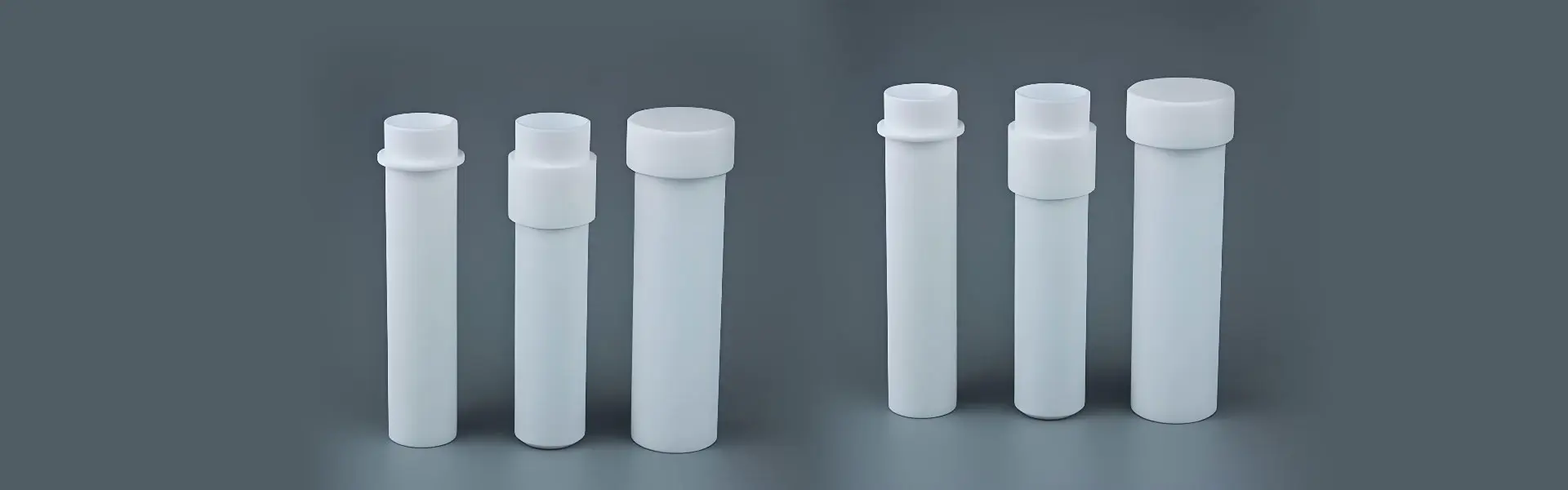
What is a Die-formed Graphite Ring and how is it manufactured? Imagine a critical pump in a chemical plant failing prematurely, causing costly downtime and potential safety hazards. Often, the culprit is a standard sealing ring unable to withstand extreme temperatures and corrosive media. This is where the precision-engineered die-formed graphite ring comes into play. Unlike simple stamped parts, a die-formed graphite ring is manufactured through a high-pressure molding process using pure, flexible graphite (or reinforced grades). This advanced manufacturing technique compresses the graphite material within precision dies, creating a ring with exceptional dimensional accuracy, uniform density, and superior sealing performance. These rings are the unsung heroes in demanding applications across industries like chemical processing, power generation, and oil & gas. For global procurement specialists seeking reliable, high-performance sealing solutions, understanding this component is key to preventing operational failures and specifying the right part. As a leader in advanced sealing technology, Ningbo Kaxite Sealing Materials Co., Ltd. specializes in manufacturing these critical components, offering engineered solutions that directly address such challenging operational scenarios.
Article Outline:
Procurement professionals in heavy industry constantly face the challenge of sourcing seals that perform under fire—literally. A common pain point is seal failure in flanges, valves, or heat exchangers operating above 450°C (842°F), where traditional elastomers burn away and basic compressed packing fails. This leads to dangerous leaks, unplanned shutdowns, and significant financial loss. The solution lies in the material and the method: die-formed graphite rings.
The manufacturing process begins with high-purity, flexible graphite foil. This material is selected for its innate thermal stability and chemical inertness. At Ningbo Kaxite Sealing Materials Co., Ltd., this foil is precisely cut and layered, then subjected to immense pressure within a custom-designed die. This die-forming process is what sets these rings apart. It doesn't just cut a shape; it compresses the graphite to a specific, uniform density throughout the entire cross-section. This eliminates weak points and creates a ring with consistent mechanical properties, ready to handle thermal cycling and high compression loads without extruding or crumbling.

The result is a seal that solves the high-temperature leakage problem reliably. For specification, here are key parameters that define performance:
| Parameter | Typical Range / Value | Importance for Procurement |
|---|---|---|
| Temperature Range | -200°C to 3000°C (inert atmos.) | Defines application suitability |
| Density | 1.5 - 1.9 g/cm³ | Higher density often indicates better sealing force & creep resistance |
| Flexible Graphite Purity | >99% Carbon | Ensures chemical compatibility and thermal conductivity |
| Standard Sizes (ID/OD) | Custom & ASME B16.20/B16.21 | Ensures fit for standard flanges and custom equipment |
Another frequent sourcing challenge is variability in seal quality, leading to inconsistent performance across batches. For critical applications, you cannot afford a seal that behaves differently from one order to the next. The die-forming manufacturing process is inherently designed to deliver repeatable, high-quality results. Understanding these steps helps procurement experts vet suppliers and ensure part consistency.
The process at a quality-focused manufacturer like Ningbo Kaxite Sealing Materials Co., Ltd. involves several controlled stages. First, raw graphite material is rigorously tested for purity and expansion properties. It is then calendered into foil of precise thickness. Multiple layers of this foil are stacked to achieve the required cross-section and are placed into a hardened steel die. Under controlled pressure—often thousands of pounds per square inch—the graphite is compacted. This pressure is held to allow the graphite particles to bond, forming a cohesive, semi-rigid ring. Finally, the ring is precisely trimmed and may undergo secondary processes like annealing for stress relief or the application of anti-oxidant coatings for extended service in oxidizing atmospheres.
This controlled, pressure-based method is the key to solving the consistency problem. It allows for exact control over the final product's dimensions, density, and grain orientation. When evaluating suppliers, asking about their die maintenance schedules, pressure controls, and in-process quality checks is crucial. Here are the core manufacturing controls that impact the final product's reliability:
| Manufacturing Control Point | Impact on Final Product | Procurement Consideration |
|---|---|---|
| Die Precision & Maintenance | Determines dimensional accuracy and surface finish. | Ask about tooling tolerances and refurbishment cycles. |
| Compression Pressure Control | Directly controls density and structural integrity. | Suppliers should monitor and log pressure parameters for each batch. |
| Raw Material Lot Tracking | Ensures traceability and consistent starting material. | A sign of a mature quality management system (e.g., ISO 9001). |
| Post-Forming Heat Treatment | Can enhance thermal stability and reduce outgassing. | Specify if needed for ultra-high vacuum or extreme thermal cycling. |
Q: What is the main advantage of a die-formed graphite ring over a spiral-wound gasket with graphite filler?
A: While both are excellent for high temperatures, the key advantage is uniformity and extrusion resistance. A die-formed ring is a homogeneous, solid graphite structure with consistent density throughout. This makes it less prone to extrusion under high flange loads and thermal cycling compared to the layered, more flexible structure of a spiral-wound gasket. It is often the preferred choice for static seals in severe service where maximum stability is required.
Q: How is the manufacturing process for a die-formed ring different from machining a ring from a solid graphite block?
A: Machining (or lathe-cutting) a ring from a molded block can create a product with anisotropic properties—its strength and sealing characteristics may vary with the grain direction. The die-forming process compresses the material uniformly in the direction of the sealing force, creating a part with more isotropic, predictable behavior. Die-forming also minimizes material waste compared to machining and allows for more complex cross-sectional shapes (like raised-face profiles) to be formed directly, reducing cost and improving structural integrity.
Making the final sourcing decision often comes down to comparing options. A common dilemma is choosing between a standard die-formed ring and one with enhancements like metal inserts or coatings. Each variant solves a specific set of problems. For instance, a basic die-formed ring is perfect for most high-temperature, non-oxidizing environments. However, in applications with high internal pressure or potential for significant flange movement, a graphite ring with a solid metal core provides much higher mechanical strength and blow-out resistance. Conversely, for aggressive oxidizing atmospheres (like certain air or steam services), an anti-oxidant impregnated die-formed ring significantly extends service life.
Ningbo Kaxite Sealing Materials Co., Ltd. offers this full spectrum of solutions, allowing procurement teams to match the exact seal to the application's pressure, temperature, and media. This targeted approach prevents over-engineering (and overspending) or the greater risk of under-specifying. Use the comparison below to guide your next RFQ:
| Ring Type | Best For Solving... | Key Limitation | Consider for... |
|---|---|---|---|
| Standard Die-Formed | High-temp, corrosive media, general severe service. | Limited mechanical strength in pure bending. | Heat exchanger gaskets, valve stem seals. |
| Metal Insert Reinforced | High internal pressure, potential for flange separation. | Higher cost; may have different thermal expansion than flange. | High-pressure turbine casings, reactor flanges. |
| Anti-Oxidant Treated | Oxidizing atmospheres up to ~550°C in air. | Treatment can add cost; check chemical compatibility. | Steam system flanges, air pre-heater seals. |
Selecting the optimal sealing component requires expertise and a reliable partner. The die-forming process is a cornerstone of modern high-performance sealing, delivering the consistency and performance that plant reliability depends on.
For over two decades, Ningbo Kaxite Sealing Materials Co., Ltd. has been at the forefront of sealing technology, specializing in engineered solutions like precision die-formed graphite rings. We understand the critical challenges faced by procurement teams in demanding industries and provide not just products, but reliable performance that minimizes downtime and operational risk. Visit our website at https://www.kxt-seal.com to explore our full range of sealing solutions or contact our technical sales team directly at [email protected] for personalized support on your next project.
Buchheim, G. M., 1998, "The Use of Flexible Graphite for High Temperature Gasketing," Sealing Technology, Issue 56.
Chen, X., & Wang, Y., 2005, "Thermal and Mechanical Properties of Compressed Flexible Graphite Sheets," Carbon, Vol. 43, Issue 14.
Ferguson, R. L., 2002, "Sealing with Flexible Graphite: A Guide for Engineers," ASME Press, 1st Edition.
Ishikawa, T., & Nagaoki, Y., 1987, "Recent Development of Flexible Graphite and Its Applications," Tanso, Vol. 1987, Issue 130.
Kang, S. J., et al., 2010, "Effects of Density and Particle Size on the Sealing Performance of Flexible Graphite Sheets," Journal of Materials Science, Vol. 45, Issue 5.
Li, H., et al., 2015, "A Study on the Oxidation Resistance of Impregnated Flexible Graphite for Sealing Applications," Materials & Design, Vol. 86.
Müller, H. K., & Nau, B. S., 1998, "Fluid Sealing Technology: Principles and Applications," Marcel Dekker, Inc., Chapter 7.
Sawa, T., et al., 2001, "Stress Analysis and Scaling Performance of Compressed Flexible Graphite Sheet Gaskets," Journal of Pressure Vessel Technology, Vol. 123, Issue 3.
Zhang, L., et al., 2018, "Creep Relaxation Behavior of Die-Formed Flexible Graphite Rings under High Temperature," Engineering Failure Analysis, Vol. 92.
Zhao, Y., & Chen, G., 2007, "The Manufacturing Process and Sealing Mechanism of Flexible Graphite Gaskets," Lubrication Engineering, Vol. 32, Issue 4.
0086-574-87527773
No. 432 Zhenhai Middle Road, Luotuo Street, Zhenhai District, Ningbo City, Zhejiang China