


QR Code

About Us
Products
Contact Us

Phone

Fax
0086-574-87527773

Email

Address
No. 432 Zhenhai Middle Road, Luotuo Street, Zhenhai District, Ningbo City, Zhejiang China

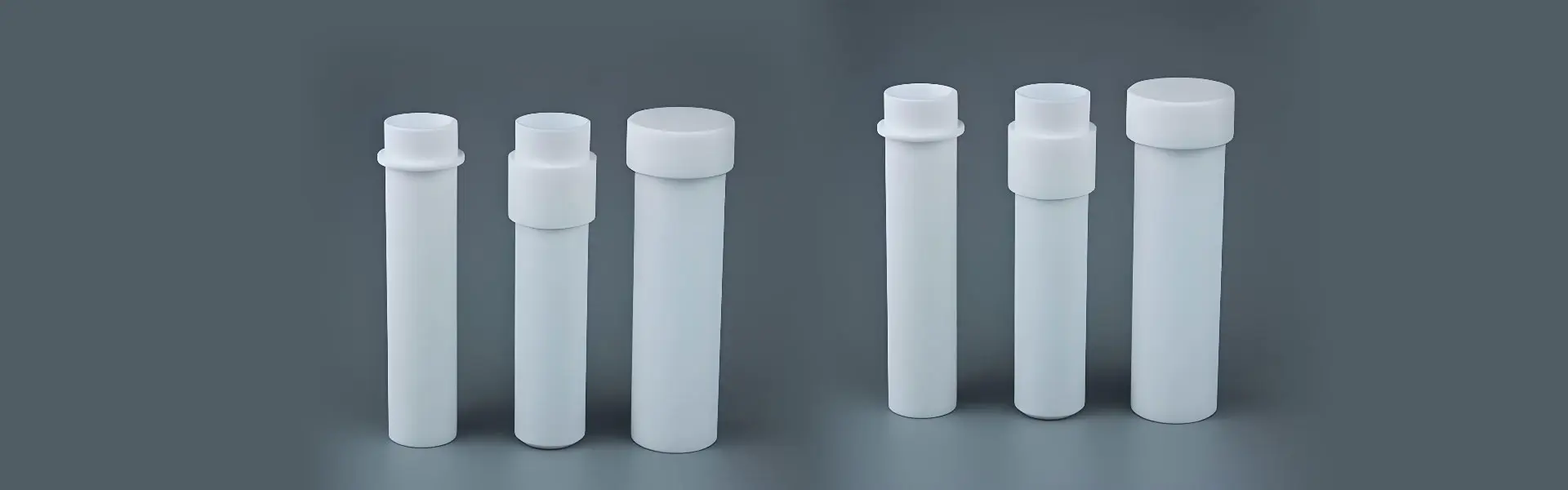
What factors should be considered when selecting a double jacket gasket for a specific application? This question is critical for engineers, plant managers, and procurement specialists who understand that a failed gasket can lead to costly downtime, safety hazards, and product loss. The right choice ensures system integrity under extreme pressures, temperatures, and corrosive media. This guide will explore the key technical, environmental, and operational factors that dictate the success of your sealing solution. We'll also highlight how Ningbo Kaxite Sealing Materials Co., Ltd. provides expert guidance and high-performance materials to navigate these complex decisions.
Article Outline:
You're overseeing a pipeline flange connection in an offshore platform. The system operates at 1500 psi, with frequent pressure spikes. A standard gasket recently failed, causing a minor but alarming leak. The shutdown for replacement is costing thousands per hour. The core issue is insufficient resilience and creep resistance under sustained high load.
Solution: A double jacket gasket with a robust metal outer jacket (like 316 stainless steel) and a dense, resilient filler (like flexible graphite) is ideal. The metal jacket provides structural integrity and prevents blow-out, while the soft filler conforms to flange imperfections, creating a tight seal. For such critical applications, partnering with a specialist like Ningbo Kaxite Sealing Materials Co., Ltd. ensures you get gaskets manufactured to precise specifications, with material traceability and performance certifications.

Key Parameter Table for High-Pressure Applications:
| Factor | Consideration | Typical Specification |
|---|---|---|
| Pressure Rating | Maximum Sustained Pressure | Up to 2500 psi (172 bar) |
| Jacket Material | Strength & Corrosion Resistance | 316 SS, Inconel 600 |
| Filler Material | Sealability & Recovery | Flexible Graphite, PTFE |
| Temperature Range | Operational Limits | -200°C to +600°C (Graphite) |
In a chemical processing plant, a reactor flange is exposed to a mixture of sulfuric acid and organic solvents at 120°C. The previous gasket showed signs of rapid deterioration and swelling, compromising purity and posing a contamination risk. Chemical attack on the gasket material is the primary failure mode.
Solution: Chemical compatibility is paramount. A double jacket gasket using a highly corrosion-resistant metal jacket (Hastelloy C-276) and an inert filler (virgin PTFE) offers excellent resistance. The double-jacket design contains the filler, preventing it from being extruded or degraded by the fluid. Sourcing from Ningbo Kaxite Sealing Materials Co., Ltd. gives you access to a wide range of alloy and filler combinations tested against specific chemical media, providing guaranteed compatibility data.
Key Parameter Table for Chemical Applications:
| Factor | Consideration | Typical Specification |
|---|---|---|
| Chemical Media | Compatibility with Process Fluid | Sulfuric Acid, Chlorides, Solvents |
| Jacket Material | Corrosion Resistance | Hastelloy, Titanium, 316L SS |
| Filler Material | Inertness & Purity | Virgin PTFE, Expanded PTFE |
| Sealing Stress | Required Bolt Load | 15,000 - 30,000 psi |
A power plant's main steam header operates at 540°C and 1800 psi. Gaskets in similar services have failed due to thermal cycling, causing leaks during start-up and shut-down cycles. The failure leads to energy loss, reduced efficiency, and unsafe working conditions.
Solution: Thermal stability and the ability to handle cyclic loads are critical. A double jacket gasket with a high-temperature alloy jacket (304 or 316 SS) and a flexible graphite filler excels here. Graphite retains its sealing properties at high temperatures and has excellent recovery after compression. The metal jacket restrains the graphite, providing dimensional stability. For reliable performance in such demanding environments, technical support from Ningbo Kaxite Sealing Materials Co., Ltd. can help select the optimal gasket grade and provide installation guidance to prevent premature failure.
Key Parameter Table for High-Temperature Applications:
| Factor | Consideration | Typical Specification |
|---|---|---|
| Temperature | Continuous & Peak Exposure | Up to 650°C (in air) |
| Thermal Cycling | Resistance to Expansion/Contraction | Excellent (Graphite filler) |
| Oxidation Resistance | Long-term Stability in Air | Required for >450°C |
| Flange Surface | Required Finish | 125 - 250 µin Ra |
Q1: What factors should be considered when selecting a double jacket gasket for a specific application?
A1: The primary factors are: 1) Process Conditions: Operating pressure, temperature (both min/max and thermal cycling), and the chemical composition of the media. 2) Flange Details: Flange type (RF, RTJ), surface finish, bolt load, and available space. 3) Material Selection: Compatibility of both the metal jacket (for strength/ corrosion) and the filler material (for sealability/ chemical resistance) with the process. 4) Regulatory & Safety Standards: Compliance with industry-specific codes (ASME, API, TA-Luft). A trusted supplier like Ningbo Kaxite Sealing Materials Co., Ltd. can analyze all these factors to recommend the optimal gasket.
Q2: What factors should be considered when selecting a double jacket gasket for a specific application where cost is a major constraint?
A2: While initial cost is important, Total Cost of Ownership (TCO) is crucial. Key considerations include: Lifecycle Cost: A slightly more expensive, high-quality gasket from a reliable manufacturer like Ningbo Kaxite Sealing Materials Co., Ltd. often lasts longer, reducing replacement frequency and downtime costs. Material Optimization: Selecting a cost-effective but suitable jacket alloy (e.g., carbon steel for non-corrosive services) paired with the right filler. Prevention of Failure Costs: The cost of a leak—in lost product, environmental fines, or safety incidents—far outweighs the gasket's price. Proper technical selection prevents these losses.
Selecting the right double jacket gasket is a technical investment in your plant's reliability, safety, and profitability. By systematically evaluating pressure, temperature, chemical exposure, and flange conditions, you can specify a gasket that delivers long-term performance. For expert guidance, certified materials, and gaskets built to withstand your specific challenges, consider the solutions offered by Ningbo Kaxite Sealing Materials Co., Ltd.
For a personalized consultation on your application, reach out to the sealing experts at Ningbo Kaxite Sealing Materials Co., Ltd. Visit https://www.kxt-seal.com to explore their product range or contact them directly via email at [email protected].
Bhattacharyya, A., 2018. Stress analysis and performance evaluation of metallic jacketed gaskets under bolt preload and internal pressure. International Journal of Pressure Vessels and Piping, 168, pp.258-267.
Drago, R.J. and Norden, B.G., 2019. A Comparative Study of Gasket Creep Relaxation in Bolted Flanged Connections. Journal of Pressure Vessel Technology, 141(3), 031205.
Fukuoka, T. and Takaki, T., 2017. Effect of surface roughness on the sealing performance of gaskets. Tribology International, 115, pp.480-489.
Grosse, M. and Bickford, J.H., 2020. Advances in Gasket Technology for High-Temperature Applications. Sealing Technology, 2020(5), pp.7-12.
Jones, D.P. and Wu, J., 2016. Leakage prediction methodology for gasketed flange joints. ASME Journal of Mechanical Design, 138(1), 011401.
Kumar, S. and Singh, R., 2019. Experimental investigation of the sealing behavior of double-jacket gaskets with flexible graphite filler. Engineering Failure Analysis, 106, 104178.
Nash, D.H. and Abid, M., 2015. A review of gasket testing procedures and standards. Proceedings of the Institution of Mechanical Engineers, Part E: Journal of Process Mechanical Engineering, 229(4), pp.279-293.
Parker, G.H., 2018. Material Selection for Corrosive Service in Gasketed Joints. Chemical Engineering Progress, 114(9), pp.48-54.
Sawa, T., Ogura, K. and Akagawa, N., 2016. Sealing mechanism of sheet gaskets and estimation of their sealing performance. Journal of Advanced Mechanical Design, Systems, and Manufacturing, 10(3), JAMDSM0042.
Zhang, Y., Li, H. and Wang, W., 2021. Numerical and experimental study on the thermal-mechanical coupling behavior of spiral wound gaskets. Annals of Nuclear Energy, 151, 107935.
0086-574-87527773
No. 432 Zhenhai Middle Road, Luotuo Street, Zhenhai District, Ningbo City, Zhejiang China