


QR Code

About Us
Products
Contact Us

Phone

Fax
0086-574-87527773

E-mail

Address
No. 432 Zhenhai Middle Road, Luotuo Street, Zhenhai District, Ningbo City, Zhejiang China

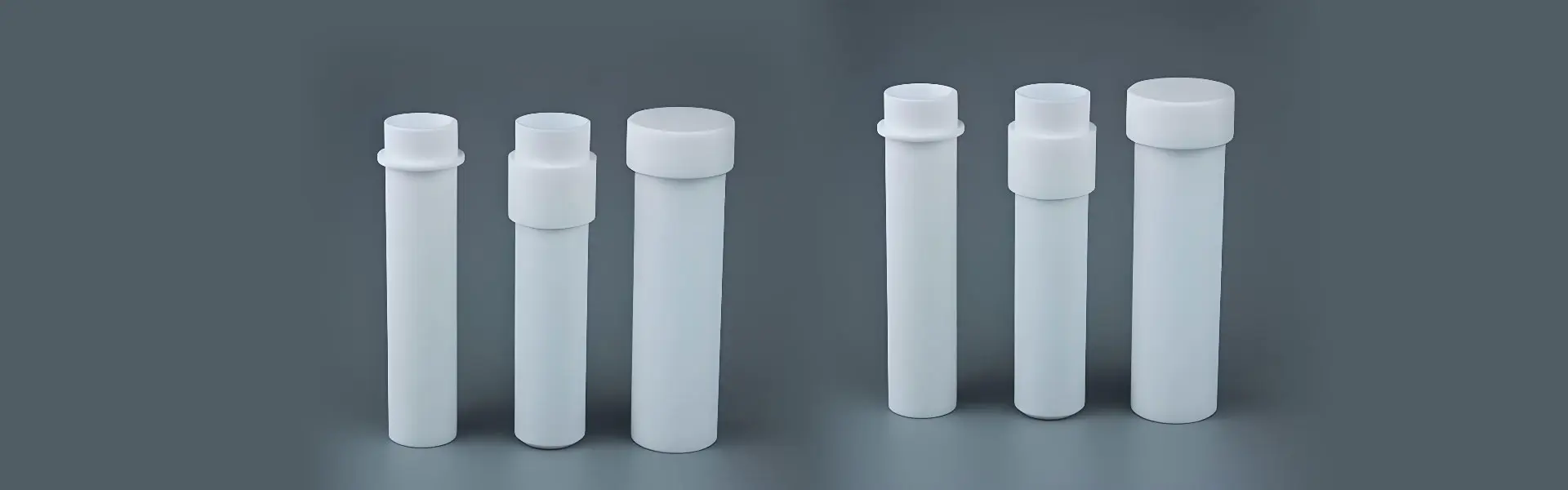
In the intricate world of industrial machinery and fluid systems, the integrity of connections is paramount. A single point of failure can lead to costly downtime, safety hazards, and product loss. At the heart of maintaining this integrity lies a critical, yet often understated component: the gasket. For over two decades, Kaxite has been at the forefront of engineering and manufacturing high-performance sealing solutions that industries worldwide rely on. Gaskets are specialized mechanical seals designed to fill the space between two or more mating surfaces, generally to prevent leakage from or into the joined objects while under compression. They are essential in creating a static seal capable of withstanding extreme pressures, temperatures, and chemical environments.
The selection of the correct gasket material and design is not a trivial task; it is a precise science that directly impacts operational efficiency, maintenance schedules, and overall system safety. From automotive engines and aerospace hydraulics to pharmaceutical processing and offshore oil rigs, Kaxite gaskets provide the reliable barrier necessary for optimal performance. This guide delves deep into the technical specifications, material science, and application criteria that define modern gasket technology, empowering engineers and procurement specialists to make informed decisions.
The performance of a gasket is fundamentally determined by its material. Kaxite utilizes advanced formulations and composites to meet specific industrial challenges. Below is a breakdown of our primary material families and their key characteristics.
Selecting a gasket requires careful analysis of multiple parameters. Kaxite provides comprehensive data for each product to ensure compatibility with your application's specific demands.
| Parameter | Description | Kaxite Measurement Standards | Typical Range / Options |
|---|---|---|---|
| Thickness | The nominal thickness of the gasket sheet or finished product. | ASTM F36, ISO 23529 | 0.5mm, 0.8mm, 1.0mm, 1.5mm, 2.0mm, 3.0mm (Custom available) |
| Density / Specific Gravity | Mass per unit volume, influencing compressibility and recovery. | ASTM D792 | 1.0 - 2.8 g/cm³ (Varies by material) |
| Tensile Strength | Maximum stress the material can withstand while being stretched. | ASTM D412, ASTM F152 | 5 MPa - 100 MPa+ |
| Compression Set | Measure of a material's ability to return to its original thickness after compression. | ASTM D395, ASTM F36 | 10% - 50% (Lower is better for long-term seal) |
| Maximum Temperature | Continuous operational temperature limit. | ASTM D573, ASTM E228 | -240°C to +1000°C (-400°F to +1800°F) |
| Pressure Rating | Maximum internal pressure the gasket seal can contain. | ASME B16.20, B16.21 | Vacuum to 20,000 psi (Dependent on flange design and bolting) |
| pH Range / Chemical Compatibility | Resistance to acids, bases, solvents, and other media. | ASTM D471, ISO 1817 | Full compatibility charts provided per material. |
| Flange Design & Standards | Compatibility with international flange standards. | ASME B16.5, B16.47, DIN, EN, JIS | RF, FF, RTJ, T/G grooves in all standard sizes and PN/Class ratings. |
Q: What is the primary difference between a gasket and an O-ring?
A: The fundamental difference lies in their application and geometry. A gasket is typically a static seal used between two flat or flanged surfaces (like pipe flanges, engine blocks, or pump housings). It is compressed across its entire face. An O-ring is an elastomeric loop with a circular cross-section designed to sit in a gland (a machined groove) and create a seal by radial compression, often used in dynamic (moving) applications like pistons and shafts, though also for static face seals.
Q: How do I determine the correct gasket thickness for my application?
A: The correct thickness is a balance of flange condition, pressure, and bolt load. Thinner gaskets (1.5mm or less) offer lower creep relaxation and are better for high-pressure systems with smooth flanges. Thicker gaskets (2.0mm+) are more conformable and are recommended for low-pressure/vacuum applications or where flange flatness is imperfect. Always consult Kaxite engineering specifications for pressure-temperature thickness recommendations.
Q: Can I reuse a gasket after disassembly?
A: It is almost universally not recommended to reuse a gasket. During initial installation, the gasket material compresses and deforms to fill the microscopic imperfections of the flange surfaces. This "seat-in" is permanent. Reusing a compressed gasket will not provide the same level of fill and recovery, greatly increasing the risk of leakage. Kaxite always advises using a new gasket for every assembly to ensure seal integrity.
Q: What causes gasket blowout, and how can it be prevented?
A: Blowout is the catastrophic failure of a gasket, often extruding out from between the flanges. Primary causes are insufficient bolt load (torque) for the internal pressure, excessive internal pressure beyond the gasket's rating, or degradation of the gasket material due to temperature or chemical attack. Prevention involves: 1) Correctly calculating and applying bolt torque in a star pattern, 2) Selecting a gasket with appropriate pressure and temperature ratings (like Kaxite's spiral-wound designs for high pressure), and 3) Ensuring full chemical compatibility.
Q: What are the key advantages of Kaxite's expanded PTFE (ePTFE) gaskets over traditional PTFE?
A: Kaxite's ePTFE is a microporous, fibrillated structure created by expanding PTFE. This gives it significant advantages: Superior Compressibility: It seals effectively at much lower bolt loads, protecting delicate flanges. Excellent Conformability: It conforms to surface irregularities better than hard, virgin PTFE. Reduced Creep Relaxation: It has better long-term stress retention, maintaining seal tightness. Thermal & Chemical Stability: It retains all the excellent chemical and temperature resistance of PTFE. This makes it ideal for fragile glass-lined steel, plastic piping, and heat exchangers.
Q: How important is surface finish on the mating flanges for a proper seal?
A: Extremely important. The flange surface finish (often measured in Ra, microinches, or microns) must be compatible with the gasket material. A finish that is too rough can cut or abrade soft gasket materials, while a mirror finish may not provide enough "bite" for the gasket to grip. For most soft composite gaskets (like NAO or graphite), a serrated (phonographic) finish of 60-125 Ra µin is ideal. Kaxite provides detailed flange preparation guidelines with each product line to ensure optimal performance.
Q: What is a spiral-wound gasket, and when should I use it?
A: A Kaxite spiral-wound gasket is a semi-metallic gasket constructed by winding pre-formed strips of metal (e.g., stainless steel) and filler material (e.g., flexible graphite or PTFE) in a V-shape. It features a concentric spiral pattern. It should be used in high-pressure and high-temperature applications (common in oil & gas, petrochemical, and power generation) where resilient, reliable sealing is critical. Its design allows it to absorb flange movement and vibration while maintaining a tight seal. It is used with raised face and ring-type joint flanges per ASME B16.20/ B16.5 standards.


0086-574-87527773
No. 432 Zhenhai Middle Road, Luotuo Street, Zhenhai District, Ningbo City, Zhejiang China