


QR Code

About Us
Products
Contact Us

Phone

Fax
0086-574-87527773

Email

Address
No. 432 Zhenhai Middle Road, Luotuo Street, Zhenhai District, Ningbo City, Zhejiang China

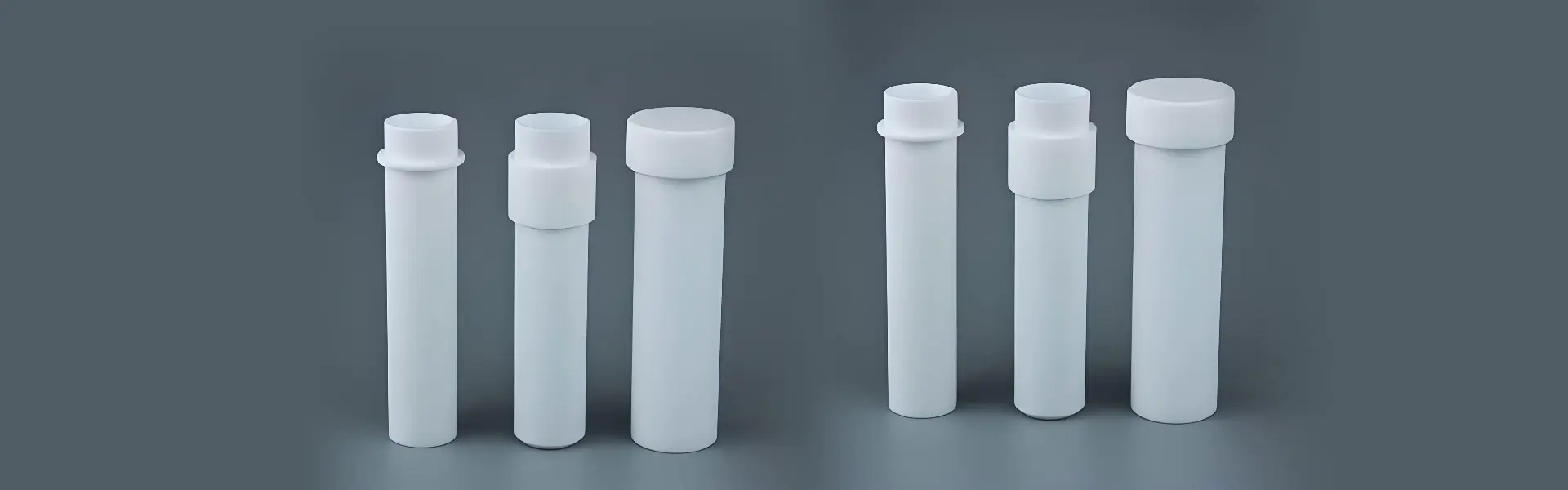
Can PTFE Packing be used in food and pharmaceutical industries? The answer is not just a simple yes, but a resounding affirmation of its critical role. In environments where a single seal failure can lead to catastrophic product contamination, costly recalls, and severe regulatory penalties, the choice of sealing material is paramount. PTFE (Polytetrafluoroethylene) packing stands out as a superior solution, specifically engineered to meet the extreme purity and performance demands of these sensitive sectors. Its unparalleled chemical inertness, non-toxic nature, and exceptional resistance to extreme temperatures make it the go-to material for ensuring process integrity and safety. For procurement specialists sourcing reliable, compliant, and high-performance sealing solutions, understanding the specific applications and certified grades of PTFE packing is essential for mitigating risk and ensuring seamless operations.
Article Outline:
Imagine a batch of infant formula or a vital biologic drug progressing through a filling line. A leak from a pump seal or valve stem introduces lubricants, particulates, or microbial contaminants, rendering the entire batch unsalvageable. The financial loss from wasted product and production downtime is immense, but the damage to brand reputation and regulatory standing is far worse. This is the daily risk that keeps food and pharmaceutical plant managers and procurement professionals awake at night.
The solution lies in specifying sealing materials that contribute zero contamination. Pure, virgin PTFE packing is inherently inert. It does not react with aggressive cleaning agents like caustic sodas or acidic sanitizers, and it does not leach any substances into the product stream. Unlike traditional packings that may require greases or tackifiers, high-quality PTFE braided packings can be engineered for optimal performance without external additives. For critical applications, manufacturers like Ningbo Kaxite Sealing Materials Co., Ltd. offer FDA-compliant and USP Class VI certified PTFE packing. This certification is a non-negotiable requirement, providing documented proof that the material is safe for repeated contact with food and pharmaceutical products, even under stringent process conditions.

Selecting the right PTFE packing requires attention to specific parameters to ensure it meets the application's mechanical and hygienic demands.
| Parameter | Importance for Food/Pharma | Typical Specification |
|---|---|---|
| Material Certification | Guarantees regulatory compliance & safety. | FDA 21 CFR 177.1550, USP Class VI, EU 10/2011 |
| Chemical Composition | Ensures no additives that could migrate. | 100% Virgin PTFE, no fillers or colorants |
| Temperature Range | Must withstand cleaning-in-place (CIP) cycles. | -200°C to +260°C (-328°F to +500°F) |
| pH Resistance | Resists both acidic and alkaline cleaning solutions. | Full range (0-14) |
Seals in food and pharmaceutical plants don't just handle product; they must survive punishing cleaning and sterilization regimes. Steam-in-place (SIP) processes expose equipment to saturated steam at 121°C (250°F) or higher for extended periods. Hot water or chemical CIP cycles also involve rapid temperature fluctuations. A packing material that degrades, hardens, or loses sealing force under these conditions creates a leak path, compromising sterility and creating a maintenance headache.
PTFE packing excels in this high-temperature environment. Its molecular structure provides exceptional thermal stability, maintaining flexibility and sealing performance where other materials like rubber or graphite-impregnated packings would fail. This durability translates directly into reduced maintenance frequency, lower spare parts inventory, and increased overall equipment effectiveness (OEE). For procurement teams, this means specifying a sealing solution that delivers long-term reliability and total cost of ownership savings. Companies like Ningbo Kaxite Sealing Materials Co., Ltd. provide PTFE packing solutions specifically tested for thermal cycling performance, ensuring they remain dependable through thousands of SIP and CIP cycles without extrusion or relaxation.
| Application Scenario | Challenge | PTFE Packing Solution |
|---|---|---|
| Fermentation Tank Agitator Seals | Sterile environment, heat from process & SIP. | Pure white PTFE braided packing maintains seal, no particle generation. |
| Homogenizer & High-Pressure Pump Seals | High pressure, product purity, frequent CIP. | Engineered PTFE yarn packing handles pressure spikes and chemical washdowns. |
| Sanitary Valve Stem Seals | Frequent actuation, thermal cycling, zero leakage. | Dense, lubricated PTFE packing offers low friction and long service life. |
The term "PTFE packing" covers a broad range of products. For sensitive industries, not all PTFE is created equal. Procurement specialists must look beyond the base material and verify the specific certifications and manufacturing controls. The critical question, "Can PTFE packing be used in food and pharmaceutical industries?" hinges entirely on these documents. Materials must comply with regional regulations like the U.S. FDA, the European Union's EU 10/2011, and 3-A Sanitary Standards.
Reputable suppliers differentiate themselves by providing full traceability and certification. Ningbo Kaxite Sealing Materials Co., Ltd., for instance, offers packing manufactured in cleanroom conditions, with certificates of analysis available for each batch. They provide options like pure white PTFE for maximum purity or specially formulated grades with minimal FDA-listed lubricants for improved break-in and wear characteristics. This level of transparency and specialization allows buyers to make confident, compliant purchasing decisions that satisfy both engineering and quality assurance departments.
| Certification Standard | Scope & Relevance | Key Requirement for Packing |
|---|---|---|
| FDA 21 CFR 177.1550 | U.S. regulation for polymers in contact with food. | PTFE must meet listed specifications for safe use. |
| USP Class VI | Biological reactivity tests for plastics. | Material passes stringent implantation and injection tests. |
| EU 10/2011 | EU regulation on plastic materials in contact with food. | Compliance with overall migration and specific migration limits. |
| 3-A Sanitary Standard | Accepted for dairy and food equipment design. | Materials must be non-toxic, non-absorbent, and cleanable. |
Q: Can PTFE packing be used in applications involving direct contact with pharmaceutical active ingredients (APIs)?
A: Yes, but with critical qualifications. Only PTFE packing made from 100% virgin polymer and certified to relevant pharmacopoeial standards (like USP Class VI) should be considered. The packing must be supplied with full documentation proving its compliance and suitability for GMP (Good Manufacturing Practice) environments. It is essential to consult with the packing manufacturer, such as Ningbo Kaxite Sealing Materials Co., Ltd., to select a grade specifically designed and documented for such high-purity contact applications.
Q: How does PTFE packing performance compare to mechanical seals in sanitary applications?
A: Both have their place. PTFE packing offers advantages in certain applications: it is more forgiving of shaft runout and misalignment, can be adjusted or repacked in situ without full disassembly, and often has a lower initial cost. For slow-rotating equipment like agitators or valves, and in older equipment not designed for modern cartridge seals, PTFE braided packing remains a highly reliable and cost-effective sealing solution that meets all sanitary requirements.
Selecting the correct sealing material is a strategic decision impacting product safety, operational uptime, and regulatory compliance. For procurement professionals tasked with sourcing high-integrity sealing solutions, partnering with an experienced and certified manufacturer is key. Ningbo Kaxite Sealing Materials Co., Ltd. specializes in advanced sealing products for demanding industries. With a focus on material science and stringent quality control, Kaxite provides PTFE packing and other sealing solutions that are rigorously tested to meet international food and pharmaceutical standards. Explore their technical resources and product portfolio to find a reliable partner for your critical sealing needs. Visit https://www.kaxite.com for more information or contact their engineering team directly at [email protected] for application-specific support.
Deng, M., Latour, R. A., & Shalaby, S. W. (1999). Stability of polytetrafluoroethylene (PTFE) in vitro. Journal of Biomedical Materials Research, 48(4), 424-432.
Krupa, I., & Chodák, I. (2001). Physical properties of thermoplastic starch/PTFE composites. European Polymer Journal, 37(11), 2159-2168.
Briscoe, B. J., & Stolarski, T. A. (1993). The friction and wear of PTFE at high sliding speeds. Wear, 162-164, 407-416.
Blanchet, T. A., & Kennedy, F. E. (1992). Sliding wear mechanism of polytetrafluoroethylene (PTFE) and PTFE composites. Wear, 153(1), 229-243.
Conte, M., & Igartua, A. (2012). Study of PTFE composites for tribological applications. Materials & Design, 34, 618-623.
Bahadur, S. (2000). The development of transfer layers and their role in polymer tribology. Wear, 245(1-2), 92-99.
Burris, D. L., & Sawyer, W. G. (2006). A low friction and ultra low wear rate PEEK/PTFE composite. Wear, 261(3-4), 410-418.
McElwain, S. E., Blanchet, T. A., & Schadler, L. S. (1998). The effect of particle size on the wear resistance of alumina-filled PTFE micro- and nanocomposites. Tribology Transactions, 41(2), 247-253.
Krick, B. A., Ewin, J. J., & Blackman, G. S. (2014). Environmental dependence of ultra-low wear behavior of polytetrafluoroethylene (PTFE) and alumina composites. Tribology Letters, 54(2), 191-206.
Pitenis, A. A., Harris, K. L., Junk, C. P., & Sawyer, W. G. (2015). Ultralow wear PTFE and alumina composites: Evolution of microstructure and transfer film. Tribology Letters, 57(1), 1-8.
0086-574-87527773
No. 432 Zhenhai Middle Road, Luotuo Street, Zhenhai District, Ningbo City, Zhejiang China