


QR Code

About Us
Products
Contact Us

Phone

Fax
0086-574-87527773

Email

Address
No. 432 Zhenhai Middle Road, Luotuo Street, Zhenhai District, Ningbo City, Zhejiang China

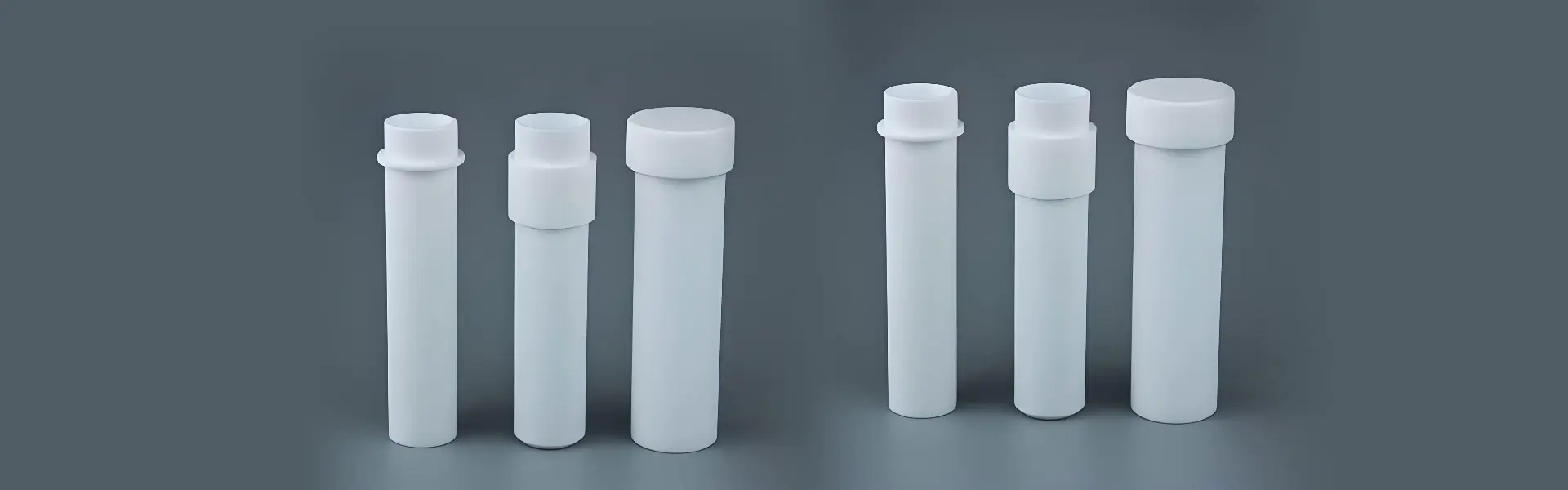
What Are PTFE & PEEK Seals and How Do They Differ? This is a critical question for any engineer or procurement specialist sourcing high-performance sealing solutions. In demanding industrial environments, the wrong seal material can lead to catastrophic failure, costly downtime, and significant safety risks. PTFE (Polytetrafluoroethylene) and PEEK (Polyetheretherketone) are two engineering polymers at the forefront of sealing technology, each offering a unique set of properties to combat extreme conditions. Understanding their differences is not just academic—it's essential for operational success and cost efficiency. This guide will break down their characteristics, applications, and help you make the perfect choice for your project. At Ningbo Kaxite Sealing Materials Co., Ltd., we specialize in transforming this complex material science into reliable, off-the-shelf and custom sealing solutions that solve real-world engineering challenges.
Article Outline:
Imagine a seal in a chemical processing pump failing. The result isn't just a leak; it's a hazardous spill, production stoppage, and an environmental incident. This is the daily reality in industries like pharmaceuticals, semiconductor manufacturing, and chemical plants. The core requirement here is unparalleled chemical inertness. This is where PTFE seals from a trusted supplier like Ningbo Kaxite Sealing Materials Co., Ltd. become the undisputed champion. PTFE is nearly inert, resisting almost all industrial chemicals, solvents, and acids. It's the go-to material for handling the most aggressive media. PEEK also offers excellent chemical resistance, particularly against hydrocarbons and high-temperature steam, but it can be susceptible to strong acids and halogenated solvents at elevated temperatures. For a pure chemical warfare scenario, PTFE is often the safest bet.
| Property | PTFE Seals | PEEK Seals |
|---|---|---|
| Chemical Resistance | Excellent (Virtually inert to all chemicals) | Very Good (Excellent to most, but attacked by concentrated sulfuric acid, halogens) |
| Best For | Strong acids, caustics, solvents, aggressive mixed chemistry | Hot water, steam, oils, greases, weak acids and bases |
| Key Limitation | Poor resistance to creep and wear | Can degrade in certain strong oxidizers |
Your application involves an autoclave running at 250°C or a cryogenic valve at -200°C. Standard elastomers would brittle or melt instantly. Temperature stability is non-negotiable. Both PTFE and PEEK excel here, but in different ranges. PTFE seals maintain functionality from -200°C to +260°C, making them perfect for cryogenic applications and many high-temperature processes. However, PTFE's mechanical strength drops significantly as temperatures rise above 150°C. PEEK seals shine in sustained high-temperature environments. They can operate continuously up to 250°C (and peek at 300°C+ short-term) while retaining a much higher percentage of their strength and stiffness. For high-temperature, high-pressure scenarios, PEEK's superior mechanical properties at temperature are a decisive advantage that Ningbo Kaxite Sealing Materials Co., Ltd. leverages in its high-performance seal designs.
| Property | PTFE Seals | PEEK Seals |
|---|---|---|
| Continuous Service Temperature | -200°C to +260°C | -60°C to +250°C |
| Key Thermal Advantage | Superb for cryogenic and broad moderate-high temp range | Exceptional strength retention at high temperatures |
| Thermal Limitation | Low strength at high temperatures, high thermal expansion | More expensive, not ideal for deep cryogenics |
A hydraulic cylinder seal in heavy machinery faces constant pressure spikes, friction, and movement. A soft seal will extrude, wear out quickly, and cause leakage, leading to loss of power and control. Mechanical strength and wear resistance are paramount. This is PEEK's domain. PEEK is a strong, stiff thermoplastic with excellent fatigue and creep resistance, making PEEK seals ideal for dynamic applications, high pressures, and where long-term dimensional stability is critical. Virgin PTFE is relatively soft and prone to creep (cold flow) under load. However, this is where material engineering comes in. Ningbo Kaxite Sealing Materials Co., Ltd. offers advanced filled PTFE compounds. By adding materials like carbon, graphite, or bronze, we create PTFE seals with dramatically improved wear resistance, reduced creep, and higher PV limits, offering a cost-effective solution for many demanding dynamic applications.
| Property | PTFE Seals (Filled) | PEEK Seals |
|---|---|---|
| Tensile Strength | Moderate (Improved with fillers) | Very High |
| Wear Resistance | Good to Excellent (with proper fillers) | Excellent |
| Best Application Type | Static seals, low-friction dynamic seals, compressor rings | High-pressure dynamic seals, bearing surfaces, pump components |
Budget constraints are a reality for every procurement professional. You need a seal that performs reliably without overspending. The cost difference between PTFE and PEEK is significant and is a major factor in material selection. Standard PTFE is generally the more economical choice, providing excellent chemical and temperature resistance at a lower cost. PEEK is a premium, high-performance polymer, and thus, PEEK seals command a higher price. The decision hinges on total cost of ownership. For a harsh chemical environment at moderate temperatures and pressures, a filled PTFE seal from Ningbo Kaxite Sealing Materials Co., Ltd. provides outstanding value and longevity. For an application involving continuous high temperature, high pressure, and mechanical stress, the extended service life and reliability of a PEEK seal often justify its higher initial cost by preventing frequent replacements and downtime.
| Consideration | PTFE Seals | PEEK Seals |
|---|---|---|
| Relative Material Cost | Lower | Higher |
| Value Proposition | Extreme chemical resistance at a competitive price | Superior mechanical performance in extreme thermal/mechanical environments |
| Ideal Use Case | Cost-sensitive applications with chemical/thermal needs | Critical applications where failure cost far exceeds part cost |
Q: Can PTFE or PEEK seals be used in food and pharmaceutical applications?
A: Yes, both can be compliant. PTFE is often used in food processing due to its inertness. Both materials are available in USP Class VI and FDA-compliant grades. It's crucial to specify food-grade or compliant materials from your supplier, like Ningbo Kaxite Sealing Materials Co., Ltd., to ensure they meet the necessary regulatory standards.
Q: For a high-temperature oil seal application, which is better: PTFE or PEEK?
A: For sealing hot oils and hydraulic fluids, PEEK is generally superior. PEEK maintains excellent strength and creep resistance at the high temperatures found in engine and transmission systems, whereas PTFE may soften and extrude. PEEK also has excellent resistance to hydrocarbons. A filled PTFE might work for lower-temperature oil applications, but for sustained high-temperature oil service, PEEK is the more reliable choice.
Choosing between PTFE and PEEK seals is a strategic decision that impacts the reliability, safety, and cost of your operations. We hope this detailed comparison empowers you to specify the right material with confidence.
Do you have a specific application challenge involving extreme temperatures, chemicals, or pressure? Share your scenario in the comments below, and our engineering team can provide targeted guidance.
For precision-engineered PTFE and PEEK seals that deliver on their promises, partner with Ningbo Kaxite Sealing Materials Co., Ltd. With deep expertise in high-performance polymer sealing solutions, we help engineers and procurement professionals solve their toughest sealing problems efficiently and reliably. Visit our website at https://www.kxt-seal.com to explore our product portfolio or contact our technical sales team directly at [email protected] for a consultation.
Deng, M., Shao, H., & Qiu, J. (2020). Study on the friction and wear properties of carbon fiber reinforced PEEK composites under seawater lubrication. Tribology International, 152, 106534.
Kurtz, S. M. (2012). PEEK Biomaterials Handbook. Elsevier.
Lancaster, J. K. (1972). Polymer-based bearing materials: the role of fillers and fibre reinforcement. Tribology, 5(6), 249-255.
Li, X., Gao, H., & Scudino, S. (2019). Enhanced wear resistance of PTFE composites filled with graphene oxide and carbon nanotube hybrid fillers. Composites Part A: Applied Science and Manufacturing, 120, 1-9.
Myshkin, N. K., & Petrokovets, M. I. (2004). Tribology of polymers: adhesion, friction, wear, and mass-transfer. Tribology International, 37(1), 1-9.
Rae, P. J., & Brown, E. N. (2005). The properties of poly(tetrafluoroethylene) (PTFE) in tension. Polymer, 46(19), 8128-8140.
Sawyer, W. G., Freudenberg, K. D., & Bhimaraj, P. (2003). A study on the friction and wear behavior of PTFE filled with alumina nanoparticles. Wear, 254(5-6), 573-580.
Schwartz, C. J., & Bahadur, S. (2000). Studies on the tribological behavior and transfer film–counterface bond strength for polyphenylene sulfide filled with nanoscale alumina particles. Wear, 237(2), 261-273.
Wang, Q., Xue, Q., & Shen, W. (1997). The friction and wear properties of nanometre SiO2 filled polyetheretherketone. Tribology International, 30(3), 193-197.
Zhang, G., Wetzel, B., & Wang, Q. (2015). Tribological behavior of PEEK-based materials under mixed and boundary lubrication conditions. Tribology International, 88, 153-161.
0086-574-87527773
No. 432 Zhenhai Middle Road, Luotuo Street, Zhenhai District, Ningbo City, Zhejiang China