


QR Code

About Us
Products
Contact Us

Phone

Fax
0086-574-87527773

Email

Address
No. 432 Zhenhai Middle Road, Luotuo Street, Zhenhai District, Ningbo City, Zhejiang China

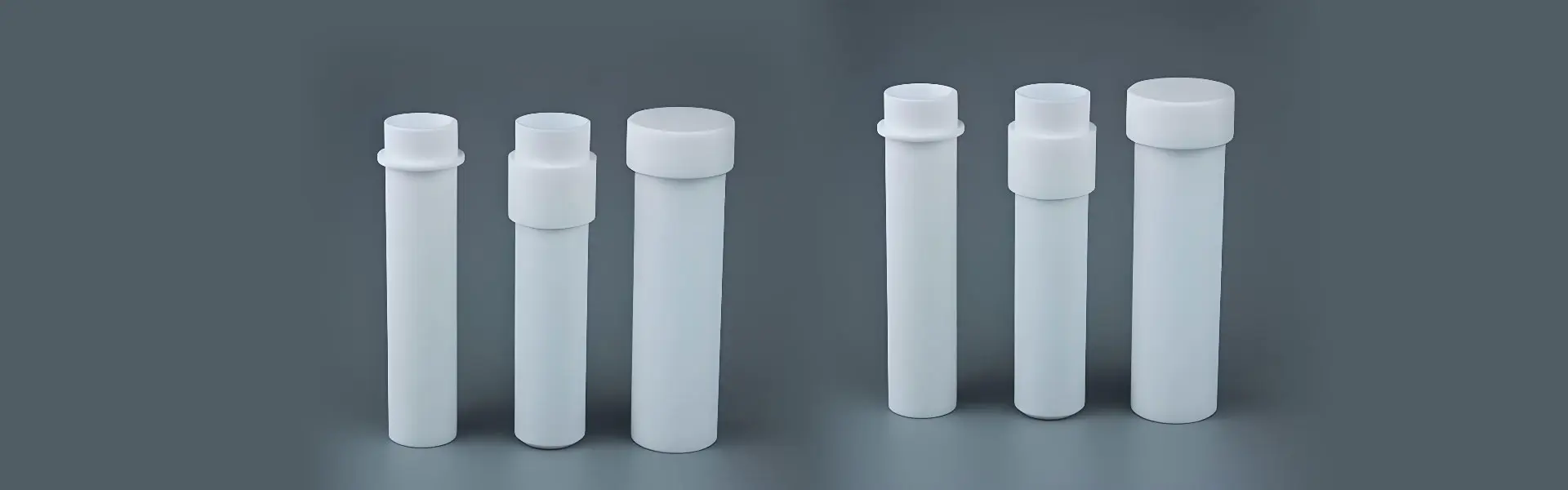
In the vast world of industrial components, few are as critical yet underappreciated as the Rubber Gaskets. These versatile sealing elements are the unsung heroes in countless applications, from the car you drive to the faucet in your kitchen and the complex machinery in manufacturing plants. At Kaxite, we have dedicated decades to mastering the science and engineering behind these essential parts. This comprehensive guide delves into the specifics of rubber gaskets, providing detailed product parameters and answering common questions to help you make an informed decision for your sealing needs.
A rubber gasket is a mechanical seal designed to fill the space between two or more mating surfaces, generally to prevent leakage from or into the joined objects while under compression. They are vital for creating a tight, reliable seal against fluids, gases, dust, and environmental contaminants. The effectiveness of a gasket depends on a precise combination of material properties, design geometry, and application-specific conditions. Failure of a simple gasket can lead to system downtime, product loss, safety hazards, and significant financial cost, underscoring the importance of selecting the right component from a trusted supplier like Kaxite.
Selecting the optimal rubber gasket requires careful consideration of several technical parameters. At Kaxite, we manufacture gaskets to exacting standards, ensuring performance, durability, and compatibility.
The choice of rubber compound is the most critical factor, determining the gasket's resistance to various operational environments.
Beyond material, precise physical characteristics define a gasket's capability.
| Parameter | Description | Typical Range (Kaxite Standard) | Measurement Standard |
|---|---|---|---|
| Hardness (Durometer) | Resistance to indentation, affecting sealability and compression. | 30 Shore A to 90 Shore A | ASTM D2240 |
| Tensile Strength | Maximum stress a material can withstand while being stretched. | 10 MPa to 25 MPa | ASTM D412 |
| Elongation at Break | The amount a material stretches before breaking, indicating flexibility. | 100% to 600% | ASTM D412 |
| Compression Set | Ability to recover original thickness after prolonged compression. | 10% to 40% (lower is better) | ASTM D395 |
| Temperature Range | Continuous operating temperature limits. | -60°C to 230°C (material dependent) | ASTM D1329 / D573 |
| Pressure Rating | Maximum sealing pressure capability. | Varies by design; standard up to 1500 PSI | Application-specific testing |
Kaxite offers a wide array of gasket profiles to suit different flange types and sealing challenges.
At Kaxite, our manufacturing process integrates advanced compounding, precision molding and cutting, and rigorous quality control. We understand that off-the-shelf solutions don't always fit unique challenges. Therefore, we offer extensive customization:
Q: How do I choose the right rubber material for my gasket application?
A: The selection depends on the medium being sealed and the environmental conditions. Identify the primary fluid (oil, water, chemical), operating temperature range, and any exposure to UV, ozone, or pressure. For example, use NBR for oil resistance, EPDM for weather and steam, and FKM for aggressive chemicals. Kaxite's technical team can provide detailed material selection charts and consultation based on your specific parameters.
Q: What is the difference between a gasket and an O-ring?
A: Both are seals, but their application differs. An O-ring is a specific, torus-shaped gasket designed to sit in a gland (groove) and create a seal through radial compression. It is often used in dynamic applications (where parts move). The term "gasket" is broader, typically referring to flat seals cut from sheet material or custom-molded shapes that seal between two flat faces (flanges) via axial compression. O-rings are a subtype of rubber gaskets.
Q: Why does my rubber gasket fail or degrade prematurely?
A: Premature failure can stem from several causes: chemical incompatibility (the rubber swells, cracks, or dissolves), excessive temperature beyond the material's rating, improper compression (over-tightening causes extrusion, under-tightening causes leakage), ozone or UV degradation (for non-resistant materials), or an incorrect hardness leading to poor sealing or extrusion. A failure analysis of the old gasket can pinpoint the exact cause.
Q: Can Kaxite manufacture gaskets to my specific drawings or samples?
A: Absolutely. Custom manufacturing is a core service at Kaxite. You can provide detailed CAD drawings, dimensional sketches, or physical samples. Our engineering team will review the specifications, recommend the optimal material and manufacturing process (die-cutting, molding, etc.), and produce prototypes for approval before full-scale production.
Q: How important is gasket hardness, and how do I select the correct Shore A value?
A: Hardness is crucial as it affects sealability, compression force, and resistance to extrusion. Softer gaskets (50-70 Shore A) conform better to irregular surfaces and require less clamping force, ideal for low-pressure applications or uneven flanges. Harder gaskets (70-90 Shore A) offer greater resistance to extrusion and blow-out, suitable for high-pressure systems. The ideal choice balances sealability with durability for your specific flange condition and pressure.
Q: What are the benefits of using molded gaskets over cut gaskets?
A: Molded gaskets, produced by Kaxite using precision tools, offer superior dimensional consistency, tighter tolerances, and the ability to incorporate complex features like lips, ribs, or metal inserts in a single part. They are ideal for high-volume applications requiring reliability. Cut gaskets from sheet stock are more cost-effective for prototypes, low-volume needs, or very large, simple shapes where tooling for molding would be prohibitively expensive.
Q: How should rubber gaskets be stored to maximize their shelf life?
A: Proper storage is key to preventing pre-installation degradation. Store gaskets in a cool, dark, dry place away from direct sunlight, ozone sources (like electric motors), and heat. Ideal temperature is between 10°C and 25°C. Avoid stretching, compressing, or hanging them. Keep them in their original packaging until use, and separate different rubber compounds to prevent migration of plasticizers.
Q: Does Kaxite offer any certifications for its gaskets, such as for food, potable water, or aerospace?
A: Yes, Kaxite can provide gaskets manufactured from compounds that meet various industry standards and certifications. This includes FDA CFR 177.2600 for food contact, NSF/ANSI 61 for potable water, USP Class VI for medical devices, and MIL-STD specifications for aerospace and defense. Please specify your certification requirements during the inquiry, and we will propose compliant material solutions.


0086-574-87527773
No. 432 Zhenhai Middle Road, Luotuo Street, Zhenhai District, Ningbo City, Zhejiang China