


QR Code

About Us
Products
Contact Us

Phone

Fax
0086-574-87527773

E-mail

Address
No. 432 Zhenhai Middle Road, Luotuo Street, Zhenhai District, Ningbo City, Zhejiang China

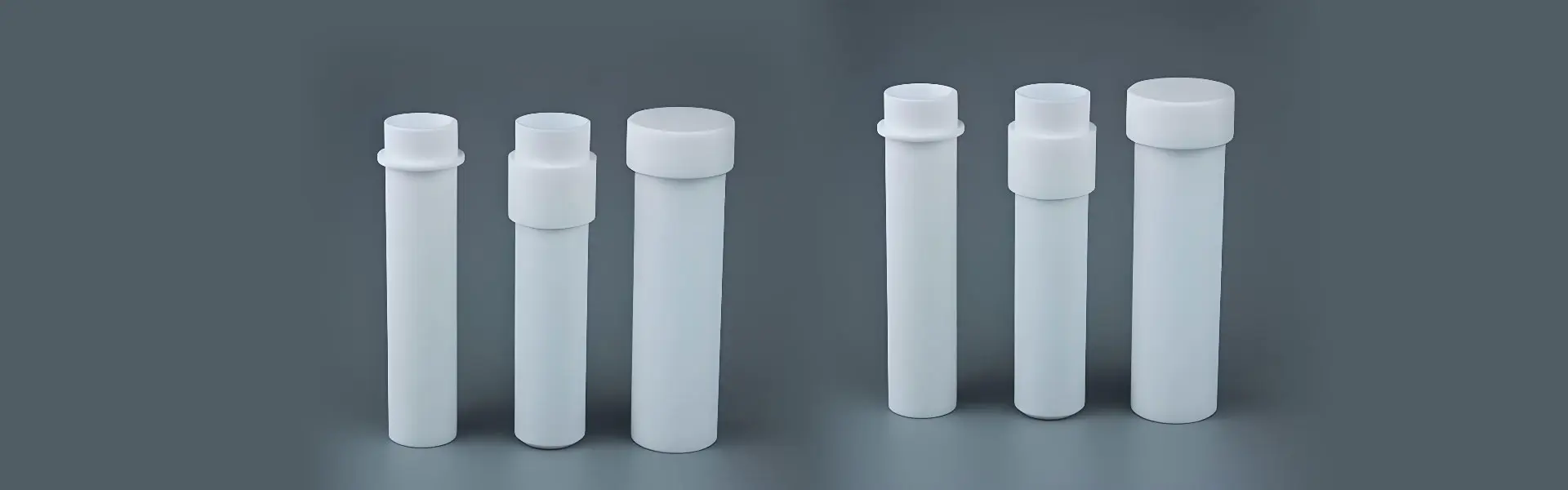
In the demanding world of industrial sealing, few materials offer the unique combination of properties that Polytetrafluoroethylene (PTFE) does. For over two decades, engineers and procurement specialists have relied on PTFE gaskets to solve their most challenging sealing problems. At Kaxite, we have dedicated our expertise to mastering this advanced material, engineering gaskets that set the benchmark for performance, reliability, and longevity in even the most corrosive and extreme environments.
Our commitment at Kaxite goes beyond manufacturing. We provide comprehensive sealing solutions, backed by deep technical knowledge and a focus on total cost of ownership. A Kaxite PTFE gasket isn't just a component; it's an investment in system integrity, safety, and operational efficiency.
PTFE, often known by the brand name Teflon®, is a fully fluorinated, high-performance synthetic polymer. Its molecular structure grants it a set of characteristics unmatched by most other sealing materials. When you specify a PTFE gasket, you are selecting a product designed to withstand the test of time and pressure.
Not all PTFE is created equal. At Kaxite, we offer a range of PTFE-based materials to meet specific application requirements. Our standard and engineered grades provide optimal solutions for diverse pressure, temperature, and media challenges.
| Property | Test Method | Typical Value (Virgin PTFE) | Benefit for Sealing |
|---|---|---|---|
| Density | ASTM D792 | 2.15 - 2.20 g/cm³ | Consistent material quality and performance. |
| Tensile Strength | ASTM D638 | 25 - 35 MPa (3600 - 5000 psi) | Resists blow-out and handles system pressure surges. |
| Elongation at Break | ASTM D638 | 300 - 500% | Excellent creep resistance and flange conformity. |
| Compression Set (24h @ 25°C) | ASTM D395 | 40 - 60% | Indicates the material's ability to recover and maintain seal. |
| Coefficient of Linear Thermal Expansion | ASTM D696 | 12 x 10-5/°C | Predictable dimensional change with temperature, critical for thermal cycling. |
| Maximum Service Temperature (Continuous) | - | 260°C (500°F) | Suitable for high-heat processes. |
| Grade Name | Description & Composition | Key Advantages | Ideal Applications |
|---|---|---|---|
| Kaxite PTFE-V (Virgin) | 100% pure, uncontaminated PTFE resin. | Ultimate chemical purity, highest elongation, superior dielectric properties. | Ultra-pure systems, semiconductor, pharmaceutical, food & beverage, critical chemical service. |
| Kaxite PTFE-G (Glass Filled) | PTFE compounded with glass microspheres or fibers (typically 15-25%). | Improved compression resistance, reduced creep (cold flow), higher hardness, better dimensional stability. | Heavy flange loads, high-pressure systems, applications requiring minimal gasket deformation. |
| Kaxite PTFE-C (Carbon Filled) | PTFE compounded with carbon or graphite particles. | Enhanced thermal conductivity, improved wear resistance, reduced deformation under load, static dissipation. | Heat exchanger gaskets, applications with thermal cycling, where static build-up is a risk. |
| Kaxite PTFE-S (Stainless Steel Insert) | PTFE envelope with an embedded stainless steel core or insert. | Extremely high bolt load capacity, virtually eliminates cold flow, excellent for uneven flanges. | High-pressure/temperature pipe flanges (ASME B16.21), heat exchangers, large diameter vessels. |
| Kaxite ePTFE (Expanded) | PTFE that is expanded to create a microporous structure. | Softer, highly conformable, excellent sealability at low flange pressures, high tensile strength. | Delicate or painted flanges, low bolt load applications, uneven surfaces. |
We provide PTFE gaskets in a comprehensive array of designs to suit every flange type and standard.
What is the main limitation of PTFE gaskets?
The primary consideration is "cold flow" or creep. Under sustained compressive load, pure PTFE can slowly deform. For applications with high permanent bolt load or uneven flanges, Kaxite recommends our filled grades (PTFE-G, PTFE-C) or PTFE-S with metal insert to mitigate this behavior and ensure a lasting seal.
Can Kaxite PTFE gaskets be used for food and pharmaceutical applications?
Yes, absolutely. Our Kaxite PTFE-V (Virgin) grade is manufactured from 100% pure PTFE resin compliant with FDA CFR 21.177.1550 and EU regulations (EC) No 1935/2004. It is non-toxic, tasteless, and will not contaminate process media, making it ideal for food, beverage, dairy, and pharmaceutical processing.
How do I select the correct PTFE gasket thickness?
Thickness selection depends on flange type, surface condition, pressure, and bolt load. Standard raised face flanges commonly use 1.5mm (1/16") gaskets. For full face flanges or uneven surfaces, 3mm (1/8") may be required. For high-pressure spiral wound gaskets, the filler thickness is standardized. Our Kaxite technical team can assist with specific recommendations based on your application data.
What are the temperature limits for PTFE gaskets?
Virgin PTFE can be used continuously from -268°C to +260°C (-450°F to +500°F). For short-term service, it can withstand up to 300°C (572°F). It is crucial to note that mechanical properties, especially strength, decrease as temperature increases. For consistent high-temperature service above 200°C, filled grades or PTFE-S often provide better long-term stability.
How do I install and torque a PTFE gasket correctly?
Proper installation is critical. Ensure flange faces are clean, parallel, and undamaged. Align the gasket carefully. Use a star-pattern sequence to tighten bolts gradually to the recommended torque value. PTFE requires re-torquing after the initial heat cycle, as the material will relax. Consult Kaxite for specific torque guidelines based on your gasket grade, size, and flange rating.
Are there any chemicals that attack PTFE?
PTFE is resistant to almost all industrial chemicals. The very few exceptions include molten alkali metals (e.g., sodium, potassium), certain fluorine compounds (like chlorine trifluoride) at high temperature and pressure, and some organic materials in extreme conditions. For 99% of chemical services, Kaxite PTFE gaskets provide a safe and reliable seal.
What is the difference between PTFE and modified PTFE (like TFMTM)?
Modified PTFE is a copolymer that is slightly altered to improve processability, which can result in better uniformity and reduced porosity in finished parts. It generally has similar chemical resistance but may have a slightly lower maximum continuous service temperature (around 230°C). Kaxite offers both standard PTFE and modified PTFE grades to match precise application needs.
Can Kaxite provide PTFE gaskets in custom colors?
Yes. While natural PTFE is white, we can compound in FDA-compliant pigments to create color-coded gaskets for easy identification of different systems, media, or pressure ratings within your facility. This is a popular solution for complex plant-wide sealing management.


0086-574-87527773
No. 432 Zhenhai Middle Road, Luotuo Street, Zhenhai District, Ningbo City, Zhejiang China