


QR Code

About Us
Products
Contact Us

Phone

Fax
0086-574-87527773

E-mail

Address
No. 432 Zhenhai Middle Road, Luotuo Street, Zhenhai District, Ningbo City, Zhejiang China

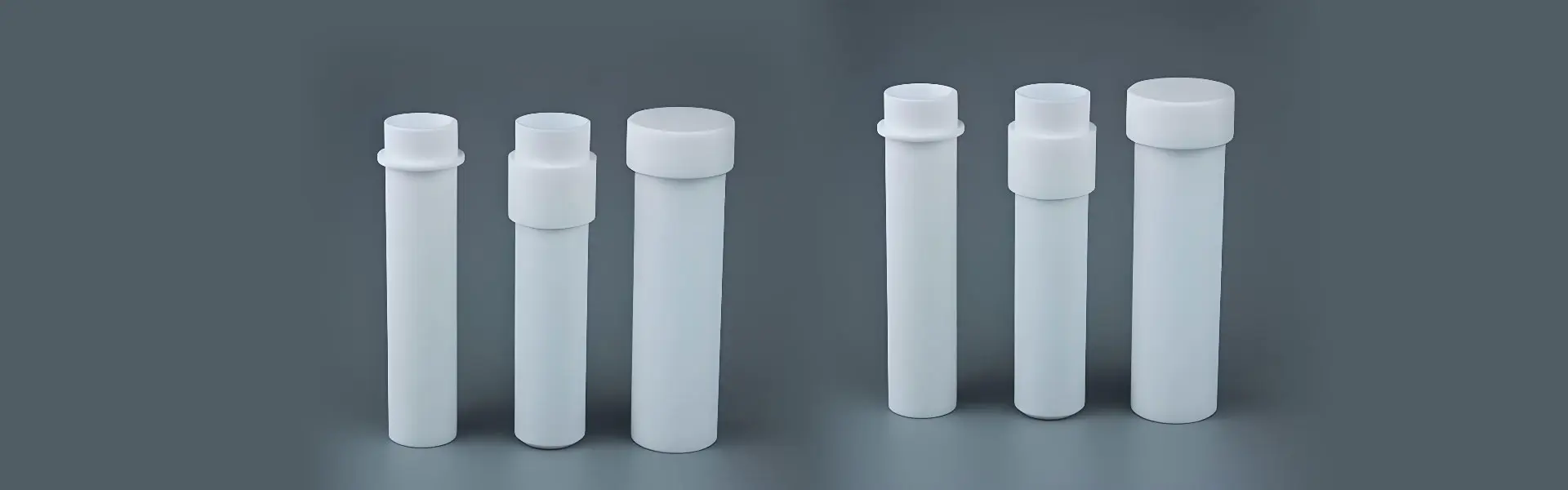
In the intricate world of industrial sealing, the selection of the correct Gasket Materials is paramount to operational integrity, safety, and cost-effectiveness. A gasket is a mechanical seal that fills the space between two or more mating surfaces, generally to prevent leakage from or into the joined objects while under compression. The performance of this simple yet critical component hinges entirely on the material from which it is fabricated. At Kaxite, with decades of specialization in advanced sealing solutions, we understand that the "one-size-fits-all" approach is a recipe for failure. This comprehensive guide delves into the core aspects of gasket material science, providing engineers, procurement specialists, and maintenance professionals with the detailed parameters and knowledge necessary to make an informed decision for their specific application.
Choosing a gasket material requires a careful evaluation of the operating environment. The following parameters are non-negotiable in the specification process:
The following table provides a technical comparison of the most prevalent gasket materials, highlighting their properties and typical applications to guide your selection.
| Material Type | Key Composition | Temperature Range | Pressure Range | Key Strengths | Primary Applications | Kaxite Product Series |
|---|---|---|---|---|---|---|
| Non-Asbestos Organic (NAO) | Aramid fibers, synthetic rubber, fillers | -50°F to 400°F (-45°C to 204°C) | Up to 1500 PSI | Cost-effective, good sealability, resistant to oils & water | General-purpose industrial, water, LP steam, mild chemicals | Kaxite NAO-2000 Series |
| Aramid Fiber | Compressed aramid fibers (e.g., Kevlar®) with elastomer binder | -40°F to 750°F (-40°C to 399°C) | Up to 3000 PSI | High tensile strength, excellent thermal stability, non-asbestos | High-temperature flanges, exhaust systems, chemical processing | Kaxite Aramid-Flex HT |
| Expanded Graphite (Flexible Graphite) | Pure exfoliated graphite, often with foil inserts | -400°F to 3000°F (-240°C to 1650°C) in inert atmospheres | Up to 2200 PSI | Exceptional temperature range, superior chemical resistance (except strong oxidizers), excellent conformability | High-temp heat exchangers, chemical reactors, power generation, aggressive media | Kaxite Grafoil-GTX |
| PTFE (Polytetrafluoroethylene) | Virgin or filled PTFE polymers | -450°F to 500°F (-268°C to 260°C) | Up to 2000 PSI (varies with design) | Nearly universal chemical resistance, excellent anti-stick properties, low friction | Pharmaceutical, food & beverage, aggressive acids and alkalis, ultra-clean systems | Kaxite PureSeal PTFE & Kaxite PTFE-Composite |
| Rubber (NBR, EPDM, CR, FKM/Viton®) | Various synthetic elastomers | Varies by polymer: -60°F to 450°F (-51°C to 232°C) | Up to 1500 PSI | Elastic recovery, good compression set, specific media resistance based on polymer | Piping, HVAC, automotive, fuel systems, hot water (polymer specific) | Kaxite Elasto-Seal Series (NBR, EPDM, FKM) |
| Metal (Stainless, Inconel, Monel) | Solid or corrugated metal, often with soft filler | Cryogenic to 1500°F+ (-196°C to 815°C+) | Very High (Full flange rating) | Extreme temperature/pressure capability, high strength, no cold flow | Pressure vessels, heat exchangers, turbine casings, aerospace, refinery piping | Kaxite Metallic-Jacket & Kaxite Ring-Joint |
Beyond standard offerings, Kaxite invests heavily in R&D to develop engineered materials for frontier applications. Our proprietary blends address specific industry pain points:
Q: What is the most important factor when selecting a gasket material?
A: There is no single "most important" factor; it is always a balance. However, chemical compatibility with the sealed media is the primary safety gate. A material that degrades chemically will fail catastrophically regardless of its other properties. Always cross-reference the fluid with the material's chemical resistance chart first, then consider temperature and pressure.
Q: Can I reuse a gasket after disassembling a flange connection?
A: As a strict rule, gaskets should never be reused. During installation, the gasket material undergoes plastic deformation to conform to the flange surface imperfections. Upon disassembly, this seal path is destroyed, and the material's compression set properties mean it will not spring back to its original shape. Reusing an old gasket almost guarantees a leak path.
Q: What is the difference between a "static" and a "dynamic" seal, and do gasket materials work for both?
A: A static seal is used between surfaces that have no relative motion (e.g., pipe flanges, manway covers). A dynamic seal is used between surfaces that move relative to each other (e.g., pump shafts, piston rods). Standard gasket materials and forms are designed almost exclusively for static sealing. Dynamic applications require specialized seals like O-rings, lip seals, or mechanical face seals.
Q: Why does my gasket fail even though I selected a material rated for the correct temperature and pressure?
A: Failure under seemingly correct conditions often stems from overlooked factors: 1) Cyclic Service: Rapid temperature or pressure cycles can cause fatigue and loosen bolts. 2) Flange Condition: Warped, scratched, or corroded flanges prevent even load distribution. 3) Improper Installation: Incorrect bolt torque sequence or insufficient load is a leading cause of failure. 4) Media Type Misidentification: A trace contaminant in the fluid may attack the material. A thorough system analysis is crucial.
Q: What are the advantages of using expanded graphite over traditional compressed fiber sheets?
A: Expanded graphite offers several key advantages: 1) Wider Temperature Range: It performs from cryogenic to very high temperatures in non-oxidizing environments. 2) Excellent Conformability: It seals easily on less-than-perfect flange finishes. 3) Superior Chemical Resistance: It is inert to most chemicals except strong oxidizers like hot nitric acid. 4) Low Creep and Relaxation: It maintains bolt load effectively over time. However, it is more fragile and requires careful handling, which is why Kaxite often supplies it with protective foil or as a composite.
Q: How do Kaxite proprietary materials solve common industry problems?
A: Kaxite materials are engineered to bridge performance gaps. For example, traditional PTFE gaskets suffer from cold flow, leading to seal loss under constant load. Our Kaxite Chem-PTFE formulation includes reinforcing agents that reduce creep by over 60%, allowing it to hold higher loads for longer durations in aggressive chemical service. Similarly, our Kaxite Graphite-SS composite prevents the blow-out of pure graphite in high-pressure steam systems while retaining its thermal resilience, providing a safer, more reliable solution for power plants.
Q: Is thicker gasket material always better for sealing?
A: No, thicker is not inherently better. Thicker gaskets are more prone to extrusion, especially under high pressure. They also have a higher potential for creep relaxation and require more bolt load to achieve adequate sealing stress. The optimal thickness is determined by flange separation, surface finish, and the specific material's recovery characteristics. Generally, the thinnest gasket that can accommodate flange irregularities and provide a proper seal is the most reliable choice.
Material selection is only half the battle; correct installation is critical. Adhering to these steps ensures the gasket performs as designed:


0086-574-87527773
No. 432 Zhenhai Middle Road, Luotuo Street, Zhenhai District, Ningbo City, Zhejiang China