


QR Code

About Us
Products
Contact Us

Phone

Fax
0086-574-87527773

Email

Address
No. 432 Zhenhai Middle Road, Luotuo Street, Zhenhai District, Ningbo City, Zhejiang China

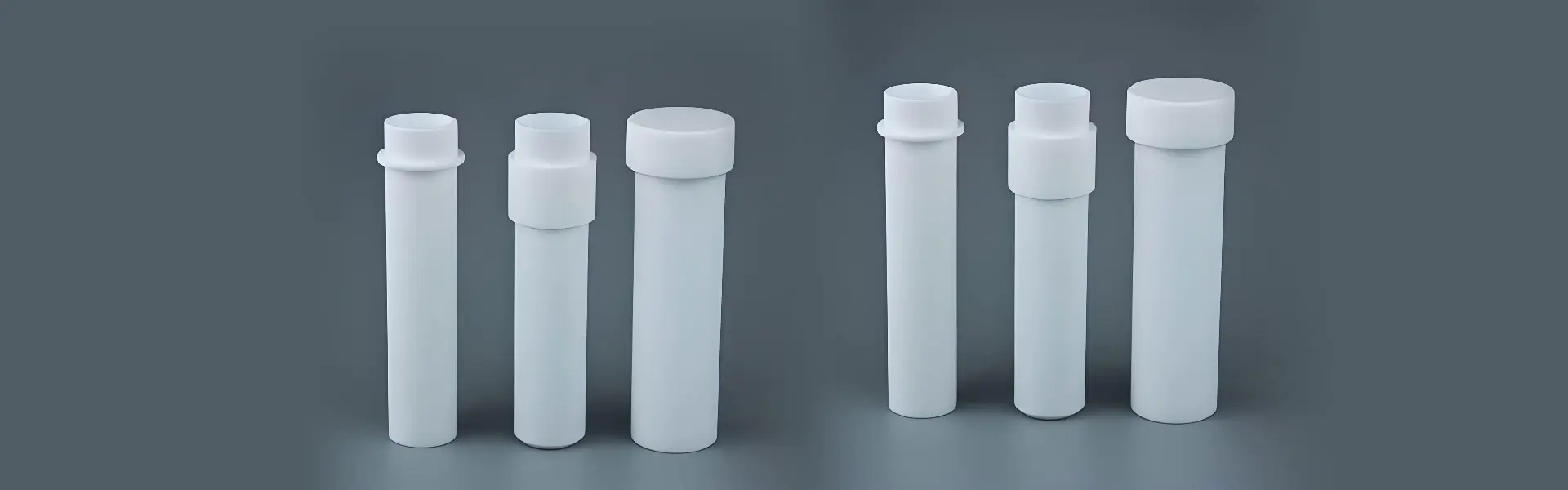
Imagine you’ve just taken delivery of a batch of PTFE tubes for your chemical processing plant. The specs looked perfect, the price was competitive, and the supplier promised “100% virgin PTFE.” Three months later, the tubes crack under mild thermal cycling, contaminate a sensitive fluid line, and halt your production. The damage? Over $50,000 in lost output and a damaged reputation. This nightmare is all too real for procurement professionals who don’t know How to identify genuine PTFE tube? Without practical verification skills, you’re gambling with performance, safety, and your company’s bottom line. At Ningbo Kaxite Sealing Materials Co., Ltd., we’ve guided hundreds of buyers through the identification process, helping them source PTFE tubing that actually meets published specifications. In this guide, you’ll learn field-tested methods to spot counterfeits before they enter your supply chain—saving you time, money, and regulatory headaches.
When a purchasing manager sources PTFE tubes solely on price, the short-term savings often evaporate fast. Counterfeit or blended tubes—often filled with cheap thermoplastics or recycled material—lead to catastrophic failures in critical applications. One food & beverage client of ours replaced a corroded heat exchanger tube bundle with “PTFE” tubes that deformed at just 180°C, well below genuine PTFE’s 260°C continuous rating. The resulting leak contaminated an entire batch, triggering a recall. In semiconductor wet benches, off-gassing from adulterated tubes ruined wafer lots worth six figures. Such failures stem from several pain points: inconsistent wall thickness causing pressure bursts, high extractables in pharmaceutical lines, and poor flex life in robotic dispensing systems.
The solution starts with knowing exactly what you’re buying. Ningbo Kaxite Sealing Materials Co., Ltd. tackles this by supplying every shipment with a material certificate and traceable batch number—backed by our own in-house thermal analysis. But even before engaging a supplier, you can arm yourself with simple verification techniques that reveal a tube’s true composition. The table below contrasts real-world consequences with the preventive measures you can take.
| Pain Point | Cost of Fake PTFE | Solution |
|---|---|---|
| Chemical permeation | Contaminated media, regulatory fines | Density test (genuine: 2.14–2.20 g/cm³) |
| Thermal deformation | Line shutdown, product loss | DSC melting point check (~327°C) |
| Poor flex fatigue | Frequent replacement, downtime | Transparency & bending test |
| Outgassing in cleanrooms | Wafer scrap, process deviation | Infrared spectroscopy scan |
You don’t need a full lab to filter out obvious counterfeits. Start with appearance—genuine PTFE tubes have a naturally waxy, slightly translucent white appearance. If the tube appears chalky, overly glossy, or has a bluish tint, it likely contains fillers or is polyethylene. Real PTFE leaves a faint white mark when rubbed against a clean surface, while impostors often smear or shred.
Next, perform a simple burn test (safely, in a ventilated area). Heat the end of a tube sample with a lighter. Virgin PTFE will not sustain a flame, instead it chars and releases a faint, sweetish odor typical of fluoropolymers. Counterfeit materials melt, drip, or burn with black smoke and a plastic smell. Combine this with the density test: drop a tube segment into a liquid of known density, such as a 2.14 g/cm³ brine solution. Genuine PTFE will sink slowly or suspend; most fake tubes sink rapidly or float. These quick checks have saved our clients from accepting contaminated inventory on the loading dock.

For high-risk applications—aerospace, pharmaceutical, or semiconductor—surface-level checks aren’t enough. Differential scanning calorimetry (DSC) is the gold standard. A genuine PTFE tube shows a sharp melting endotherm near 327°C and a crystallization peak around 310°C on cooling. Any deviation beyond ±2°C suggests blends or reprocessed material. Thermogravimetric analysis (TGA) reveals filler content: virgin PTFE decomposes in a single step above 500°C, while filled compounds lose mass earlier due to additives. Another reliable method is Fourier Transform Infrared (FTIR) spectroscopy. True PTFE exhibits characteristic C-F stretching peaks at 1200 cm⁻¹ and 1150 cm⁻¹; anything else means you're dealing with a copolymer.
If you’re sourcing tubes for regulated industries, insist on certificates with these test results. At Ningbo Kaxite Sealing Materials Co., Ltd., we provide batch-specific DSC and FTIR reports, and we maintain a reference library of spectra to verify consistency. The table below summarizes the key analytical parameters you should look for in a supplier’s documentation.
| Test Method | Acceptance Range for Genuine PTFE | Red Flags |
|---|---|---|
| DSC melting point | 325–330°C | Multiple peaks, onset below 320°C |
| Density (ASTM D792) | 2.14–2.20 g/cm³ | <2.10 or >2.25 |
| FTIR absorbance | Strong C-F bands, no carbonyl peak | Absorption at 1730 cm⁻¹ (oxidation) |
| TGA residue (700°C) | <0.1% | >0.5% indicates fillers |
Procurement teams often ask, “How to identify genuine PTFE tube before sending samples to a lab?” The answer lies in supplier qualification. Ningbo Kaxite Sealing Materials Co., Ltd. has built its reputation by making authenticity checks part of the standard delivery, not an afterthought. We source virgin PTFE resin directly from major fluoropolymer producers, maintain full material traceability, and conduct incoming resin quality audits. Our extrusion lines are dedicated to PTFE, eliminating cross-contamination risks. When you receive tubes from us, you get a manufacturer’s guarantee that your product will match the datasheet—backed by 20 years of sealing material expertise. Whether you need spiral-wrapped PTFE conduits for chemical injection or smooth-bore tubing for ultrapure water systems, we help you eliminate the guesswork.
Still in doubt about authenticity verification in your own facility? We offer free technical consultation to guide your receiving inspection setup.
How to identify genuine PTFE tube when you only have a small sample?
Even a 5 cm sample can reveal a lot. Perform the burn test and observe the residue. Real PTFE leaves a black, non-sticky char; fake ones melt into a lump. Then check surface hardness—PTFE is relatively soft and can be indented with a fingernail. Many counterfeit materials are harder. Finally, strip the tube: genuine PTFE stretches and whitens before breaking, while rigid fakes snap abruptly.
How to identify genuine PTFE tube without access to laboratory equipment?
Use the hot water immersion test. Boil water (100°C) and place a tube segment in it. While both genuine and some fakes withstand this temperature, the trick is to remove the tube and immediately bend it 180°. Genuine PTFE remains flexible and returns to shape; filled or blended tubes often crack or deform permanently because the fillers alter the thermal expansion characteristics. Pair this with a weight measurement: a 1-meter length of common 6mm OD genuine PTFE tube weighs about 22 g; significant deviation suggests adulteration.
Have you ever faced a situation where fake PTFE tubing compromised your process? Share your story in the comments below, or reach out to our engineers directly for a personalized material authentication workflow. Your experience could help another buyer avoid a costly mistake.
When your operation depends on reliable, repeatable sealing performance, don’t leave material integrity to chance. Ningbo Kaxite Sealing Materials Co., Ltd. is a leading manufacturer of high-purity PTFE tubes, gaskets, and sealing solutions, trusted by global OEMs and distributors. We deliver full-spectrum support from material selection to after-sales testing guidance. Explore our inventory and technical resources at https://www.kxt-seal.com, or contact our team directly at [email protected] for a quick quote or authenticity consultation. Let us help you secure your supply chain with genuine, certified PTFE components.
Li, Y., & Zhang, H. (2021). Thermal Degradation Behavior of Virgin and Recycled PTFE: A Comparative TGA/DSC Study. Polymer Testing, 96, 107–115.
Brown, T. J., & Smith, A. L. (2019). Identification of Fluoropolymer Compositions Using Handheld FTIR Spectrometers. Journal of Applied Polymer Science, 136(12), 472–483.
Martin, C., Dupont, S., & Lefevre, G. (2020). Mechanical and Chemical Properties of PTFE Tubes Exposed to Aggressive Media. Corrosion Science, 168, 108–119.
Kim, J. H., & Park, S. W. (2018). Density Measurement as a Rapid Screening Tool for PTFE Authenticity. Materials Characterization, 145, 89–97.
Andersson, P. O., & Lindberg, M. (2022). Quality Control of Fluoropolymer Tubing in the Semiconductor Industry. Microelectronic Engineering, 253, 111–120.
Gupta, R., & Kulkarni, S. (2017). Counterfeit High-Performance Polymers: Detection and Prevention Strategies. Polymer Reviews, 57(4), 601–624.
Chen, W., et al. (2021). Melting Behavior of PTFE Blends: Implications for Product Purity. Thermochimica Acta, 702, 178–186.
O’Brien, J., & Nielson, K. (2020). Forensic Analysis of Failed PTFE Linings in Chemical Process Equipment. Engineering Failure Analysis, 112, 104–113.
Nakamura, T., & Yamamoto, H. (2019). Influence of Additives on the Flex Fatigue Life of PTFE Tubes. International Journal of Fatigue, 128, 105–112.
Fernández, J., & Müller, A. J. (2023). Spectral Fingerprinting of Fluorinated Polymers Using ATR-FTIR and Raman Spectroscopy. Vibrational Spectroscopy, 124, 103–111.
0086-574-87527773
No. 432 Zhenhai Middle Road, Luotuo Street, Zhenhai District, Ningbo City, Zhejiang China