


QR Code

About Us
Products
Contact Us

Phone

Fax
0086-574-87527773

E-mail

Address
No. 432 Zhenhai Middle Road, Luotuo Street, Zhenhai District, Ningbo City, Zhejiang China

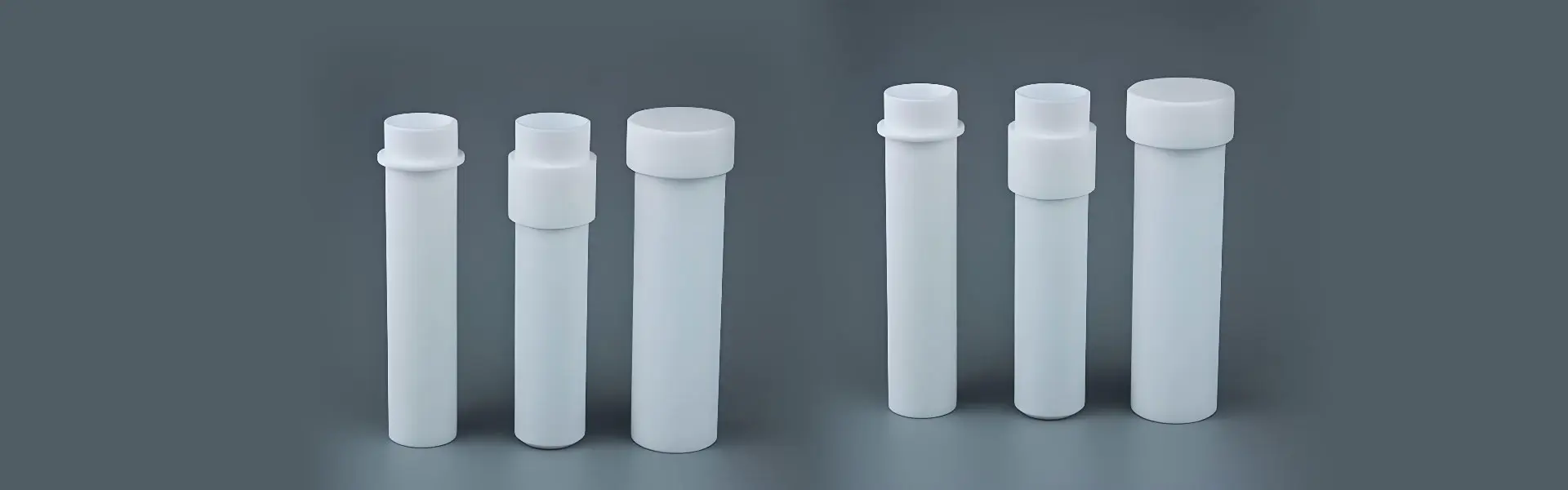
For engineers, designers, and procurement specialists across demanding industries, selecting the right fluid conveyance component is critical. When uncompromising chemical resistance, extreme temperature stability, and superior non-stick properties are required, one material consistently stands out: Polytetrafluoroethylene, universally known as PTFE. This guide delves into the specifications, applications, and technical nuances of PTFE tubing, providing the detailed information necessary for your next project specification.
PTFE tubing is a semi-translucent, flexible hose manufactured from a fluoropolymer resin. Its unique molecular structure, characterized by a strong carbon backbone surrounded by fluorine atoms, grants it a set of unparalleled properties. Often referred to by the common brand name Teflon®, PTFE is synonymous with high-performance in challenging environments. At Kaxite, we specialize in engineering PTFE tubing solutions that meet the rigorous demands of modern manufacturing, laboratory analysis, and industrial processing.
Kaxite PTFE tubing is engineered for excellence. Its core benefits define its suitability for critical applications:
Selecting the correct PTFE tubing requires careful attention to its physical and dimensional specifications. Below are the standard parameters for Kaxite's premium PTFE tubing range.
| Property | Test Method | Typical Value | Unit |
|---|---|---|---|
| Density | ASTM D792 | 2.15 - 2.20 | g/cm³ |
| Melting Point | — | 327 | °C |
| Continuous Service Temperature | — | -200 to +260 | °C |
| Tensile Strength | ASTM D638 | 25 - 35 | MPa |
| Elongation at Break | ASTM D638 | 300 - 500 | % |
| Dielectric Strength | ASTM D149 | >60 | kV/mm |
| Coefficient of Friction (Static) | ASTM D1894 | 0.05 - 0.08 | — |
Kaxite PTFE tubing is available in a comprehensive range of sizes to suit various flow rates and pressure requirements. Standard offerings include:
| Inner Diameter (ID) | Outer Diameter (OD) | Wall Thickness | Working Pressure (Standard) | Common Application |
|---|---|---|---|---|
| 1/16" (1.6 mm) | 1/8" (3.2 mm) | 0.031" (0.8 mm) | Up to 150 PSI | Chromatography, analytical instrumentation |
| 1/8" (3.2 mm) | 1/4" (6.4 mm) | 0.062" (1.6 mm) | Up to 120 PSI | Chemical feed lines, laboratory peristaltic pumps |
| 1/4" (6.4 mm) | 3/8" (9.5 mm) | 0.062" (1.6 mm) | Up to 100 PSI | General industrial chemical transfer |
| 1/2" (12.7 mm) | 5/8" (15.9 mm) | 0.062" (1.6 mm) | Up to 80 PSI | Food & beverage processing, bulk solvent lines |
| 1" (25.4 mm) | 1-1/8" (28.6 mm) | 0.062" (1.6 mm) | Up to 50 PSI | Lining for pipes, ducting for corrosive fumes |
Note: Custom sizes, colors (for identification), and tolerances are available upon request from Kaxite's engineering team.
The versatility of Kaxite PTFE tubing makes it indispensable across numerous sectors:
What is the main difference between PTFE, FEP, and PFA tubing?
PTFE, FEP (Fluorinated Ethylene Propylene), and PFA (Perfluoroalkoxy) are all fluoropolymers with excellent chemical resistance. PTFE has the highest continuous use temperature (260°C) but can be more difficult to thermoform. FEP is melt-processable, transparent, and has a lower temp rating (200°C). PFA shares PTFE's high temp rating, is melt-processable, and is exceptionally pure, but is typically more expensive. Kaxite offers expert guidance on material selection.
Can PTFE tubing be used for steam lines?
While PTFE can withstand the temperatures of low-pressure steam for short periods, it is not generally recommended for continuous high-pressure steam service. The material can soften and the pressure ratings drop significantly at temperatures above 150°C. For steam applications, it's critical to consult Kaxite's technical data sheets for pressure/temperature derating curves.
How do I connect and fit PTFE tubing?
PTFE tubing is typically connected using compression fittings (e.g., Swagelok® style), flanges, or sanitary fittings (like Tri-Clamp®). Due to its flexibility and "creep" (cold flow) characteristic, it is essential to use proper ferrules and follow the fitting manufacturer's torque specifications to create a reliable, leak-free seal without over-compressing and damaging the tube.
Is Kaxite PTFE tubing suitable for ultra-high purity (UHP) applications?
Yes. Kaxite manufactures specific grades of PTFE tubing for UHP applications, such as semiconductor wet processing or high-purity chemical distribution. This tubing undergoes specialized cleaning processes, is packaged in cleanrooms, and features extremely low levels of extractable metals and ionic contamination. Certificates of Analysis are provided.
What are the limitations of PTFE tubing?
Key limitations include: permeability to gases (which can be a factor in high-purity or vacuum systems), susceptibility to damage from abrasion and shear forces (which can be mitigated with braiding), and its tendency to "cold flow" or deform under sustained mechanical load. It also has moderate radiation resistance. Understanding these limits is part of Kaxite's design consultation service.
How do I clean PTFE tubing?
PTFE tubing is easily cleaned due to its non-stick surface. For most contaminants, rinsing with an appropriate solvent (compatible with PTFE) followed by deionized water and drying with clean, oil-free air is sufficient. For biological or tenacious deposits, mild alkaline or acid cleaners can be used, taking full advantage of PTFE's chemical resistance. Autoclaving is also possible for sterilizable grades.
Can the tubing be custom colored or printed?
Absolutely. Kaxite offers tubing in a range of standard colors for coding and identification purposes. We can also provide permanent printing or laser marking with part numbers, logos, flow direction arrows, or other specifications to meet traceability and assembly requirements in regulated industries.


0086-574-87527773
No. 432 Zhenhai Middle Road, Luotuo Street, Zhenhai District, Ningbo City, Zhejiang China