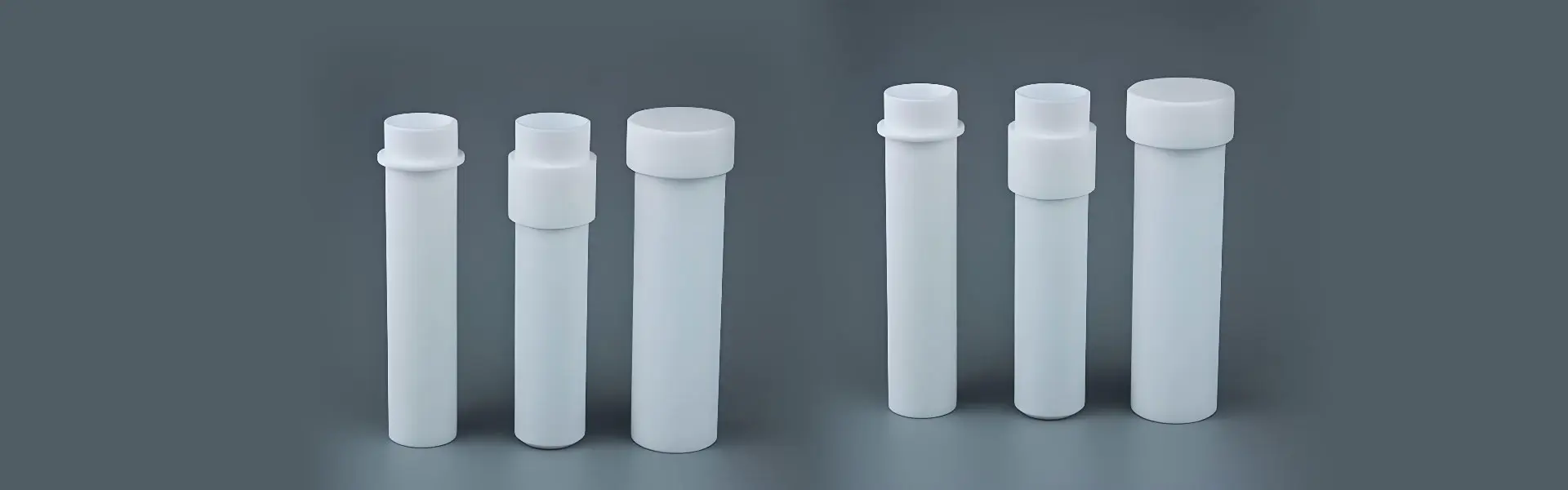
PTFE Hose, also known as Polytetrafluoroethylene hose, represents the pinnacle of performance in fluid transfer applications demanding exceptional chemical resistance, extreme temperature stability, and ultra-pure conveyance. At Kaxite, we engineer PTFE hoses to meet and exceed the rigorous demands of modern industry, from semiconductor manufacturing and chemical processing to food & beverage and pharmaceutical production. Our commitment is to deliver not just a component, but a reliable, high-performance solution that ensures operational integrity, safety, and efficiency.
### Understanding the Superiority of PTFE Hoses
PTFE, the material at the core of these hoses, is a synthetic fluoropolymer celebrated for its nearly universal inertness. This property translates into several critical advantages for industrial hose applications:
* **Unmatched Chemical Resistance:** PTFE is virtually unaffected by almost all industrial chemicals, solvents, and aggressive media. This makes
PTFE Hose ideal for handling corrosive acids, bases, and organic compounds where other hose materials would degrade rapidly.
* **Extreme Temperature Range:** Kaxite PTFE hoses maintain flexibility and performance across a breathtaking temperature spectrum, typically from -100°F (-73°C) to +500°F (+260°C), with some constructions handling even higher short-term spikes.
* **Exceptional Purity and Non-Stick Properties:** The inherently non-stick, low-friction surface of PTFE prevents material buildup and contamination. This ensures the purity of products being transferred, which is paramount in food, pharmaceutical, and high-purity chemical applications.
* **Excellent Electrical Properties:** PTFE is an outstanding electrical insulator, making these hoses suitable for applications involving sensitive electronic equipment or where static dissipation is a concern.
* **Long Service Life and Durability:** Resistant to weathering, UV radiation, and aging, a properly specified and installed Kaxite PTFE hose offers a significantly longer service life compared to rubber or thermoplastic hoses in demanding environments.
### Kaxite PTFE Hose Product Line and Technical Specifications
Our product range is designed to cater to various pressure requirements, flex needs, and application specifics. Below is a detailed breakdown of our core PTFE hose families.
#### 1. Standard Smooth Bore PTFE Hose
This is the workhorse of the PTFE hose family, featuring a smooth inner core for unrestricted flow. It is perfect for general chemical transfer, pneumatic lines, and suction and discharge services.
**Key Parameters:**
* **Inner Core:** Virgin, pressure-rated PTFE.
* **Reinforcement:** High-tensile stainless steel wire braid (one or two layers).
* **Cover:** Optional protective braid (stainless steel or synthetic).
* **Temperature Range:** -100°F to +500°F (-73°C to +260°C).
* **Applications:** Chemical transfer, compressor lines, instrumentation, and fuel lines.
**Standard Size and Pressure Table:**
| Nominal ID (Inches) | Nominal ID (mm) | Working Pressure (PSI) - 1 Braid | Working Pressure (PSI) - 2 Braid | Min. Bend Radius (Inches) |
| :--- | :--- | :--- | :--- | :--- |
| 1/4" | 6 mm | 1500 | 3000 | 2.0 |
| 3/8" | 10 mm | 1200 | 2500 | 3.0 |
| 1/2" | 13 mm | 1000 | 2000 | 4.0 |
| 3/4" | 19 mm | 750 | 1500 | 6.0 |
| 1" | 25 mm | 600 | 1200 | 8.0 |
#### 2. Convoluted (Corrugated) PTFE Hose
This design features a corrugated inner PTFE liner, providing superior flexibility and excellent resistance to kinking and vibration fatigue. It is the preferred choice for applications with constant movement or tight routing.
**Key Parameters:**
* **Inner Core:** Convoluted, virgin PTFE.
* **Reinforcement:** Interlocked stainless steel or bronze braid.
* **Cover:** Perforated or non-perforated metal braid.
* **Temperature Range:** -100°F to +450°F (-73°C to +232°C).
* **Applications:** Steam lines, hot oil/transfer, high-temperature gases, exhaust systems.
**Convoluted Hose Specification Table:**
| Nominal ID (Inches) | Construction Type | Max Working Pressure (PSI) | Max Temperature (°F) | Primary Use Case |
| :--- | :--- | :--- | :--- | :--- |
| 1" | PTFE / Bronze Braid | 250 | 450 | Hot Oil Circulation |
| 2" | PTFE / SS Braid | 150 | 450 | Low-Pressure Steam |
| 3" | PTFE / SS Braid | 100 | 450 | Fume Exhaust |
#### 3. PTFE Lined Stainless Steel Hose
For the most demanding high-pressure, high-temperature, or vacuum applications, Kaxite offers hoses with a PTFE liner inside a flexible stainless steel metal hose. This combines the chemical properties of PTFE with the mechanical strength of metal.
**Key Parameters:**
* **Inner Liner:** Seamless PTFE tube.
* **Carcass:** Corrugated stainless steel.
* **Braiding:** Multiple layers of high-tensile stainless steel wire.
* **End Fittings:** Swaged or flanged stainless steel.
* **Applications:** Ultra-high purity systems, severe chemical service, high-pressure instrumentation.
### Frequently Asked Questions (FAQ) About PTFE Hoses
**Q: What is the main difference between a smooth bore and a convoluted PTFE hose?**
A: The key difference lies in flexibility and pressure rating. A smooth bore hose has a higher pressure rating for its size but a larger bend radius. A convoluted hose is much more flexible, resistant to kinking, and ideal for dynamic applications with movement or vibration, though it typically has a lower pressure rating than an equivalent smooth bore hose.
**Q: Can Kaxite PTFE hoses be used for food and beverage applications?**
A: Absolutely. We offer specific grades of PTFE hoses that are compliant with FDA, EC 1935/2004, and 3-A Sanitary Standards for repeated use with food products. These hoses feature ultra-smooth, non-absorbent bores that prevent bacterial growth and ensure product purity.
**Q: How do I select the right PTFE hose for my chemical application?**
A: You must consider four primary factors: 1) The specific chemical and its concentration/temperature during transfer. While PTFE is resistant to nearly everything, we recommend confirming compatibility for exotic media. 2) The operational pressure and temperature ranges. 3) The required flow rate (hose inner diameter). 4) The environmental conditions (static, dynamic, exposure to abrasion). Our Kaxite technical team can assist with this selection.
**Q: What are the best practices for installing and routing a PTFE hose?**
A: Always respect the minimum bend radius (MBR) specified for the hose. Avoid twisting the hose during installation. Ensure proper support to prevent stress on the end fittings. For dynamic applications, ensure the routing allows free movement without abrasion against surfaces. Use the correct ferrules and fittings, torqued to manufacturer specifications.
**Q: How does the stainless steel braid affect the hose performance?**
A: The braid is the pressure-containing component. A single braid provides standard pressure ratings, while a double braid significantly increases the pressure capability. The braid also provides mechanical protection, contains the PTFE liner if it fails, and adds some crush resistance.
**Q: Can PTFE hoses be used for steam service?**
A: Yes, convoluted PTFE hoses are excellent for low to medium-pressure saturated steam applications (typically up to 250-300 PSI, depending on size and construction). They offer excellent temperature resistance and flexibility compared to traditional rubber steam hoses.
**Q: What end fittings are available for Kaxite PTFE hoses?**
A: We offer a comprehensive range of end connections including, but not limited to, stainless steel JIC 37° flare fittings, NPT threads, DIN/ISO metric threads, Sanitary Tri-Clamp fittings, flanges, and custom configurations. The fitting must be compatible with both the hose pressure rating and the system connection.
**Q: What is the shelf life or service life expectancy of a PTFE hose?**
A: PTFE itself does not degrade over time under normal storage conditions. The service life, however, depends entirely on the application's severity—exposure to chemicals, temperature cycles, pressure pulsations, and mechanical flexing. With proper selection and installation, Kaxite PTFE hoses can last for many years, often outlasting the equipment they are connected to.