


QR Code

About Us
Products
Contact Us

Phone

Fax
0086-574-87527773

E-mail

Address
No. 432 Zhenhai Middle Road, Luotuo Street, Zhenhai District, Ningbo City, Zhejiang China

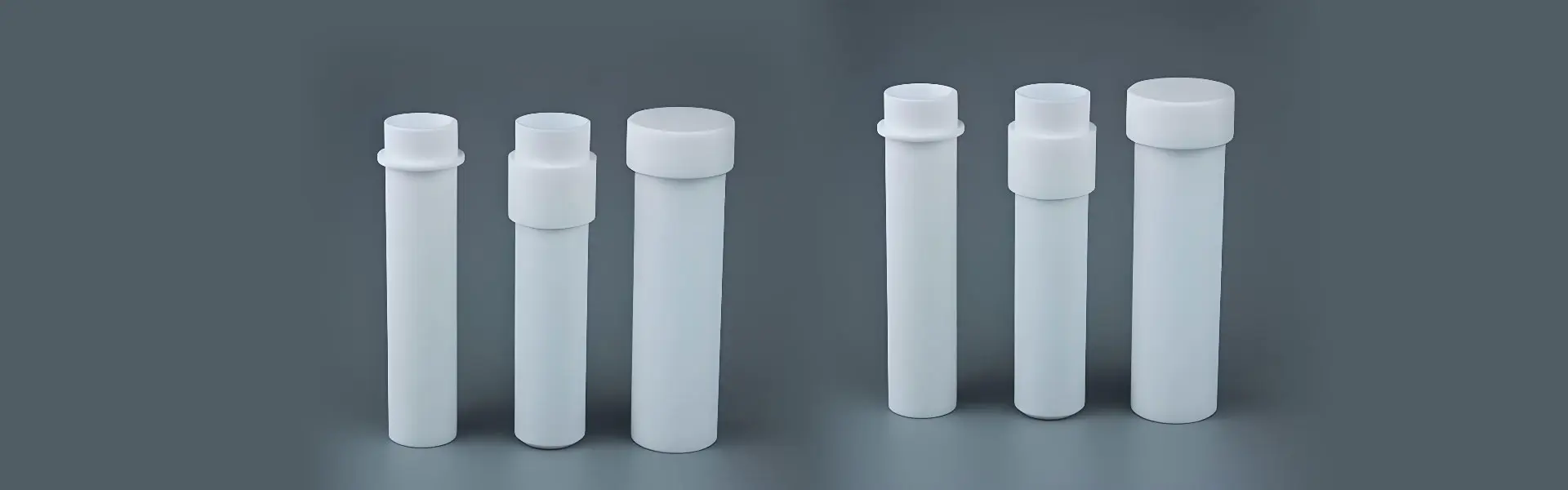
For industries demanding unparalleled performance under extreme conditions, PTFE Film stands as the material of choice. Kaxite, a leader in advanced fluoropolymer solutions, delivers premium-grade PTFE films engineered for excellence. Our films combine the exceptional inherent properties of Polytetrafluoroethylene—such as superb chemical resistance, a wide operating temperature range, and outstanding dielectric strength—with precise, consistent manufacturing to meet the most stringent application requirements. From aerospace and electronics to medical devices and industrial filtration, Kaxite PTFE Film provides the reliable backbone for innovation and durability.
Kaxite PTFE Films are available in various formulations and types to suit specific needs. Below is a detailed breakdown of our standard product parameters.
| Property | Value / Rating | Test Method / Notes |
|---|---|---|
| Continuous Service Temperature | -240°C to +260°C (-400°F to +500°F) | Short-term peaks up to 300°C possible. |
| Dielectric Strength | > 100 kV/mm (for 0.1mm film) | ASTM D149; excellent insulator. |
| Chemical Resistance | Excellent | Inert to virtually all industrial chemicals and solvents. |
| Coefficient of Friction | 0.05 - 0.10 | ASTM D1894; one of the lowest of any solid material. |
| Water Absorption | < 0.01% | ASTM D570; virtually non-hygroscopic. |
| Flammability | UL94 V-0 | Self-extinguishing, non-dripping. |
| UV & Weather Resistance | Excellent | Highly stable, no significant degradation. |
| Film Type | Key Features | Primary Applications |
|---|---|---|
| Skived PTFE Film | Manufactured by precision skiving from a sintered billet. Offers high strength, excellent dimensional stability, and very smooth surfaces. | Gaskets, seals, diaphragms, insulating washers, high-frequency circuit substrates. |
| Cast PTFE Film | Produced by casting a PTFE dispersion. Softer, more conformable, with good clarity. Can be heat-sealed. | Chemical liner sheets, release films, medical packaging, laboratory equipment covers. |
| Porous PTFE Film (ePTFE) | Expanded microstructure creating a membrane with controlled porosity. Highly breathable yet waterproof. | Air & liquid filtration, medical garments (sterile barrier), venting membranes, seals for fibrous media. |
| Adhesive-Backed PTFE Film | PTFE film laminated with PSA (Pressure Sensitive Adhesive) like acrylic or silicone for easy application. | Low-friction surfaces on guides, rollers, slides; protective covers; electrical insulation tape. |
| Filled PTFE Film | PTFE compounded with fillers like glass fiber, carbon, graphite, or bronze to enhance specific properties. | Applications requiring improved wear resistance, creep resistance, thermal conductivity, or reduced deformation under load. |
What is the main advantage of PTFE Film over other plastic films?
The primary advantage is its combination of extreme chemical inertness and outstanding high-temperature performance. Unlike many engineering plastics, PTFE Film does not melt and retains its properties across a vast temperature range from deep cryogenic to over 260°C. It also possesses an extremely low coefficient of friction and is an excellent electrical insulator, making it uniquely versatile.
How do I choose between Skived and Cast PTFE Film?
The choice depends on your application's mechanical and processing needs. Skived Film is preferred for precision mechanical parts (gaskets, seals) where dimensional stability, strength, and a smooth, dense surface are critical. Cast Film is better for applications requiring conformability, clarity, or heat-sealability, such as liners or protective covers. The Kaxite technical team can assist in selecting the optimal type.
What does "Virgin PTFE" mean, and why is it important?
"Virgin PTFE" refers to material produced from 100% new, first-use PTFE polymer, without any recycled or reprocessed content. Kaxite uses virgin resin to ensure consistent, predictable, and high-performance material properties in every batch. Recycled PTFE can have contaminants, variable particle sizes, and degraded mechanical/electrical properties, which is unacceptable for critical applications.
Can PTFE Film be easily die-cut, stamped, or machined?
Yes, Kaxite PTFE Film, especially skived grades, is excellent for fabrication. It can be cleanly die-cut, stamped, punched, CNC machined, or laser cut. Its toughness and lack of melt flow allow for precise cutting without fraying or melting edges. For complex shapes, machining from film is often more cost-effective than molding.
How can PTFE Film be joined or sealed?
PTFE cannot be melted for thermal welding like polyolefins. The primary methods for joining are:
1. Adhesive Bonding: Requires specialized PTFE surface treatments (like sodium etching or plasma treatment) to create a bondable surface before applying epoxy or acrylic adhesives.
2. Heat Sealing (Cast Film only): Certain cast films can be heat-sealed to themselves or other materials.
3. Mechanical Fastening: Using bolts, rivets, or clamps is common and effective.
Kaxite offers pre-treated films or can advise on the best bonding method for your process.
Is PTFE Film safe for use in food contact or medical applications?
Pure, virgin PTFE is biologically inert and is approved for specific food contact and medical device applications under various regulations (e.g., FDA CFR 21, EU 10/2011, USP Class VI). Kaxite can supply films with appropriate compliance documentation. It is crucial to ensure that any fillers or adhesives in compounded films are also approved for the intended use.
How does PTFE Film perform outdoors or under UV exposure?
PTFE Film has exceptional weatherability and UV resistance. It does not photodegrade like many polymers, meaning it won't become brittle or crack from sunlight exposure. This makes Kaxite PTFE Film ideal for long-term outdoor applications in architectural membranes, solar panel components, and aerospace.
Can PTFE Film be used as a release liner or non-stick surface?
Absolutely. Its very low surface energy makes it one of the best non-stick and release materials available. Kaxite PTFE Film is widely used as a release liner in composite manufacturing (for prepregs), in food processing belts, and as a protective layer on heat press plates. Its non-stick property is intrinsic and does not wear off.
What is ePTFE film, and how is it used differently from solid film?
Expanded PTFE (ePTFE) film is a microporous membrane created by stretching PTFE, creating a network of microscopic pores. While it remains hydrophobic (water-resistant), it allows gas and vapor transmission. This makes it perfect for "breathable" waterproof applications like medical packaging, protective apparel, venting for enclosures (allowing pressure equalization while blocking contaminants), and advanced filtration of gases and liquids.
What are the electrical properties of PTFE Film?
PTFE Film is a superb dielectric material. It has a very high dielectric strength (resistance to electrical breakdown), a low dielectric constant that is stable over a wide frequency and temperature range, and an extremely low dissipation factor (loss tangent). These properties make Kaxite PTFE Film the preferred insulation for high-frequency cables, critical circuit substrates, and high-voltage applications.
Selecting Kaxite means more than just purchasing a material; it means gaining a strategic partner dedicated to your success. Our commitment is built on three pillars:
For industries where failure is not an option—aerospace, semiconductor manufacturing, life sciences, and energy—Kaxite PTFE Film provides the proven reliability and performance edge. Our global logistics network ensures timely delivery, supporting your production schedules anywhere in the world.
0086-574-87527773
No. 432 Zhenhai Middle Road, Luotuo Street, Zhenhai District, Ningbo City, Zhejiang China