


QR Code

About Us
Products
Contact Us

Phone

Fax
0086-574-87527773

E-mail

Address
No. 432 Zhenhai Middle Road, Luotuo Street, Zhenhai District, Ningbo City, Zhejiang China

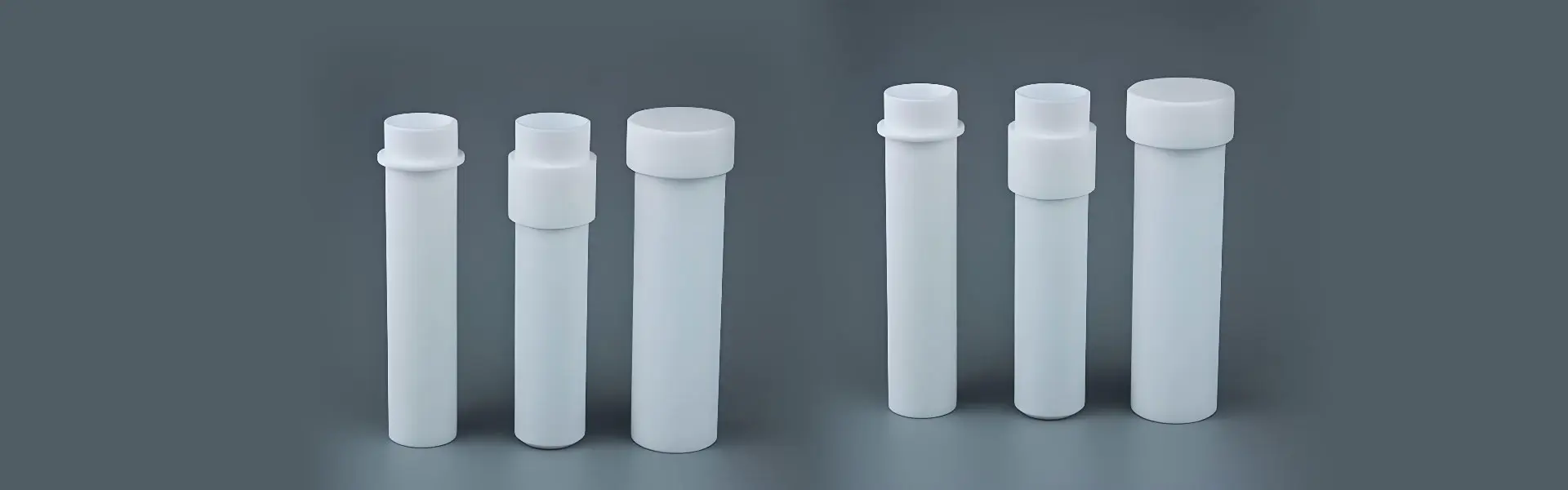
For decades, industries reliant on pumps, valves, mixers, and rotating equipment have sought reliable, durable sealing solutions to prevent leaks, reduce maintenance costs, and ensure operational continuity. The Molded Packing Ring represents a significant evolution in sealing technology. Unlike traditional die-cut or spiral-wound packing, a molded packing ring is manufactured as a single, homogeneous unit under precise heat and pressure. This process, perfected by Kaxite Sealing Solutions, creates a product with superior dimensional consistency, enhanced density, and optimized mechanical properties. The result is a sealing component that delivers exceptional performance in demanding applications, from chemical processing and water treatment to power generation and marine engineering. Kaxite's commitment to material science and precision engineering ensures each ring provides a perfect seal from the initial installation.
Choosing a Kaxite molded ring offers tangible benefits that directly impact your bottom line and operational safety.
Selecting the correct molded packing ring requires an understanding of application parameters. Kaxite offers a comprehensive range of materials and sizes to meet specific needs. Below are standard parameters and a material comparison.
| Parameter | Specification / Range | Remarks |
|---|---|---|
| Cross-Section (Width x Thickness) | From 3mm x 3mm to 25mm x 25mm | Standard square sections; rectangular available on request. |
| Inside Diameter (ID) | 10mm to 1000mm | Custom diameters outside this range can be manufactured. |
| Density | 1.2 - 2.1 g/cm³ | Varies by material compound; higher density generally indicates better wear resistance. |
| Temperature Range | -40°C to +290°C (-40°F to +550°F) | Maximum range; specific limit depends on material grade. |
| Pressure Rating | Up to 25 MPa (3600 psi) | For rotating shafts; static seal applications can withstand higher pressures. |
| pH Range | 0 - 14 (Full range) | Achievable with specific inert materials like PTFE or flexible graphite. |
| Material Type | Key Components | Best For | Limitations |
|---|---|---|---|
| Premium Braided Aramid | Aramid fibers, PTFE, high-grade lubricants. | High-speed rotary pumps, potable water, mild chemicals. Excellent for general service. | Not suitable for strong acids or alkalis at high concentrations. |
| PTFE (Teflon) Based | 100% PTFE or filled PTFE compounds. | Extremely aggressive chemicals, pharmaceutical, food & beverage (FDA compliant options). Virtually inert. | Lower thermal conductivity; can exhibit cold flow under very high constant load. |
| Flexible Graphite (GRAFOIL®) | Exfoliated, purified graphite. | High-temperature valves & fittings, steam services, hot oils. Excellent thermal stability. | Requires avoidance of strong oxidizers. Performance can degrade in highly turbulent fluids. |
| Carbon Fiber Reinforced | Carbon fibers, PTFE or synthetic binders. | Applications requiring high strength, low friction, and good thermal conductivity. Abrasive media. | Higher cost. Not recommended for strong oxidizing agents. |
| Specialty Elastomeric | NBR, EPDM, FKM (Viton) elastomers. | Applications needing high elasticity and compression set resistance. Sealing gases or LPG. | Chemical and temperature resistance is specific to the elastomer type. |
Q: What is the primary difference between a molded packing ring and traditional coil/spiral packing?
A: The fundamental difference lies in the manufacturing process and resulting structure. Traditional packing is cut from a spool or braided length, which can create joints and inconsistencies. A molded packing ring is formed in a precision mold under heat and pressure, creating a single, seamless, and homogeneous unit. This eliminates layered joints that can leak, provides uniform density throughout, and offers superior dimensional accuracy for a more reliable and longer-lasting seal.
Q: How do I select the right size molded packing ring for my equipment?
A: Accurate sizing is critical. You need two measurements: the shaft (or stem) diameter and the stuffing box bore diameter. The cross-section of the ring is calculated as (Bore Diameter - Shaft Diameter) / 2. Always refer to the equipment manufacturer's manual for the recommended packing size. If unsure, Kaxite's technical support team can assist you with sizing based on your equipment model and operating conditions to ensure an optimal fit.
Q: Can Kaxite molded rings be used in high-speed pump applications?
A: Yes, absolutely. Kaxite offers specific material compounds, such as our premium aramid/PTFE blends and carbon fiber reinforced grades, engineered for high-speed rotary service. These materials provide excellent tensile strength, low friction coefficients, and superior heat dissipation properties, which are essential for preventing packing burnout and excessive shaft wear at high surface velocities.
Q: Are molded packing rings suitable for valve stems, or are they only for pumps?
A: Molded packing rings are exceptionally well-suited for valve stems (glands). Their pre-formed shape makes installation in the often-confined valve stuffing box easier and more precise than coil packing. For valve applications, materials like flexible graphite or PTFE are popular choices due to their chemical inertness and ability to seal with minimal torque on the gland follower, ensuring smooth valve operation.
Q: How many rings are typically required for a proper seal in a stuffing box?
A: The number of rings depends on the depth of the stuffing box and the cross-section of the packing. A general rule is to use enough rings so that the total packed height is approximately 1.5 times the shaft diameter. For a standard ANSI pump, this is often 5 or 6 rings. It's crucial not to over-pack or under-pack the box. Over-packing creates excessive heat and friction, while under-packing leads to rapid leakage. Kaxite provides installation guidelines with all shipments.
Q: Do Kaxite molded rings require a break-in or run-in period?
A: Yes, a proper run-in period is essential for maximizing packing life and performance. After installation, the gland nuts should be tightened only enough to allow a slight drip (about 1 drop per 10-20 seconds for pumps). As the rings seat and adjust to the shaft surface over the first few hours of operation, this initial leakage will diminish. The gland can then be gradually tightened in small increments until the leakage stops. This process allows heat to dissipate and forms a polished sealing interface.
Q: Can you manufacture custom-shaped molded packing rings outside standard square sections?
A: Yes, Kaxite specializes in custom-engineered sealing solutions. While square cross-sections are standard, we can produce molded rings with rectangular, round, or other specialized profiles to fit unique stuffing box geometries. We can also combine different materials or create rings with custom IDs and cross-sections for OEM applications. Contact our engineering department with your specifications for a quote.
Correct installation is as important as selecting the right product. Follow these key steps to ensure your Kaxite molded packing ring performs as designed:
0086-574-87527773
No. 432 Zhenhai Middle Road, Luotuo Street, Zhenhai District, Ningbo City, Zhejiang China