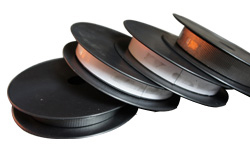
Gasket Tape is a crucial component in numerous industrial, construction, and manufacturing applications. This specialized form of sealing tape is designed to create a reliable, durable, and often customizable barrier against environmental factors such as dust, moisture, liquids, gases, sound, and vibration. As industries demand higher performance and greater efficiency from their materials, the role of high-quality gasket tape becomes ever more critical.
At its core, gasket tape is a pre-formed, pressure-sensitive adhesive tape used to replace traditional cut gaskets. It offers significant advantages, including ease of application, reduced inventory needs (as one roll can create gaskets of various shapes and sizes), and excellent conformability to irregular surfaces. Whether you're sealing an electrical enclosure, an automotive panel, a plumbing fixture, or an HVAC duct, selecting the right gasket tape is paramount to the longevity and functionality of the assembly.
### In-Depth Look at Gasket Tape Parameters
To select the appropriate gasket tape for your project, understanding its key parameters is essential. These specifications determine the tape's performance under specific conditions such as temperature, pressure, and chemical exposure.
**Primary Material Composition:**
The base material defines the tape's fundamental characteristics. Common materials include:
* **Closed-Cell Foams (EPDM, Neoprene, PVC, Polyethylene):** Excellent for general-purpose sealing against water, air, and dust. They offer good compression recovery and are often used in outdoor applications.
* **Open-Cell Foams (Polyurethane, Recycled Polyurethane):** Softer and more compressible, ideal for sound damping and cushioning. They are more absorbent and typically used in dry environments.
* **Rubber (Silicone, Natural Rubber, SBR):** Known for high temperature resistance, flexibility, and durability. Silicone, in particular, is favored for extreme temperature ranges and food-grade applications.
* **Fiber-based Materials (Cork, Cork & Rubber, Graphite):** Often used for their thermal insulation properties and resistance to fuels and oils, common in automotive and flange gasketing.
* **Thermoplastic Elastomers (TPE):** A versatile material blending rubber-like properties with the processing ease of plastics, offering good UV and chemical resistance.
**Critical Performance Specifications:**
The following table outlines the key parameters you must evaluate. Kaxite gasket tapes are engineered to meet and exceed these specifications across our product range.
| Parameter |
Description |
Typical Range / Common Options |
Why It Matters |
| Thickness |
The depth of the tape from the backing liner to the top surface. |
0.5mm (1/64") to 12.5mm (1/2") |
Determines the gap-filling capability and level of compression required for an effective seal. |
| Width |
The dimension of the tape across the roll. |
3mm (1/8") to 100mm (4") or more |
Must be chosen based on the flange or surface area that needs sealing. |
| Adhesive Type |
The glue layer that bonds the tape to the substrate. |
Acrylic, Rubber-based, Silicone |
Affects initial tack, ultimate bond strength, temperature resistance, and environmental aging. Acrylic offers excellent long-term UV and temperature resistance. |
| Density |
Mass per unit volume of the foam or material. |
Expressed in lbs/ft³ or kg/m³ (e.g., 6 lb/ft³, 25 lb/ft³) |
Impacts compressibility, recovery, and mechanical strength. Higher density often indicates greater durability and load-bearing capacity. |
| Temperature Range |
The continuous operating temperature span the tape can withstand. |
-40°F to 400°F (-40°C to 204°C) is common; Silicone can reach 500°F+ (260°C+) |
Critical for applications exposed to heat (engine compartments, ovens) or cryogenic conditions. |
| Tensile Strength |
Resistance to breaking under tension. |
20 to 200 psi (varies greatly by material) |
Indicates the material's durability and resistance to tearing during handling or under stress. |
| Compression Set |
The material's ability to return to its original thickness after prolonged compression. |
Expressed as a percentage (e.g., 10% max). Lower is better. |
A low compression set is vital for long-term sealing performance, ensuring the gasket doesn't permanently deform. |
| Fire Rating / Flammability |
Resistance to ignition and flame spread. |
UL 94, ASTM E84 (Class A, B, C), FAR 25.853 |
Mandatory for applications in construction, transportation, and electronics where fire safety is regulated. |
| Chemical Resistance |
Ability to withstand exposure to oils, fuels, solvents, acids, or alkalis. |
Specific to material type (e.g., EPDM resists polar fluids, Neoprene resists oils). |
Prevents degradation, swelling, or loss of sealing force in harsh chemical environments. |
| Water Absorption |
The amount of water the core material can absorb. |
Closed-cell: <5% by volume. Open-cell: significantly higher. |
For outdoor or wet environment seals, low water absorption prevents swelling and loss of insulating properties. |
### Kaxite Gasket Tape: Engineered for Performance
Kaxite has built its reputation on providing sealing solutions that professionals trust. Our gasket tape portfolio is developed through rigorous R&D and real-world testing to ensure consistent, reliable performance. We understand that a seal is only as good as its weakest parameter, which is why we control every aspect of production, from raw polymer selection to adhesive formulation and final slitting.
Our tapes feature high-performance acrylic adhesives known for their strong initial grab and exceptional long-term aging resistance against UV light, ozone, and plasticizer migration. The closed-cell foam substrates used in our flagship lines offer excellent environmental sealing with minimal water absorption. Every roll of Kaxite gasket tape is manufactured to precise tolerances, ensuring the thickness and width you specify are the dimensions you receive, batch after batch.
### Gasket Tape FAQ (Frequently Asked Questions)
**What is the primary advantage of using gasket tape over a pre-cut gasket?**
Gasket tape offers unparalleled flexibility and efficiency. It allows you to create custom gaskets on-site, in any shape or size, eliminating the need to stock multiple pre-cut gaskets. This reduces inventory costs and downtime waiting for specific parts. It also conforms exceptionally well to uneven or slightly damaged surfaces.
**How do I choose the right thickness for my application?**
The ideal thickness depends on the gap you need to fill and the compression required. A good rule of thumb is to select a tape that is 25-30% thicker than the gap to ensure adequate compression for a tight seal. For example, for a 2mm gap, a 2.5mm to 3mm tape is often suitable. Consider the surface irregularity and the required seal compression force.
**What is the difference between closed-cell and open-cell foam gasket tape?**
Closed-cell foam has sealed, non-interconnecting bubbles, making it impervious to water and air passage. It's ideal for environmental sealing (dust, moisture, air). Open-cell foam has interconnected pores, making it softer, more compressible, and breathable. It is excellent for acoustic damping, cushioning, and filtration, but not for waterproof seals.
**Can gasket tape be used on uneven or textured surfaces?**
Yes, one of the key benefits of foam-based gasket tape is its ability to conform to surface irregularities, textures, and minor imperfections. The compressible nature of the foam fills in low spots that a rigid gasket would bridge over, creating a more reliable seal on non-perfect surfaces.
**How should I prepare a surface before applying gasket tape?**
Surface preparation is critical for maximum adhesion and seal life. The surface must be clean, dry, and free of oil, grease, dust, rust, and loose paint. Use a solvent like isopropyl alcohol to wipe the surface clean. For best results, ensure the surface temperature is above 50°F (10°C) during application.
**What is the service temperature range for typical gasket tape?**
This varies drastically by material. Standard PVC or PE foam tapes generally handle -20°F to 150°F (-29°C to 65°C). EPDM and Neoprene tapes can range from -40°F to 200°F (-40°C to 93°C). For high-temperature applications, silicone-based gasket tapes are used, with some grades resisting temperatures from -80°F to 500°F (-62°C to 260°C) continuously.
**Is gasket tape resistant to chemicals, oils, and fuels?**
Resistance is material-specific. For example, Neoprene and Nitrile-based foams offer good resistance to oils, greases, and many hydrocarbons. EPDM resists polar fluids like brake fluids, steam, and alkalis. It's crucial to consult a chemical compatibility chart for your specific fluid exposure. Kaxite provides detailed chemical resistance guides for our products.
**How do I ensure a long-lasting seal with gasket tape?**
Apply firm, even pressure along the entire length of the tape after application. For the strongest bond, allow 24-72 hours for the adhesive to reach full ultimate strength before subjecting the assembly to stress, pressure, or environmental exposure. Ensure the tape is not stretched during application, as this can cause shrinkage and peeling over time.
**Can gasket tape be painted over?**
Some gasket tapes can be painted, but it depends on the material and paint type. Closed-cell foam tapes with a smooth skin often accept paint better than open-cell or textured surfaces. Always test paint compatibility on a sample first, as solvents in the paint may degrade the foam or adhesive.
**How is gasket tape different from standard double-sided tape?**
While both have adhesive, their purposes differ fundamentally. Standard double-sided tape is designed primarily for bonding two surfaces together with a thin, non-compressible layer. Gasket tape is designed specifically for sealing, with a thick, compressible core that fills gaps and accommodates irregularities. Its adhesive is formulated for long-term environmental resistance on often challenging industrial surfaces.
**Does Kaxite offer custom formulations or dimensions?**
Yes, Kaxite specializes in providing tailored sealing solutions. We can work with customers to develop custom colors, specific adhesive formulations, unusual thickness and width combinations, and custom die-cutting or kissing to meet unique application requirements. Our engineering team is available for consultation on special projects.
**What industries commonly use gasket tape?**
Virtually every manufacturing and maintenance sector uses it. Key industries include: Automotive (panel seals, light housings), Electronics (EMI/RFI shielding, enclosure sealing), HVAC & Construction (door/window seals, ductwork), Plumbing, Marine, Food Processing (FDA-compliant grades), Aerospace, and General Industrial Machinery.